
Water in Space: How Astronauts Get Their Drinking Water
In 2023, NASA announced that the space station's life support system had reached a 98% water recovery rate, recycling astronauts' urine, sweat, and breath moisture into drinking water.
By Embrace Relief Team · Updated October 9, 2026
The useful part before the long read.
The ISS life support system now recovers about 98% of the water brought aboard, including water from urine and sweat (NASA, 2023).
Recycling water in space is essential because launching cargo costs thousands of dollars per pound.
Embrace Relief builds deep-water wells in Africa for $3,500 each, serving over 1,000 people per well.
How Astronauts Stay Hydrated in Space
When you’re orbiting Earth in a sealed spacecraft with no rivers, rain, or running water, how do you stay hydrated?
The answer lies in one of the most remarkable examples of human ingenuity: space water recycling systems. On the International Space Station (ISS), water is a limited and precious resource. Astronauts don’t bring all their drinking water from Earth. Instead, they rely on closed-loop water recycling systems that recover and purify nearly every drop of moisture produced onboard.
That includes urine, sweat, breath vapor, shower water, and humidity from the air. In space, nothing is wasted. In 2023, NASA announced that the space station's life support system had reached a 98% water recovery rate, recycling astronauts' urine, sweat, and breath moisture into drinking water. NASA's Water Recovery System uses a multi-layered process:
- 1Condensation collection: Water vapor from breathing and sweating is captured by air conditioning units and condensed.
- 2Urine processing: Astronauts’ urine is distilled using a Vacuum Distillation Assembly, which boils the liquid at low pressure, then captures and condenses the clean water.
- 3Filtration and chemical treatment: Recovered water passes through multifiltration beds to remove organic and inorganic contaminants, then is disinfected with iodine or silver ions.
The final product is cleaner than tap water in many U.S. cities, according to NASA scientists.
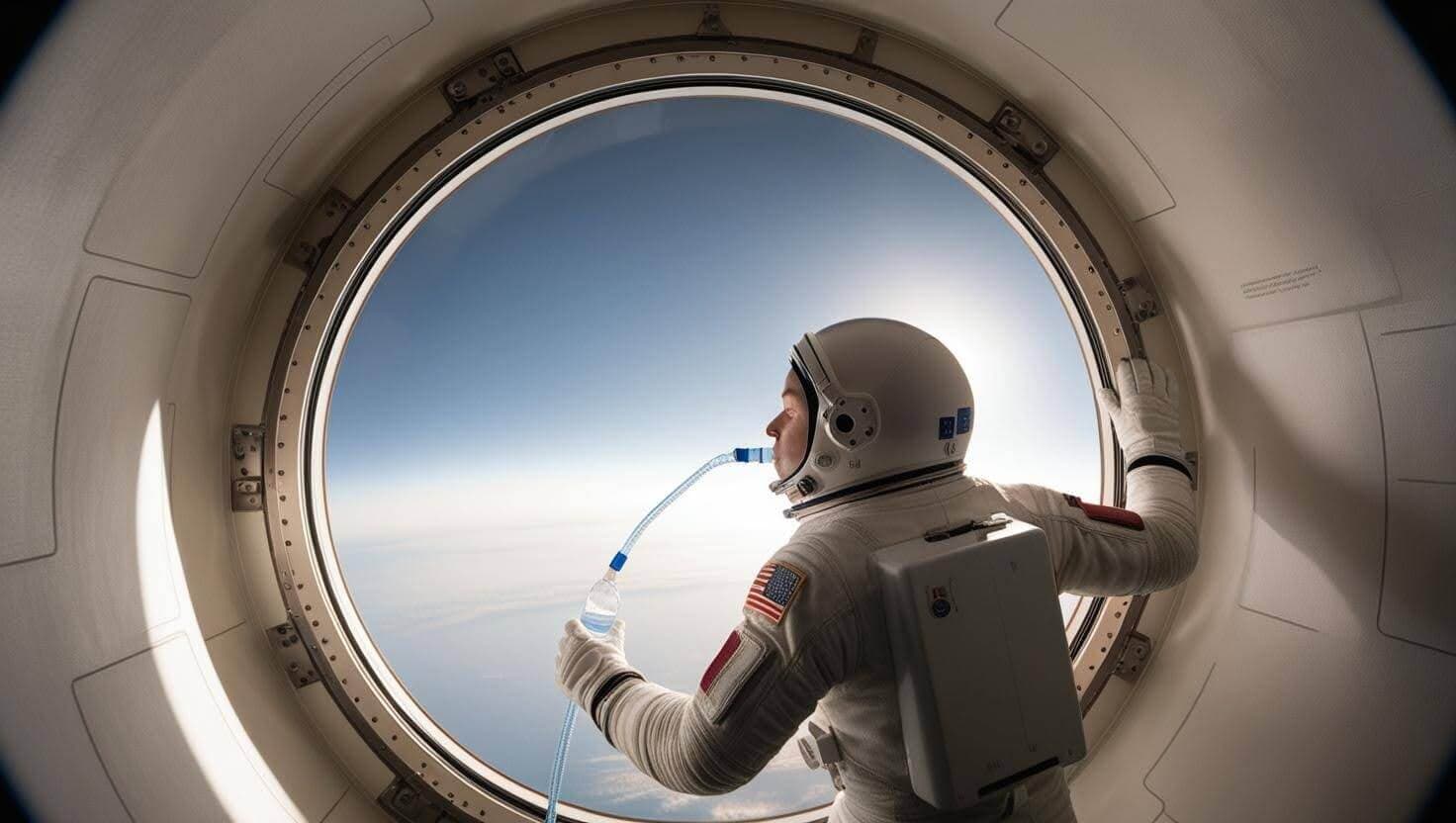
Once purified, water is stored in special collapsible pouches. In zero gravity, you can’t pour water into a cup, or it would float away in blobs. Instead, astronauts drink through straws equipped with one-way valves, sipping water in small amounts to prevent it from drifting.
They also use this purified water to rehydrate freeze-dried food, make drinks like instant coffee or electrolyte beverages, and perform hygiene routines like brushing teeth.
Why is all of this necessary? Sending water into space is incredibly expensive. One gallon of water weighs over 8 pounds, and every pound of cargo costs thousands of dollars to launch. By recycling water, NASA drastically reduces the need to resupply and makes long-term space missions more sustainable.
Future Missions and Earthly Challenges
In fact, future missions to the Moon and Mars depend on improving these systems. Scientists are exploring biological water recycling using algae, solar-powered purification, and harvesting water from the lunar ice or Martian soil.
Yet on Earth, about 2.1 billion people, or 1 in 4, still lack safely managed drinking water, including 106 million who drink directly from rivers, lakes, and ponds (WHO/UNICEF, 2025).
From Orbit to Earth: Clean Water with Embrace Relief
Embrace Relief created the Clean Water Initiative, to ensure that no community is left behind.
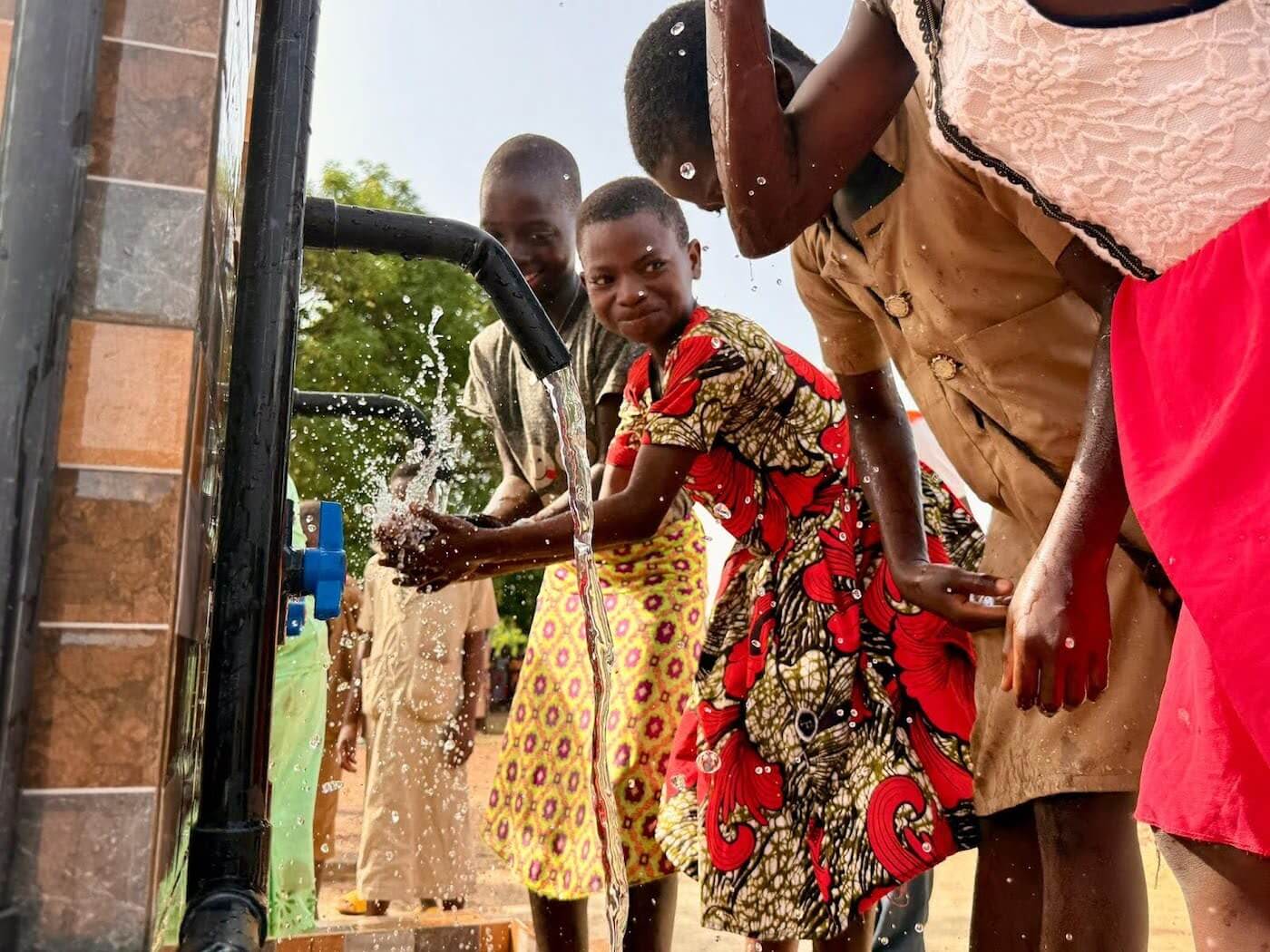
Through this initiative, Embrace Relief builds deep-water wells in areas where clean water is scarce. These wells reach underground aquifers, pulling up fresh, disease-free water and serving over 1,000 people per well. Each well costs just $3,500, making a life-changing difference for an entire community at a fraction of what it costs to send water into orbit.
But we go further than just drilling a hole. Our wells come with a five-year maintenance warranty, ensuring that they stay functional and reliable. They are also customizable; you can dedicate a well in your name, in honor of a loved one, or on behalf of a group, school, or business.
Embrace Relief has built and restored wells in countries including Chad, Cameroon, Nigeria, Tanzania, and Benin, bringing clean water closer to home for entire communities.
Water should not be a luxury, on Earth or in space. By supporting Embrace Relief, you help turn that belief into a reality.
For more information on Embrace Relief’s Clean Water Initiative, click here!