



Summary
- Prolonged screen time and blue light exposure may accelerate eye aging and increase cataract risk
- Eye health experts recommend practical steps to reduce strain and protect your vision
- Embrace Relief is restoring sight in Mali through cataract surgeries that cost just $120
It’s no secret that screen time is at an all-time high. Whether it’s scrolling through social media on smartphones, working long hours on laptops, binge-watching Netflix, or gaming on high-resolution monitors, digital devices have become deeply woven into our daily routines. As screen time continues to rise globally, especially with the increase in remote work, online education, and entertainment streaming, concerns about its long-term effects on eye health are gaining momentum.
But can your digital lifestyle actually lead to cataracts? Emerging scientific research suggests that it just might. Cataracts are typically associated with aging, but recent studies are beginning to uncover how certain modern habits and environmental exposures could contribute to earlier development of this vision-impairing condition. At the center of this conversation is the impact of high-energy visible (HEV) blue light.
HEV blue light is a specific wavelength of light that is emitted in large amounts from LED screens, such as those found in smartphones, tablets, flat-screen televisions, and computer monitors. Unlike natural sunlight, which contains a balance of different light types, screens emit concentrated levels of blue light that penetrate deep into the eye. Preliminary lab-based studies have shown that extended and unfiltered exposure to HEV light may contribute to oxidative stress within the eye and potentially damage the proteins in the eye’s natural lens. Over time, this damage could accelerate the process of lens clouding, a key feature of cataract development.
In addition to possible structural damage, screen-related habits may also increase the risk of digital eye strain, also known as computer vision syndrome. Symptoms like dryness, blurred vision, headaches, and difficulty focusing have become increasingly common, especially among younger adults and teenagers who spend many hours a day on devices. While these symptoms are often temporary, they can be a warning sign that your eyes are under stress, and prolonged exposure without proper care could contribute to longer-term damage.
Although more clinical studies on humans are needed to draw definitive conclusions about the link between screen use and cataracts, ophthalmologists and eye health experts agree that proactive steps can help reduce the potential risks. Here are some practical tips to protect your eyes in the digital age:
- Follow the 20-20-20 rule: Every 20 minutes, look at something 20 feet away for at least 20 seconds. This helps relax the focusing muscles in the eyes.
- Use blue light filters or night mode on your devices to reduce the intensity of HEV light, especially during evening hours.
- Wear blue-light-blocking glasses if you work in front of screens for extended periods.
- Make sure to blink often and stay hydrated to avoid dryness and irritation.
- Schedule regular eye exams to monitor your vision and catch early signs of strain or degeneration.
As screen time continues to increase and our dependency on digital technology deepens, being mindful of how it affects your eye health is more important than ever. Protecting your vision now can help prevent more serious issues, like cataracts, from developing earlier than expected.
From Digital Eye Strain to Global Blindness: Embrace Relief’s Mission to Cure Cataracts
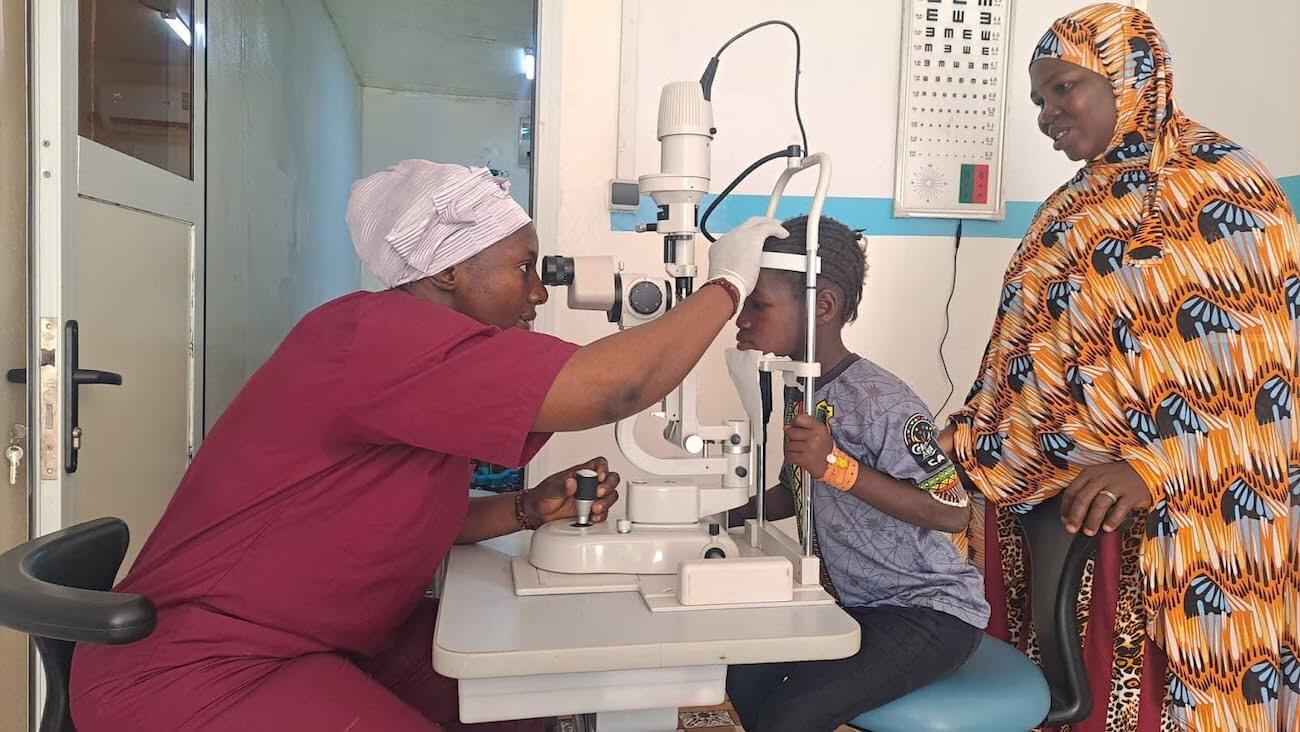
While blue light exposure is a modern eye health concern, millions around the world suffer from cataracts caused not by screens, but by poverty, lack of healthcare, and environmental factors like UV exposure and smoke. In places like Mali, thousands live in complete darkness, even though cataracts are entirely treatable.
This is where Embrace Relief steps in.
Through our Cure Cataracts program, we deliver free and affordable cataract surgeries to people in underserved rural communities. Each surgery takes less than 20 minutes and costs just $120; a small amount with a life-changing result. That same donation also helps fund 15 medical screenings, allowing more patients to be diagnosed and treated before they lose their sight entirely.
The results are powerful:
A teacher sees her students again.
A father returns to work.
A grandmother smiles as she sees her grandchildren clearly for the first time in years.
Embrace Relief partners with local healthcare teams to create sustainable eye care systems that continue long after the last surgery. This is more than medical aid. It’s the gift of independence, dignity, and a brighter future.
For more information on Embrace Relief’s Cataracts Surgeries , click here!How You Can Help: The Gift of Sight
A simple cataract surgery, which costs only $120, can transform a life. With your support, our Embrace Relief’s health clinics can provide these surgeries to those in need, giving them the gift of sight and the opportunity for a better future. Here’s how your donation can make a difference:
- $120 Donation: Funds one complete cataract surgery, restoring sight to an individual in need.
- $240 Donation: Supports two surgeries, doubling the impact.
- $600 Donation: Helps five people regain their vision, enhancing their quality of life and ability to contribute to their communities.
Your donation can make a significant difference in the lives of those suffering from cataracts in Mali and Burkina Faso. For just $120, you can fund a cataract surgery and give someone the precious gift of sight.
Help us light up lives and drive away the darkness caused by cataracts. Donate now and be a part of this life-changing mission.