

Recent

The economic benefits of women’s empowerment

Nearly half of all the people on Earth are women. Yet in much of the world, women have been discouraged for centuries from playing key roles in government or the larger economy. While women have made great progress in some parts of the world, achieving milestones in representation in government and business, there is still a long way to go.

  • An estimated 2.7 billion women worldwide are legally restricted from having the same job options as men, according to the United Nations. 
  • More than half of the 189 countries assessed by the UN have laws preventing women from working in specific jobs. 
  • Pay gaps between men and women exist in nearly every economy, resulting in women earning 77 cents for every $1 earned by a man in the same job.
  • Just 63 percent of women worldwide participate in the labor force, compared to 94 percent of men. This is partly due to the fact that women spend nearly three times as many hours doing unpaid care and domestic work as men – crucial, society-sustaining work that is under-appreciated and undervalued.
  • Even in parts of the world where women are more integrated into their country’s economic life, leadership roles remain dominated by men: of the companies making up the S&P 500 in 2022, only 32 CEOs – just 6.4 percent! – are women.

Women’s rights are human rights. Eliminating structural obstacles and allowing women to pursue a life of their choosing and fulfill their potential is an important goal by itself.

But it’s also true that empowering women – putting women in control of their own bodies, time, resources, and economic choices – offers massive benefits to society and the economy at large.

Countries with more women in the workforce see greater economic growth and innovation, and reduced poverty. These countries also typically have more stability and more equitable treatment of women under the law. An economy where women are integral is an economy that can invest in education, health and nutrition, building a sustainable long-term foundation for a thriving society.

Perhaps the best way to empower women around the world is to invest in their education. A lack of education is one of the main structural barriers that prevent women from advancing. Investing in women’s education will provide the skills necessary to take on advanced roles as leaders in their communities and in business. Women who complete their schooling earn more wealth, live healthier lives, have healthier families, and contribute to a more equitable, productive society. 

Successful women also serve as role models for the next generation, inspiring them to follow in their footsteps and achieve great things.

Embrace Relief is investing in women’s education

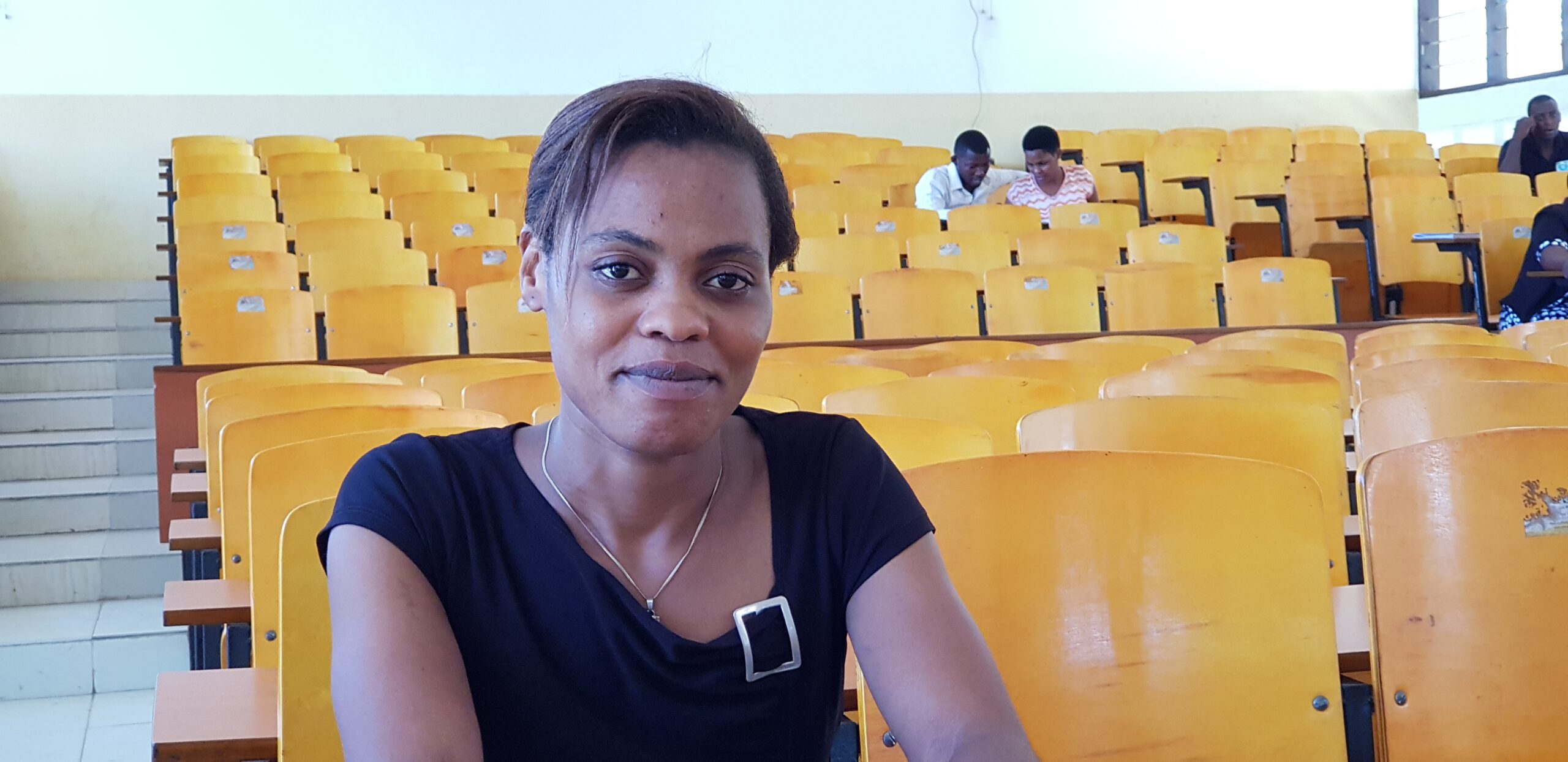
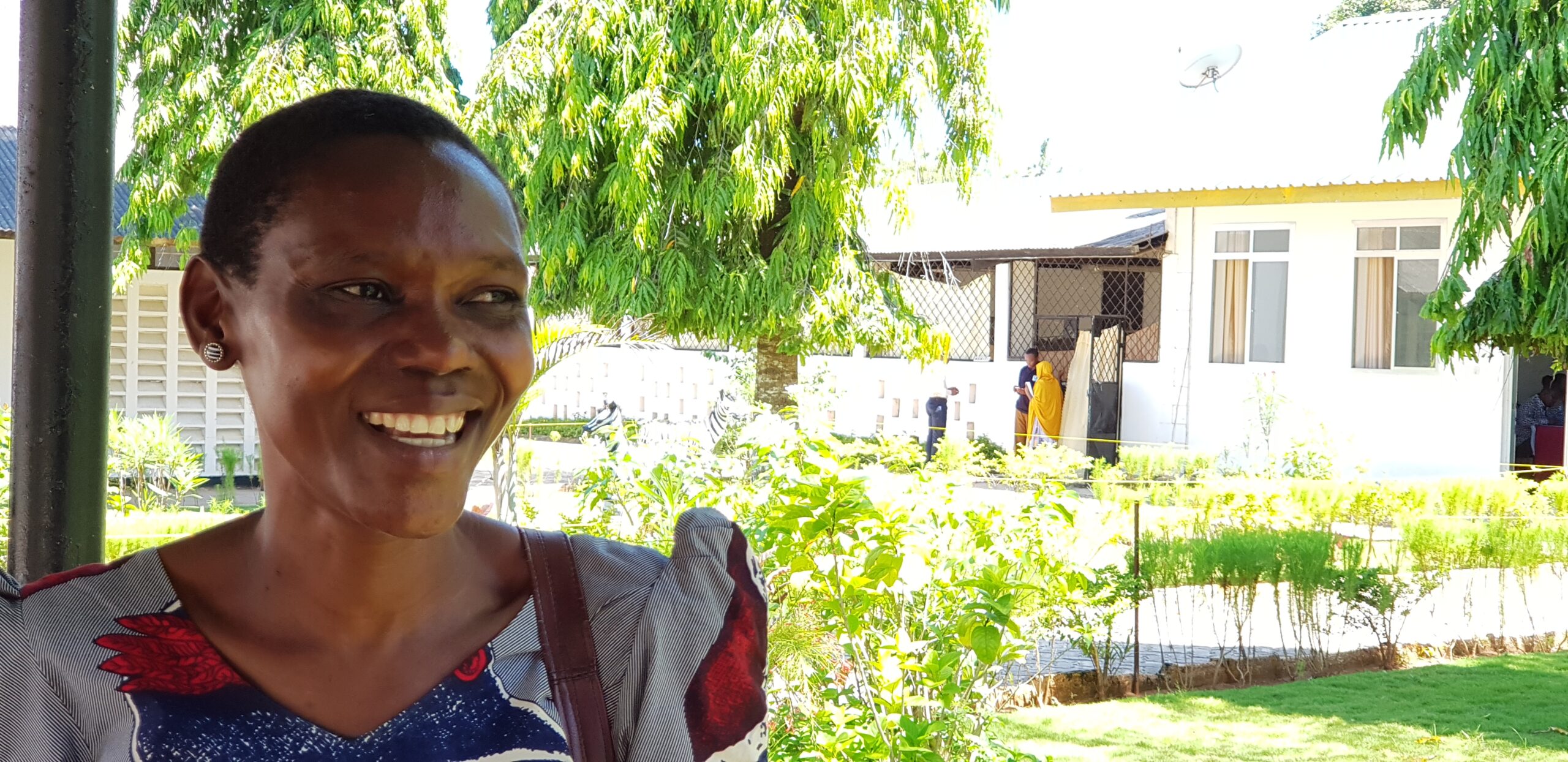
At Embrace Relief, women’s education is a fundamental aspect of our mission. That’s why we have launched our “Reach. Inspire. Support. Educate.” (R.I.S.E.) program, where we are training the next generation of teachers and administrators to be the foundation for improved education in Tanzania.

Through Embrace Relief’s R.I.S.E. program, we and our local partners are providing financial support to 24 women in Tanzania in order to help them achieve a two-year degree in Education Management and Administration (DEMA) and School Inspection (DSI). These degrees will empower the graduates with the knowledge and skills they need to break through into a male-dominated field of work, while ultimately working towards the improvement of Tanzania’s educational system for all students.

This is a life-changing opportunity for these women, and we plan to provide more assistance for even more women in the future. But we need your help.

Each donation to Embrace Relief’s R.I.S.E. program will go directly to pay for students’ tuition, health insurance, books, transportation and meals. Every $100 donated to this program can empower one more woman to unleash her potential, making her life – and the world – better for it.
8 benefits of drinking water

Summary

  • Water is life, literally: our bodies don’t work unless we’re drinking enough water.
  • But do you know why that is? Read on to learn about eight key functions of our bodies that are directly served by water.
  • That’s why it’s so important to not take water for granted. Hundreds of millions of people are unable to drink fresh, clean water on a daily basis – meaning they’re missing out on important health benefits.
  • Embrace Relief is working to fix this through our Clean Water Initiative of building water wells in Africa. Learn more below about our wells and how you can support the cause!

There’s almost never a bad time to drink a glass of water. The human body is 60 percent water, and so it makes sense that every ounce we drink is important for maintaining our body’s processes.

Whether you are engaging in strenuous exercise, staying in the shade on a hot day, or simply trying to be at your best mentally, a glass of water can give you a big lift. Proper hydration includes drinking small amounts of water throughout the day, for an average of 3-4 liters per day.

What are the health benefits from drinking water? There are too many to count, but here are eight big ones to think about:

Regulating your body temperature: Water is especially important during the warm summer months, because that’s when we typically sweat the most. Sweat is our body’s release of water to the surface of our skin when our body is too hot. When that water evaporates, it cools down our bodies and prevents us from overheating. However, that water needs to be replaced. Drinking water when you sweat is one of the most important ways to stay healthy during the summer (or while working out). Failing to do so can cause serious harm to the body, and even death.

Staying mentally focused: Dehydration, even mild and short-term, can have a noticeable negative effect on your brain. Water is vital for the brain’s function, and studies show that dehydrated people have more short-term memory issues, reduced energy, impaired mood, and reduced focus and concentration. Long-term dehydration can actually even shrink your brain cells’ size and mass, resulting in cognitive decline.

Clearing your skin: Being hydrated is important in having your skin serve its role as your body’s protector and regulator. Drinking water is also important for the look of your skin: dehydrated skin can be cracked and dry. Well-hydrated skin is much more smooth, soft and clean.

Lubricating your joints: Our joints (think knees, elbows, shoulders) need water to function, as does the cartilage that connects those joints. Your body produces a gel called “synovial fluid,” which cushions your joints and cartilage. When you’re properly hydrated, this fluid prevents your joint bones from rubbing together, which can be very painful.

Maintaining your digestive system: Water helps break down the food we eat, promotes good bowel health, and prevents constipation. Staying properly hydrated also keeps the stomach in good working order.

Helping blood flow: Staying hydrated improves your blood circulation, which is important because your blood circulation is the mechanism by which oxygen and nutrients are delivered to every part of your body. Warm water especially is helpful – it opens your veins and arteries, allowing for blood to pass through quicker and easier.

Curbing your appetite: For people looking to lose weight or cut down on their sugar intake, drinking water is a much healthier option than drinking sugary sodas, coffees, teas, sports drinks, or other beverages. But water can also be a useful aid in consuming the right number of calories during meal time. Drinking a glass of water about 30 minutes prior to a large meal will help your body ‘feel’ full sooner and prevent you from over-eating.

Protecting your kidneys: Water is crucial for avoiding kidney damage, because it dissolves minerals and nutrients in the kidney, and helps to remove waste products as well. A lack of water over a long-enough time period can lead to painful kidney stones, or to long-term kidney damage and even failure.

Water truly is a remarkable resource. We can’t survive without it, and our families and communities can’t thrive without it.

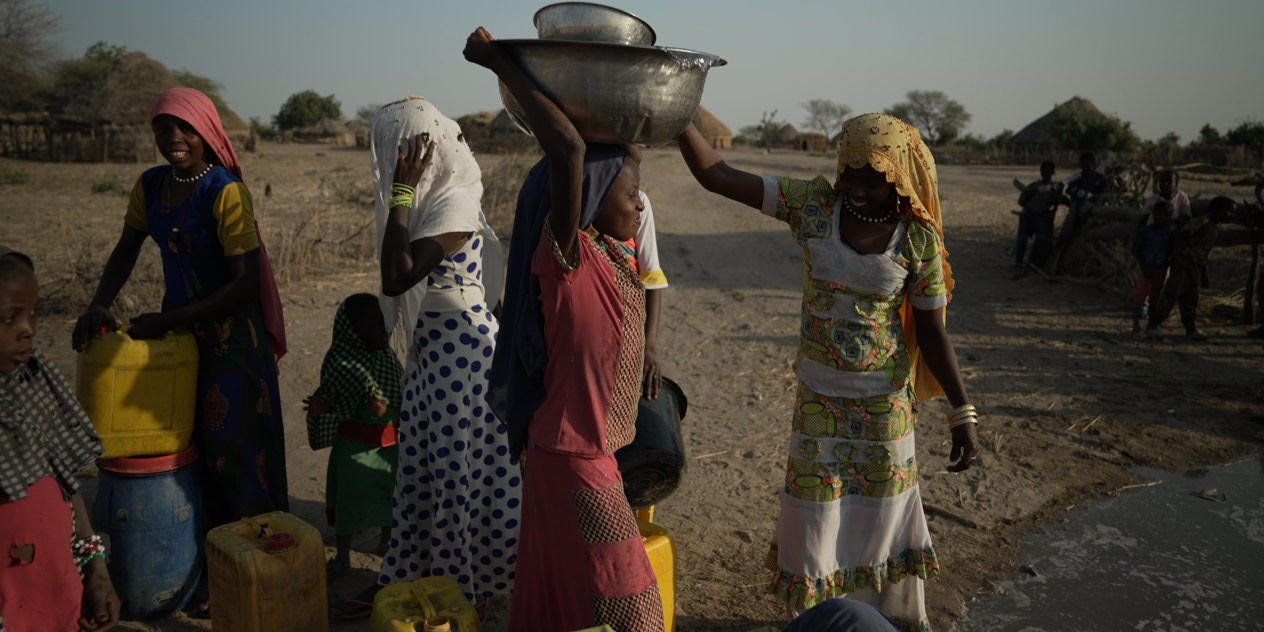
If you’re fortunate enough to live in a part of the world where drinkable water is just a few steps and a turn of the faucet away, it’s easy to take all of these benefits for granted. Try to put yourself in the shoes of someone in sub-Saharan Africa, where 400 million people do not have an accessible source of clean water. Think about facing the choice between chronic dehydration and drinking potentially dangerous untreated water from a river, lake or pond.

Help Embrace Relief deliver clean water to people who need it

At Embrace Relief, we’re working to make clean water accessible to all, and to make sure no one on Earth needs to make such a terrible choice. Now, we need your help.

Through our Clean Water Initiative, we have funded the construction of 450 new water wells, and the reconstruction of 50 pre-existing water wells, in the African nations of Cameroon, Chad and Nigeria. These wells are providing water to more than 500,000 people for at least the next five years.

How much water do you use in a day?

How much water do you use on an average day? Probably more than you think!

We use water for so many everyday uses, and so it can be easy to overlook exactly how much you’re using every time you bathe, wash your clothes or dishes, use the bathroom, fill a water bottle for drinking. But it all adds up.

According to the U.S. Geological Survey, the average American uses 82 gallons of water per day. This can fluctuate significantly depending on where you live, whether you live in a house or apartment, alone or with family members, and based on your lifestyle and hygiene choices.

Some studies have shown that the average water use per day could be as high as 101 gallons per day, and up to 300 gallons per day for the average family. You can determine your own water usage with an online water-use calculator.

So where is all that water going?

  • How much water do your toilets use? Surprisingly, the highest water usage in many households is the toilet. This is because its average water-usage can run anywhere from 1.5 gallons (with modern low-flush toilets) to 7 gallons (for older models) per flush. For households with multiple people living under one roof, every flush adds up.
  • How much water do you use while taking showers and baths? An average modern showerhead delivers about 2.5 gallons of water per minute, so each 10-minute shower would use roughly 25 gallons of water. For those who take baths, a half-filled bath tub is roughly 35 gallons on average.
  • How much water do you use at the sink? Brushing teeth and shaving while the water is running from the sink is common, but it’s wasteful, with roughly 2-3 gallons going down the drain per minute.
  • How much water do you use washing dishes? Modern energy- and water-efficient dishwashers may only use 4 gallons per load. But many older dishwashers use up to 15 gallons per load, and washing dishes by hand can use even more than that (an estimated 20 gallons per load on average).
  • How much water do you use washing clothes? Once again, the age of your equipment will make a difference. Modern washing machines typically use between 25-30 gallons of water per load, while older, less-efficient models use about 40 gallons per cycle.
  • How much water do you use for lawn care? For those lucky enough to own homes with front and backyards, it is occasionally necessary to water the lawn and plants. For a 10-by-10-foot patch of grass, an estimated 60 gallons of water are necessary to properly irrigate each time.

And these make up most of the average individual American household’s water usage, which is – pardon the pun – just a drop in the bucket compared to the amount of water we need to keep our farms, industries, workplaces, transportation and other infrastructure going.

Be mindful of how much water you’re using! It’s important to be careful not to waste water, because it is a finite resource, and one that underpins our entire society. When you try to imagine life without any of the above uses of water, you’ll realize how precious clean water is.

In sub-Saharan Africa, people know all about that. More than 300 million people in that part of the world do not have access to clean water for drinking, cooking, bathing or sanitation. There is plentiful water in Africa, but much of it is located in either untreated water sources like rivers, lakes and ponds, or in open watering holes, unprotected from bacteria and diseases.

The average African uses less than half the amount of water as the average American, but even this lesser quantity is hard to come by – requiring people to either make do with their nearby, potentially dangerous water sources, or to make long, back-breaking journeys to find cleaner water.

Help Embrace Relief deliver clean water to people who need it

That’s where the Embrace Relief Foundation comes in.

Through our Clean Water Initiative, we’re working to make clean water accessible to all. So far, we have funded the construction of 450 new water wells, and the reconstruction of 50 pre-existing water wells, in the African nations of Cameroon, Chad and Nigeria. These wells are providing water to more than 500,000 people for at least the next five years.

Donating to Embrace Relief’s Clean Water Fund and our “Fountains of Hope” project is the single-best way to ensure that thousands of people will get the water they need.

But there are more ways for you to help Embrace Relief fight the clean water crisis. On Saturday, June 25, we will be hosting our inaugural H2Ow Far Can You Walk: 5K Walkathon at Liberty State Park in New Jersey. This family-friendly event is open to people of all ages and abilities, and will help raise awareness and money for building and rebuilding water wells in Africa.

Every single dollar donated during our 5K Walkathon will provide more than 2,000 gallons of clean, drinkable water for those in need. For more information, and to register, click here. We look forward to having some fun in the sun with you as we help improve hundreds of thousands of lives.

Water wells: how they work

More than 300 million people in sub-Saharan Africa do not have access to a source of clean, safe drinking water. But that’s not because the water doesn’t exist. On the contrary: water in that part of the world is fairly plentiful. 

What’s lacking is the infrastructure to pull that water up from the ground and deliver it safely to people.

That’s why Embrace Relief’s Clean Water Initiative is laser-focused on building water wells in Africa, providing a sustainable piece of infrastructure that can have an enormous positive effect on communities wherever they are built.

Since we began our Clean Water Fund – as well as our “Fountains of Hope” project, which rebuilds abandoned and inoperative wells – Embrace Relief has provided a life-sustaining source of drinking water to more than 500,000 people in the African nations of Chad, Cameroon and Nigeria. 

Why has this strategy been so effective for Embrace Relief? Because the technology is simple, the wells themselves are relatively easy and cost-effective to build and maintain, and because our well designs are easily adaptable depending on the local geography.

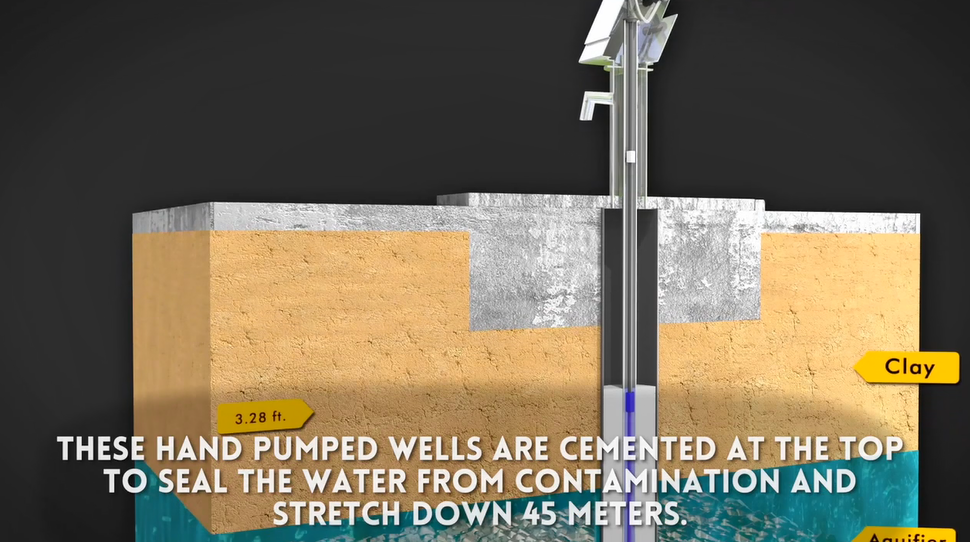
So, how do Embrace Relief’s water wells work? It’s a top-to-bottom process:

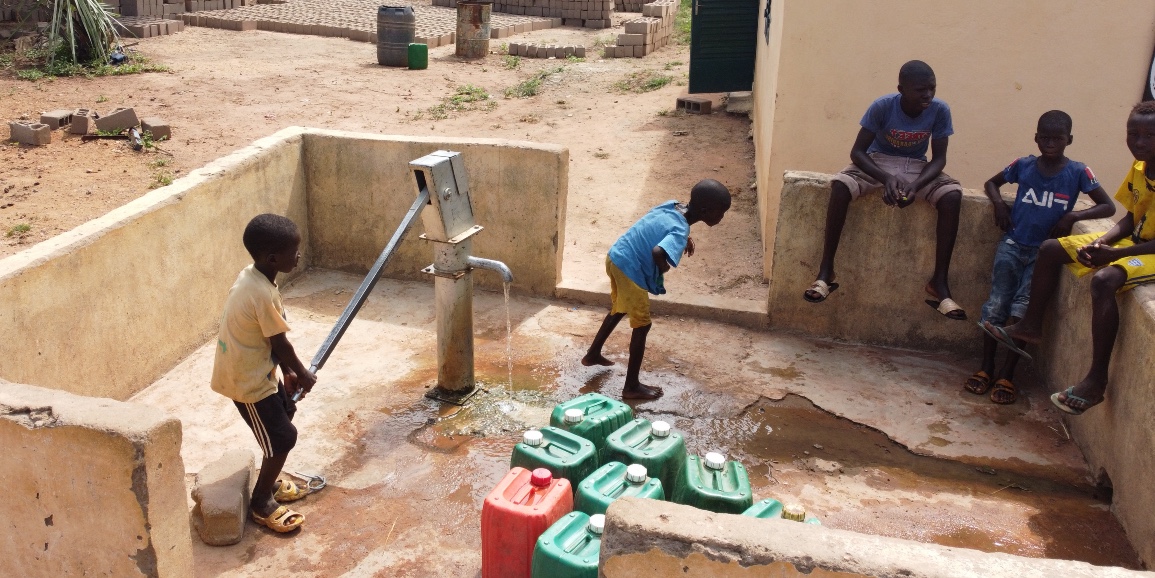
  • Hand pumps: Above ground, community members can access the clean water from our wells via a manual hand pump, with a cemented basin to protect the inside of the well from contamination. This simple design, and the minimal amount of force required to use, means it can be operated by most people of any age or gender. 
  • Depth: On average, our well pipes are dug roughly 45 meters (about 147 feet) below the surface. This means we’re tapping into safer, cleaner water sources. This is already a marked improvement for most sub-Saharan Africans, whose most common sources of freshwater include rivers, ponds or open watering holes prone to contamination by bacteria or waste. Water found this deep underground is significantly less likely to be contaminated in any way. 
  • Filtration: To provide even more safety, Embrace Relief’s wells include a multifaceted filtration system comprised of decanters, strainers, and filters at the bottom of the well, to remove various sediments and ensure nothing harmful reaches the surface. 
  • Sealed pipes: Our wells use galvanized pipes, which are designed to be used safely for many years before needing replacement. These pipes are sturdy and protect the pumped water from any outside materials. 
  • Maintenance: Embrace Relief has committed to funding annual maintenance checkups and repairs for five years after a well is built. In addition to responding to requests to fix broken parts, our partners on the ground will provide an annual inspection at each well site, testing the water for any impurities or contamination, over the first five years of the well’s life.

Each well Embrace Relief builds can provide thousands of people with the benefits of clean water, giving hope and a brighter future to entire communities.

People with universal access to clean drinking water are healthier, safer, more well-educated, more productive, and more prosperous. Clean water makes a positive contribution to women’s equality, too: young women and girls often bear the brunt of back-breaking journeys to obtain water for their families, taking away precious time they could spend receiving an education or earning an income.

For such a small investment, it’s hard to make a bigger impact.

Help Embrace Relief deliver clean water to people who need it

Embrace Relief’s Clean Water Initiative continues to expand, with ambitious goals to build 250 new water wells in the immediate future, providing water to another quarter-million people. To do that, though, we need your support.

Donating to Embrace Relief’s Clean Water Fund and our “Fountains of Hope” project is the single-best way to ensure that thousands of people will get the water they need.

But there are more ways for you to help Embrace Relief fight the clean water crisis. On Saturday, June 25, we will be hosting our inaugural H2Ow Far Can You Walk: 5K Walkathon at Liberty State Park in New Jersey. This family-friendly event is open to people of all ages and abilities, and will help raise awareness and money for building and rebuilding water wells in Africa.Every dollar donated during our 5K Walkathon will provide more than 2,000 gallons of clean, drinkable water for those in need. For more information, and to register, click here. We look forward to having some fun in the sun with you as we help improve hundreds of thousands of lives.

The need for women’s education in Tanzania

Education is a fundamental human right, and one of the cornerstones of women’s empowerment.

No matter where you go in the world, one fact is constant: young women and girls who receive and complete their education are more successful, productive, and more in control of their lives. Educated women are more likely to enter the labor market, earning higher incomes when they do; are more likely to gain leadership positions in government and business; and have significantly more autonomy over their reproductive health.

The benefits of women’s education not only impact individuals, but society as whole: countries with high rates of educated women are healthier, more economically productive, and more prosperous.

In many parts of the world, there is still a long way to go for women seeking equality. In Tanzania, educational outcomes are relatively poor for all, even relative to other sub-Saharan African countries. But the gender gap that exists in education, as revealed in a 2018 study, has a major negative impact on Tanzanian girls and women especially:

  • About 17 percent of all primary school-aged Tanzanian children are not participating in the education system. But more girls (19 percent) than boys (15 percent) of that age are not in school.
  • This gap is more pronounced at the secondary-school level. More than half of all Tanzanians age 14-19 (56 percent) are not in school, but once again it is girls who bear a disproportionate burden: 61 percent of girls between the ages of 14-19 are not receiving an education, compared to 51 percent of boys.
  • The literacy rate for women ages 15 and up is just 73 percent, well below the corresponding rate for Tanzanian men (83 percent), and well below the global average for all people.

As a result, even when women in Tanzania are able to join the labor market, they find it difficult to ascend to leadership positions. Mohamed Kitendo, Charity Department Coordinator at Ishik and an Embrace Relief partner on the ground in Tanzania, described the state of the teaching profession in his country:

“In primary schools, the number of ladies who are teachers is higher than men,” he said. “There is a school close to us here with 19 teachers, of which only 2 are men. But the two men are the head teacher and assistant head teacher. They are the decision makers in the school. This is the challenge that women are facing.”

The need for investment in women’s education is clear: supporting women on their path to becoming leaders improves their individual odds of success, and has the potential to inspire future generations to pursue education, careers, and successful adult life of their choosing.

Embrace Relief is investing in women’s education

At Embrace Relief, this goal is foundational to our mission. That’s why we have launched our “Reach. Inspire. Support. Educate.” (R.I.S.E.) program, where we are training the next generation of teachers and administrators to be the foundation for improved education in Tanzania.

Through Embrace Relief’s R.I.S.E. program, we and our local partners are providing financial support to 24 women in Tanzania in order to help them achieve a two-year degree in Education Management and Administration (DEMA) and School Inspection (DSI). These degrees will empower the graduates with the knowledge and skills they need to break through into a male-dominated field of work, while ultimately working towards the improvement of Tanzania’s educational system for all students.

This is a life-changing opportunity for these women, and we plan to provide more assistance for even more women in the future. But we need your help.

Each donation to Embrace Relief’s R.I.S.E. program will go directly to pay for students’ tuition, health insurance, books, transportation and meals. Every $100 donated to this program can empower one more woman to unleash her potential, making her life – and the world – better for it.
How education plays a role in women’s empowerment

The fight for women’s rights and gender equality has made significant progress in many parts of the world over the past several centuries. Many millions of women have gained political rights, have been able to take on leadership roles in government and business, and have been able to enjoy the freedom and autonomy to live their lives as they see fit.

But the struggle is far from finished. 

  • Women are still under-represented in leadership roles even in countries where women’s rights are most protected. Only 23.1 percent of representatives in national parliaments worldwide are women, while women make up just 13 percent of the world’s agricultural land-holders.
  • In many other countries, discriminatory laws and social practices prevent women from achieving their potential. Nearly 40 countries around the world do not have equal inheritance rights for sons and daughters, and 19 countries allow a husband to prevent his wife from working. Meanwhile, 750 girls and women worldwide were married prior to the age of 18.
  • And physical and sexual violence against women remains frighteningly common and universal, affecting more than 25 percent of all women.

The task of empowering women and ensuring true equality requires a society-wide effort and investment. One of the most important investments we can make is providing a thorough, quality education to all girls and young women.

The United Nations estimates that 960 million adults worldwide are illiterate – and two out of every three illiterate adults are women. An estimated 129 million school-age girls are currently not attending school, with the majority being of secondary school-age. On a percentage basis, fewer girls worldwide complete each level of education, compared to boys.

The skills and knowledge provided by an education unlocks doors for women, creates a path for women who wish to be leaders and entrepreneurs, and provides important life skills to help navigate the world. Studies demonstrate that better-educated women:

  • Are better-informed about nutrition and healthcare.
  • Have fewer children, who are typically healthier.
  • Marry at a later age.
  • Are more likely to be a part of the formal labor market
  • Earn higher incomes.

By improving educational outcomes and ensuring that all girls and women have the opportunity to complete their education, we can create impacts that lift individual women, benefit women as a group, and enrich society as a whole.

Embrace Relief is investing in women’s education

At Embrace Relief, we’re committed to educating girls and women in under-served countries and providing them with the opportunity to pursue a brighter future.

That’s why we have launched our “Reach. Inspire. Support. Educate.” (R.I.S.E.) program, where we are training the next generation of teachers and administrators to be the foundation for improved education in Tanzania.

Through Embrace Relief’s R.I.S.E. program, we and our local partners are providing financial support to 24 women in Tanzania in order to help them achieve a two-year degree in Education Management and Administration (DEMA) and School Inspection (DSI). These degrees will empower the graduates with the knowledge and skills they need to break through into a male-dominated field of work, while ultimately working towards the improvement of Tanzania’s educational system for all students.

This is a life-changing opportunity for these women, and we plan to provide more assistance for even more women in the future. But we need your help.

Each donation to Embrace Relief’s R.I.S.E. program will go directly to pay for students’ tuition, health insurance, books, transportation and meals. Every $100 donated to this program can empower one more woman to unleash her potential, making her life – and the world – better for it.
Clean water: A luxury in sub-Saharan Africa

In the United States, having access to clean water is as simple as turning on the faucet. Across the country, Americans use, on average, approximately 82 gallons of water per day while at home. Water is so abundant that the average American family wastes an estimated 9,400 gallons of water per year. Water leaks from ineffective piping systems cause an additional waste of about 900 billion gallons of water nationwide each year. Even despite all of this waste, most Americans are usually within arms’ reach of clean water.

Because of this, it can be difficult to imagine what life is like for the 785 million people worldwide who do not have such access to clean water. Over half of these people are concentrated in sub-Saharan Africa, where groundwater is plentiful, but a lack of infrastructure means that safe, nearby drinking water is unavailable for most.

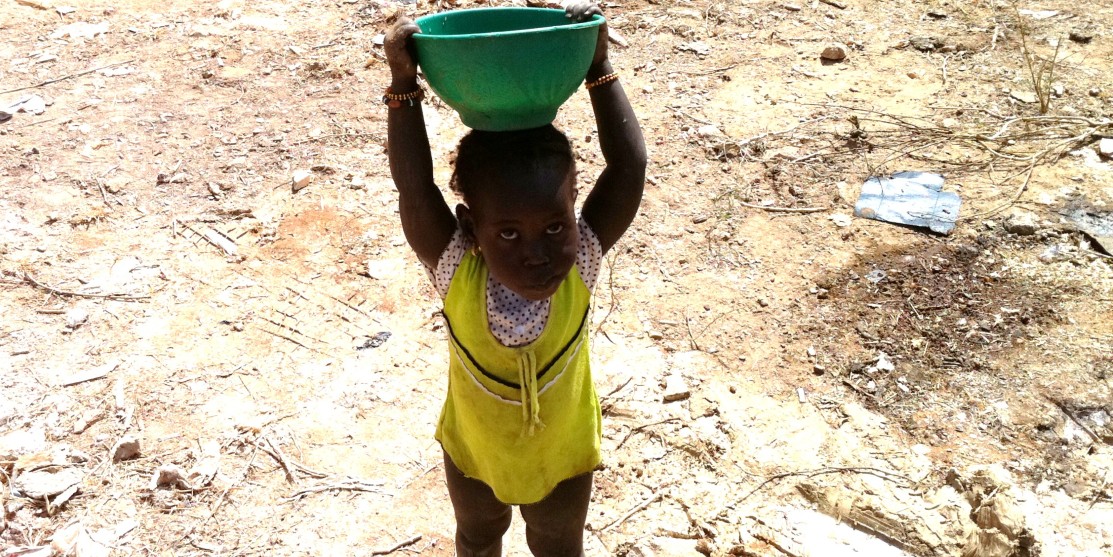
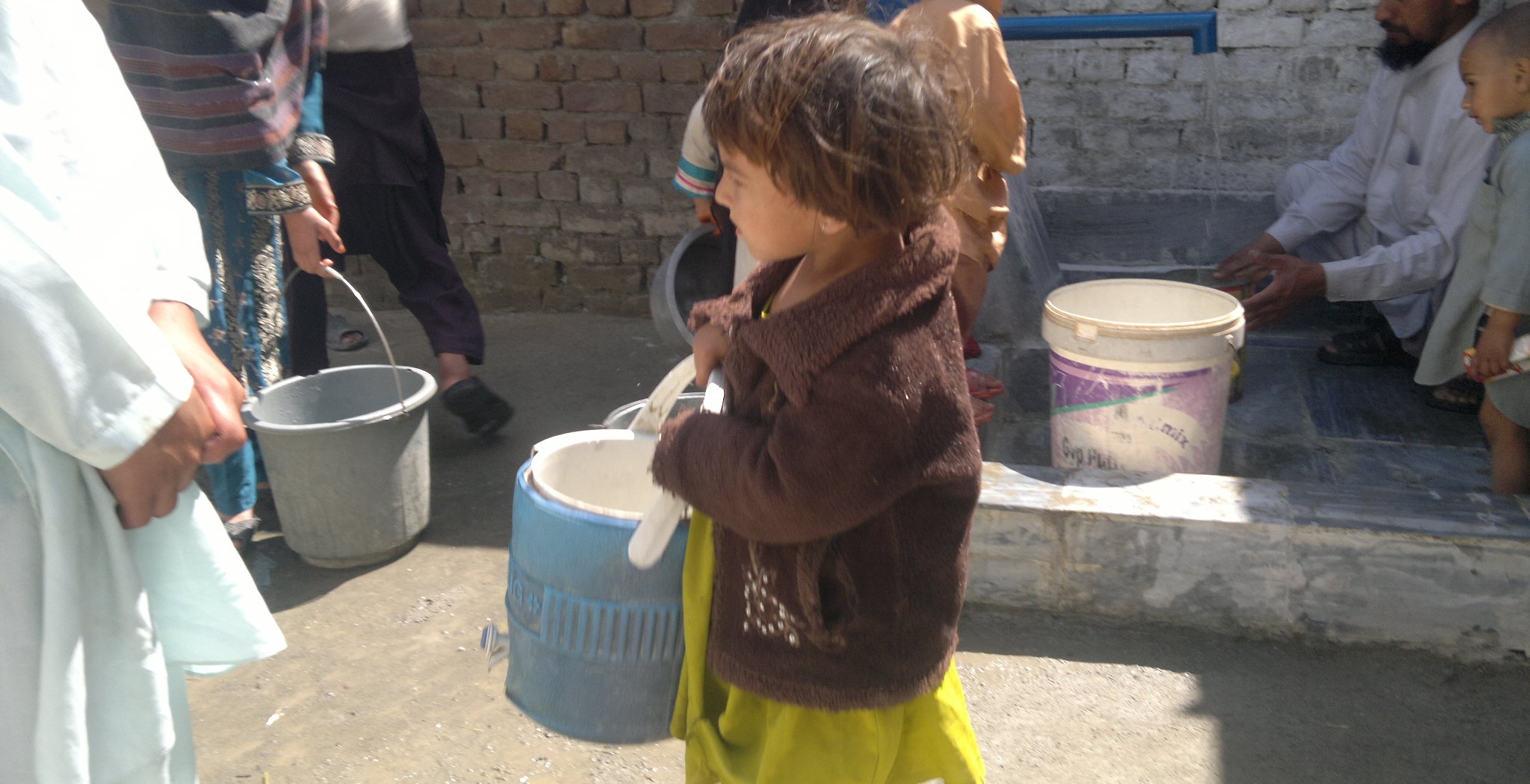
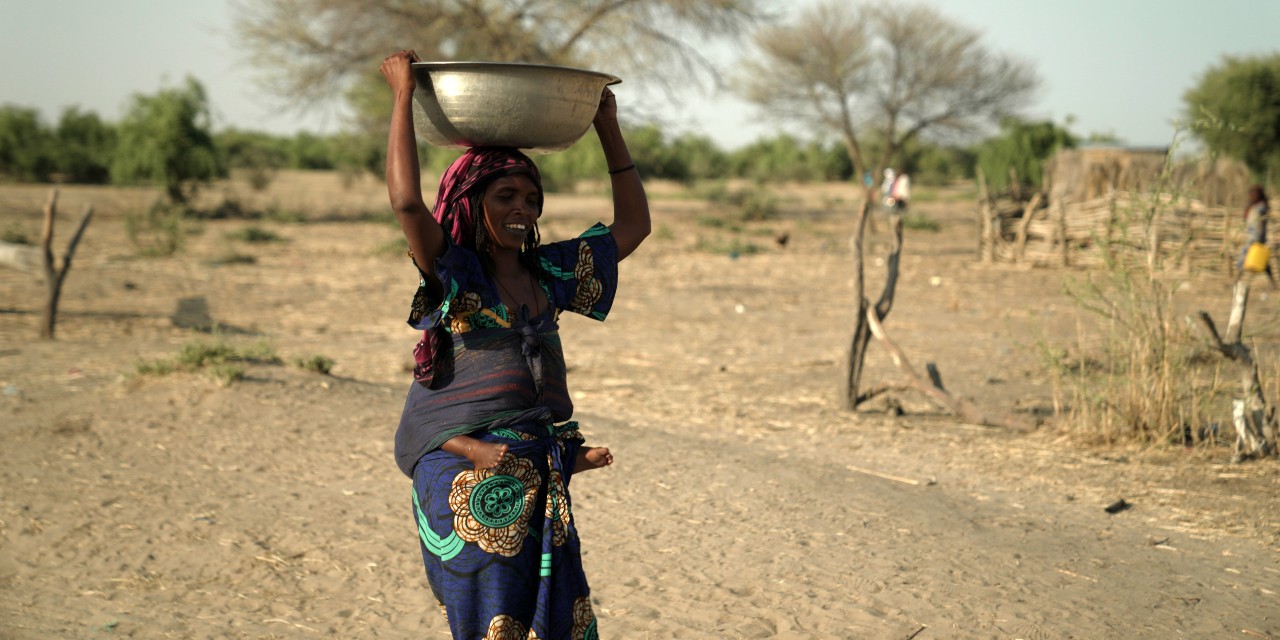
But where getting clean water in America is as simple as taking a few steps into the kitchen, in Africa collecting water is a time-consuming daily task, undertaken usually by women and children. 

  • The average water collection trip is approximately 33 minutes long in rural areas, and 25 minutes long in urban areas. 
  • But unlike in parts of the world where water is treated and filtered to protect the population, water collected in sub-Saharan Africa is often heavily polluted, containing harmful worms or bacteria, because it is located above ground in unprotected ponds, lakes, rivers or watering holes, or because it has been contaminated with sewage runoff. 
  • Drinking contaminated water leads to illnesses like typhoid fever, Guinea worm disease, dysentary, salmonella, Hepatitis A, and Hepatitis E. 
  • Water-related illnesses kill 3.4 million people each year, the vast majority of whom are young children.

While the United States can afford to waste billions of gallons of water each year, simply having clean water is a luxury in sub-Saharan Africa. Every drop counts.

Help Embrace Relief deliver clean water to people who need it

At Embrace Relief, we’re working to make clean water accessible to all, and we need your help.

Through our Clean Water Initiative, we have funded the construction of 450 new water wells, and the reconstruction of 50 pre-existing water wells, in the African nations of Cameroon, Chad and Nigeria. These wells are providing water to more than 500,000 people for at least the next five years.

Donating to Embrace Relief’s Clean Water Fund and our “Fountains of Hope” project is the single-best way to ensure that thousands of people will get the water they need.

But there are more ways for you to help Embrace Relief fight the clean water crisis. On Saturday, June 25, we will be hosting our inaugural H2Ow Far Can You Walk: 5K Walkathon at Liberty State Park in New Jersey. This family-friendly event is open to people of all ages and abilities, and will help raise awareness and money for building and rebuilding water wells in Africa.

Every dollar donated during our 5K Walkathon will provide more than 2,000 gallons of clean, drinkable water for those in need. For more information, and to register, click here. We look forward to having some fun in the sun with you as we help improve hundreds of thousands of lives.

What is water scarcity?

Water is essential to human life. We need to drink it to keep our organs functioning. We need it to grow and cook our food. We need it to maintain proper hygiene and keep ourselves and our communities clean. This is true for all people everywhere, and it’s why water is a fundamental human right.

Though two-thirds of Earth’s surface is covered in water, just 3 percent of all of the existing water on the planet is the freshwater we need for drinking, growing crops, hygiene, and many other uses.

There is enough water for everyone, but because of varieties of climate and geography, as well as economic conditions and infrastructure, large areas of the world – including parts of every continent – face water scarcity issues:

  • Currently, an estimated 1.1 billion people worldwide lack reliable access to clean water. 
  • An estimated 2.7 billion people live with water scarcity for at least one month out of the year. 
  • Additionally, 2.4 billion people have inadequate access to hygiene and sanitation. 
  • But as staggering as these numbers are, they may be poised to rise significantly higher during the next several decades as climate change impacts weather patterns and water sources.

There are two main types of water scarcity

1) Scarcity in availability: In which there is a shortage in the freshwater supply (rivers, lakes, aquifers, oases, glaciers, reservoirs, ponds, streams, wetlands, etc.) due to drought, overuse, or some other physical cause; and

2) Scarcity in access: In which the clean water supply is plentiful enough, but there are either institutional failures or a lack of adequate infrastructure to extract and distribute this water equitably to all people.

In sub-Saharan Africa, where an estimated 400 million people live with water scarcity, it is this second type of scarcity that is most common. For many, the nearest water source is an unprotected lake, river or pond full of bacteria and worms; drinking this water means putting oneself at risk for deadly diseases. And for many others, the nearest water source requires a significant daily journey on foot, usually undertaken by women and young girls; this means precious hours spent collecting water rather than attending school, working, or taking care of family. 

Help Embrace Relief fight to end water scarcity

At Embrace Relief, we’re working to build up the infrastructure of sub-Saharan Africa and make clean water accessible to all, and we need your help.

Through our Clean Water Initiative, we have funded the construction of 450 new water wells, and the reconstruction of 50 pre-existing water wells, in the African nations of Cameroon, Chad and Nigeria. These wells are providing water to more than 500,000 people for at least the next five years.

Donating to Embrace Relief’s Clean Water Fund and our “Fountains of Hope” project is the single-best way to ensure that thousands of people will get the water they need.

But there are more ways for you to help Embrace Relief fight the clean water crisis. On Saturday, June 25, we will be hosting our inaugural H2Ow Far Can You Walk: 5K Walkathon at Liberty State Park in New Jersey. This family-friendly event is open to people of all ages and abilities, and will help raise awareness and money for building and rebuilding water wells in Africa.

Every dollar donated during our 5K Walkathon will provide more than 2,000 gallons of clean, drinkable water for those in need. For more information, and to register, click here. We look forward to having some fun in the sun with you as we help improve hundreds of thousands of lives.