Embrace Relief is a 501 (c) (3) non-profit organization which collaborates with volunteers to deliver humanitarian aid and disaster relief to vulnerable communities around the world.
Our teams offer relief in the form of:

Financial Support
Emotional Support
Physical Support
in order to meet the needs of people ravaged by disaster and other misfortune. The foundation collects and distributes supplies to families, individuals and institutions.
When you or your organization partner with Embrace Relief, you join our mission of alleviating suffering and promoting human development throughout the world. With our diverse array of humanitarian programs and ability to reach every corner of the globe, we can ensure your support will reach people in need.

Delivering research-based, sustainable solutions to achieve immediate and lasting improvements in situations of humanitarian emergency and improving the quality of life of individuals and communities enduring chronic hardships.
OUR VISION
Driven by a strong belief in the power of comprehensive development, Embrace Relief is committed to creating a lasting impact in the lives of individuals locally and globally. We implement research-based programs to achieve measurable, sustainable improvements in the lives of those in need. By constantly using research and closely engaging with those we serve, our innovative approach ensures we deliver the most beneficial services.
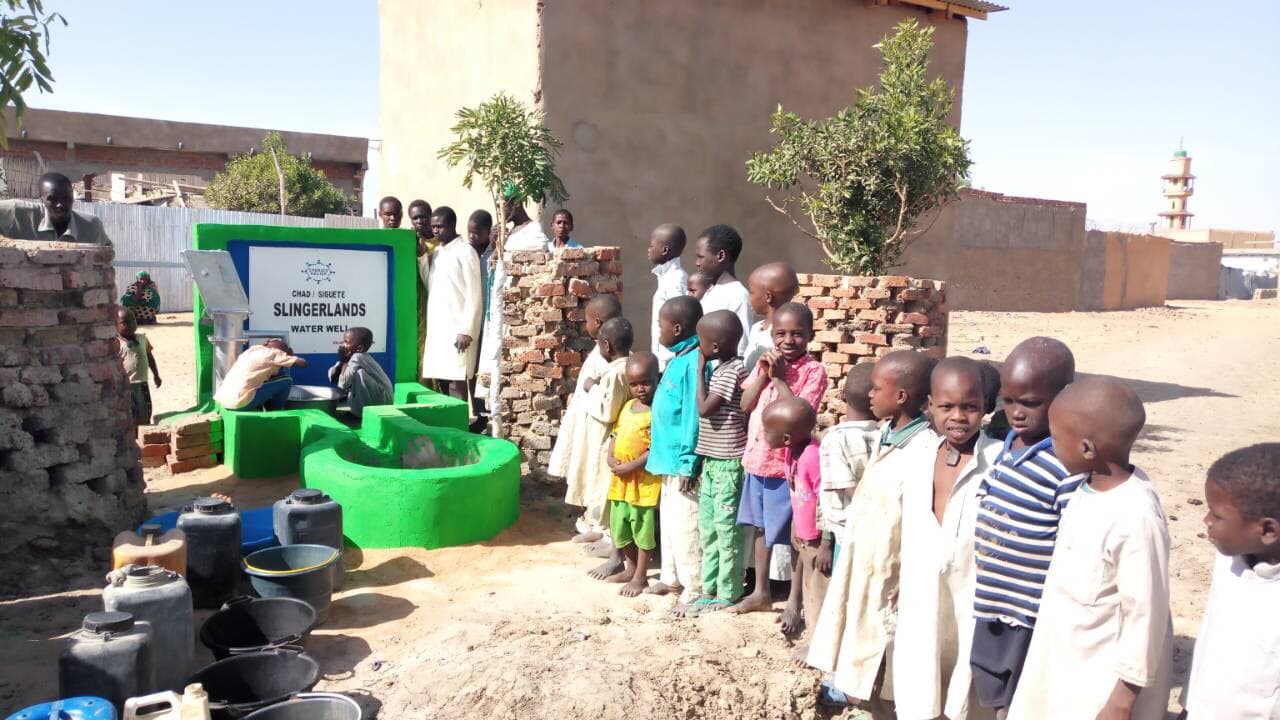
“Slingerlands Elementary School students have the opportunity to submit a proposal for a community outreach project. This year, the Build a Water Well project proposal, written by 2nd- and 4th-grade siblings, was chosen. Their proposal detailed the importance of ensuring kids just like them (and adults!) have access to clean water– something many of us take for granted each day. As a school, we have talked about the importance of clean water access, and students are eager to play a part in this mission. Thank you for your support! “”Our prime purpose in this life is to help others…”
We are an FLL team(Syntax Error #7300) at Fulton Science Academy Private School. We want to sponsor a water well to help people receive water easier. To make this more memorable, we named the water well after our coach’s brother who recently died. Our coach is always there when we need him, so we wanted to do something for him in return.
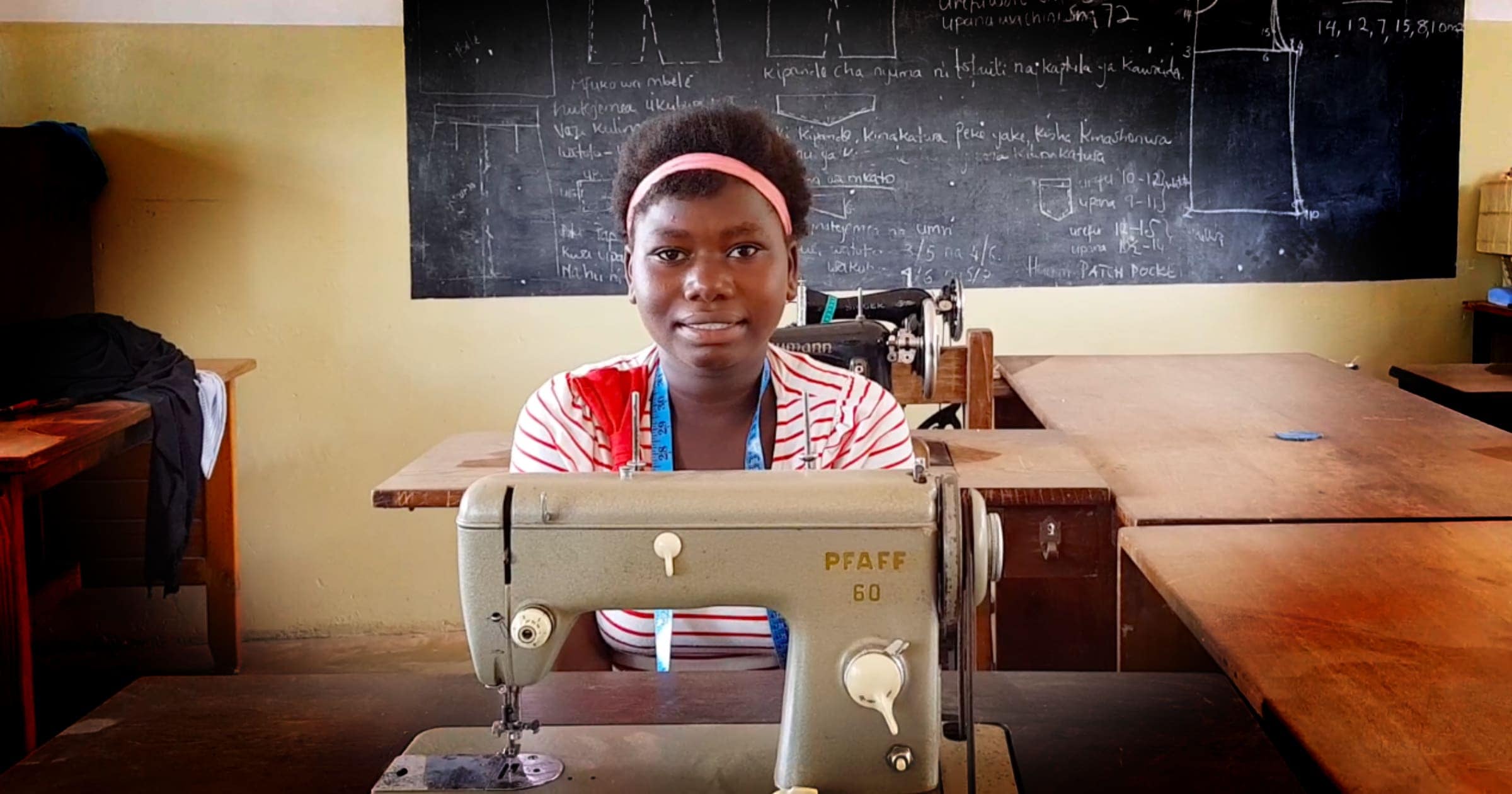
This is Beatrice Joseph. She comes from Musoma, Tanzania, where she’s the third of six children. After finishing primary school in 2014, she traveled to Dar es Salaam, the country’s largest city, where her father passed away two years later, making her an orphan. Beatrice isn’t the only orphan in Tanzania. In fact, the country’s home to 1.3 million orphans, primarily due to the AIDS crisis. Suddenly forced to grow up and assume adult responsibilities, many of these children don’t have time or money to further their education, limiting their potential.In July of 2016, Beatrice enrolled at the Dogodogo Training Centre, where she learned the elements of tailoring: Sewing trousers, skirts, shorts and gowns. In its 27 years of operation, the Centre has facilitated the empowerment of thousands of young women, providing quality educations and vocational training, as well as advocating on behalf of girls whose voices are too often stifled, in Dar es Salaam and in the country. Through education and legal representation, rural women have broader horizons and more options than being a traditional housewife.Now, Beatrice’s dream is to become a renowned designer, drawing clients from miles around. More than anything, she dreams of being self-sufficient. You can commemorate International Women’s Day 2019, by donating to our Women’s Empowerment Campaign and making Beatrice’s dream a reality. Your contribution will empower her – and young women like her – to design their own destinies.To learn more about our Women’s Empowerment Campaign, click here.
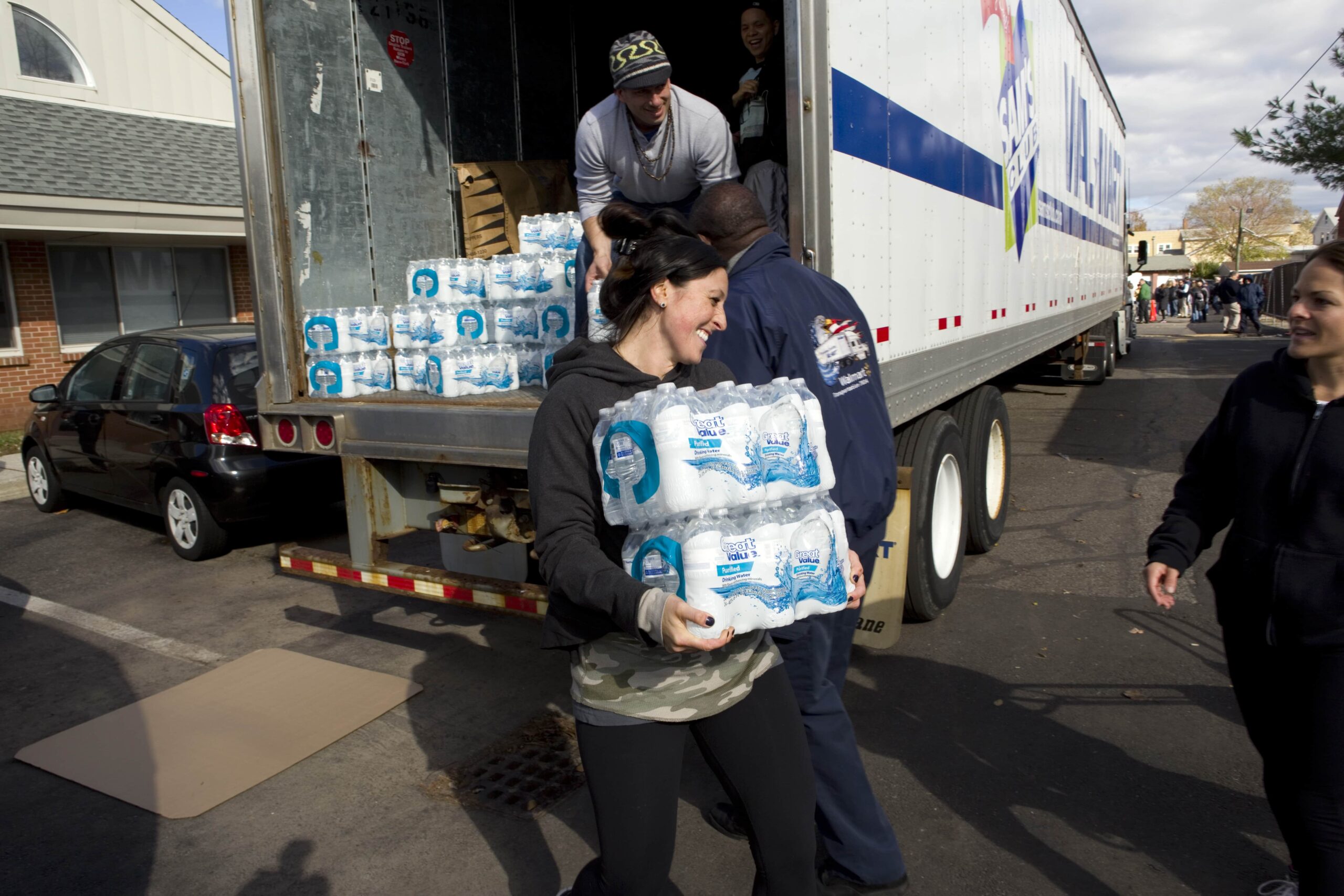
Established as a relief organization to provide timely aid to victims of natural disasters in the United States and abroad, Embrace Relief goes a step beyond traditional aid organizations. Our recovery efforts feature dynamic, multi-pronged strategies, involving the cooperation of other organizations. Acting in concert, we combat poverty, hunger, homelessness, unemployment, preventable diseases, poor sanitation and inadequate healthcare. Also encompassing financial and emotional support, our efforts strive to restore the whole person, preserving both their lives and their dignity.In 2012, following Hurricane Sandy, Embrace Relief joined forces with a number of organizations to provide much needed relief in the form of food, water and other resources, such as hygienic supplies. Over the course of four days, they served meals to roughly 2,740 people at three locations: Levittown Memorial High School, Nassau Community College and Lindenhurst. On Nov. 11, 2012, members of the organization joined New York City Assembly Member Eric Stevenson’s recovery efforts at the Salvation Army Franklyn Women’s Shelter in the Bronx. Overseen by Congressman Jose E. Serrano and Manhattan Borough President Scott Stringer, they fed 500 people.For the Broadway Presbyterian Church’s annual Thanksgiving dinner, held in the Lower East Side’s NY City Rescue Mission, Embrace Relief donated 15 turkeys, 240 cans of tuna, 108 cans of corned beef, 80 pounds of apples and three cases of pudding. Along with the Turkish Cultural Center, they gave 200 blankets and 4,000 bars of soap to residents of Brooklyn. In Rockaway, Queens, they delivered food and cleaning supplies to 500 people, and the Connecticut Food Bank received 13 boxes, containing 200 pounds of ground beef. Lastly, the organization gifted $40,000 for general storm recovery, as well as $50,000 specifically allocated to the Far Rockaway branch of the Queens library.Because of its demand for up-to-date intelligence, constant communication and thoughtful governance, Embrace Relief was able to not only stave off hunger, thirst and cold, but restore a measure of dignity to victims of Hurricane Sandy. Its response here is emblematic of its recovery efforts since the disaster, as well as the those it will conduct in the future. Due to its adaptability, Embrace Relief can be relied upon to see you through the storm.To learn more about Embrace Relief’s disaster relief efforts, click here.

Despite its status as the shortest month, February is arguably one of the densest. In Ancient Rome, farmers devoted the month to purging the fields in preparation of imminent spring sowing. In the modern era, it plays host to a number of regional and international observances, many related to the persistent themes of love and leadership in one form or another. Nowhere are these themes more prominent than in the United States, which celebrates both Valentine’s and President’s Day. More than mere coincidence, this suggests that by exercising love and leadership, we can all thrive come spring.
Like many NGO’s, Embrace Relief inspires its supporters to lead with love by engaging in its Chapter Projects. Though accomplished on the organization’s behalf, these projects hinge entirely on the initiative and compassion of independent groups. Largely composed of fundraising drives, projects include water well construction, orphanage or school renovations, collection of school supplies, healthcare services and more. For those who desire direct involvement, Embrace Relief can facilitate visiting volunteer activities to benefit orphans, such as organizing anything from a movie night to a party replete with face painting, balloon animals, puppet shows, clowns and games.
Much in the same way February encompassed clearing the fields of debris, these opportunities, which blend the month’s chief holidays, symbolize the metaphorical purging of obstacles toward the blooming of compassion for our fellow humans and confidence in our own abilities to help those in need. We hope you will join us in leading with love and making the most of this year.To learn more about Embrace Relief’s Chapter Projects, click here.
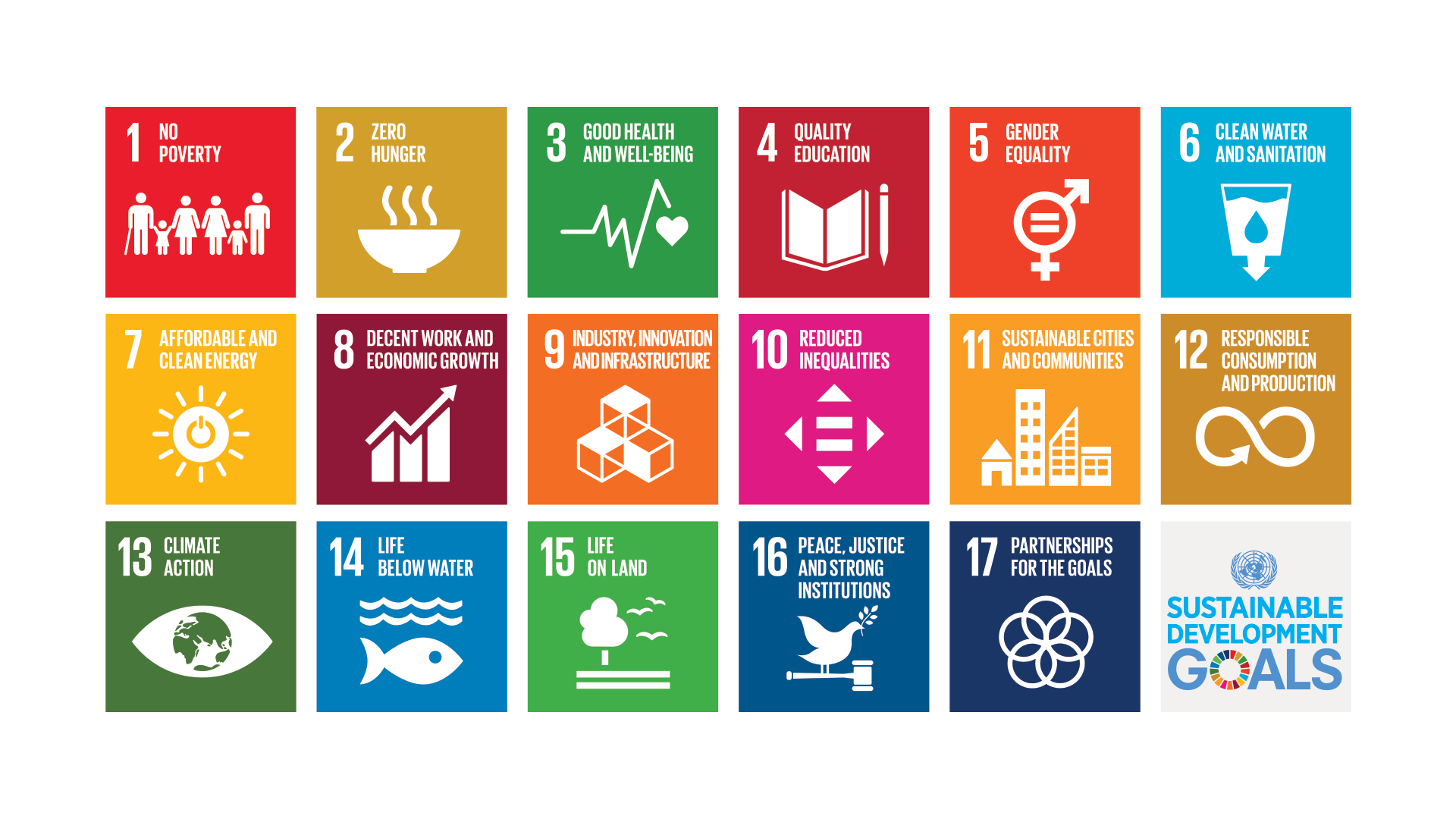
In 2015, the United Nations General Assembly adopted the 2030 Agenda for Sustainable Development. On behalf of each respective country and humanity at large, representatives and stakeholders from all member states established a cohesive framework for a prosperous world. At the core of this global, unified vision are the Sustainable Development Goals (SDGs). Also known as the “Global Goals,” the SDGs are to be achieved by 2030. With recognition of the importance of eradicating global poverty as fundamental to humanity’s flourishing, the SDGs encompass 17 objectives. The 17 SDGs are as follows:
End poverty in all its forms everywhere
End hunger, achieve food security and improved nutrition and promote sustainable agriculture
Ensure healthy lives and promote well-being for all at all ages
Ensure inclusive and equitable quality education and promote lifelong learning opportunities for all
Achieve gender equality and empower all women and girls
Ensure availability and sustainable management of water and sanitation for all
Ensure access to affordable, reliable, sustainable and modern energy for all
Promote sustained, inclusive and sustainable economic growth, full and productive employment and decent work for all
Build resilient infrastructure, promote inclusive and sustainable industrialization and foster innovation
Reduce inequality within and among countries
Make cities and human settlements inclusive, safe, resilient and sustainable
Ensure sustainable consumption and production patterns
Take urgent action to combat climate change and its impacts*
Conserve and sustainably use the oceans, seas and marine resources for sustainable development
Protect, restore and promote sustainable use of terrestrial ecosystems, sustainably manage forests, combat desertification, and halt and reverse land degradation and halt biodiversity loss
Promote peaceful and inclusive societies for sustainable development, provide access to justice for all and build effective, accountable and inclusive institutions at all levels
Strengthen the means of implementation and revitalize the global partnership for sustainable development
United Nations Sustainable Development Goals to Transform Our World
All Embrace Relief programs are in alignment with the UN’s Sustainable Development Goals. In pursuit of advancing the SDGs, we have implemented campaigns that support nearly every Global Goal.
For instance, as clearly articulated in the Preamble to the 2030 Agenda for Sustainable Development, “[we] seek to realize the human rights of all and to achieve gender equality and the empowerment of all women and girls” (“Preamble”). Accordingly, Embrace Relief’s women’s empowerment campaign seeks to increase women’s participation in the formal economy by providing the vocational training necessary for gainful employment. Therefore, we have implemented vocational training programs for women in Kenya, Haiti, and the US. These initiatives have provided women with the means to economically contribute to their families and communities, a foundational component of the 2030 Agenda for Sustainable Development.
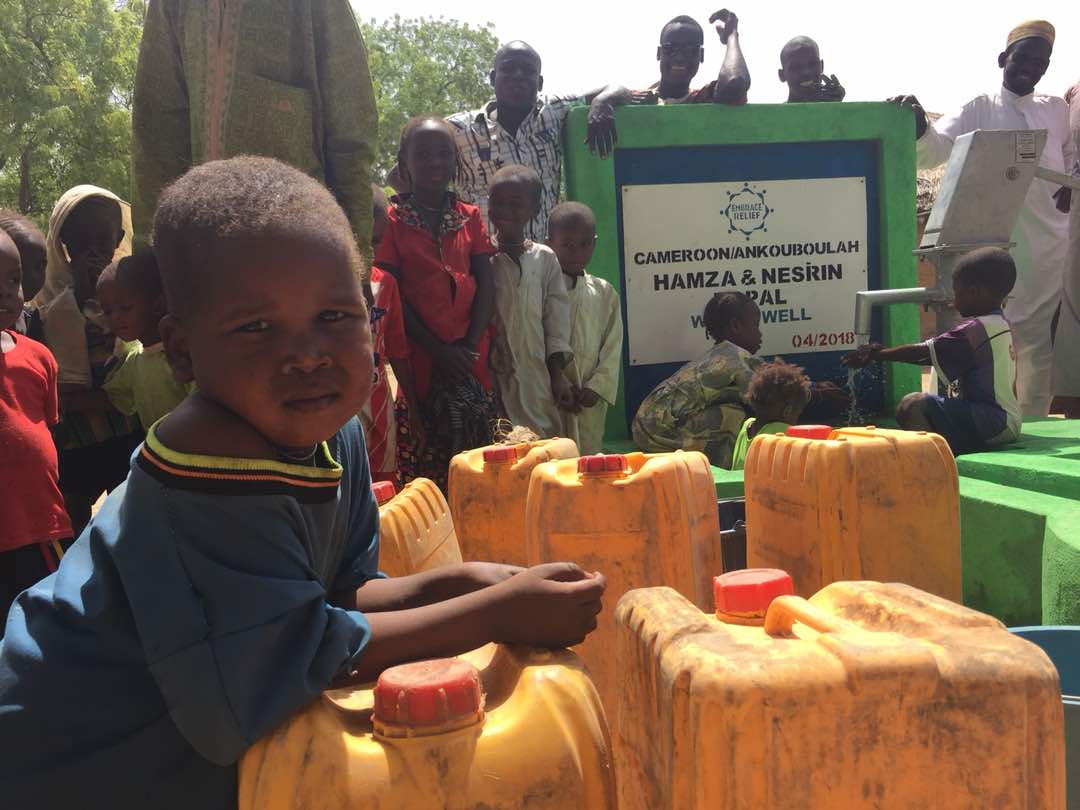
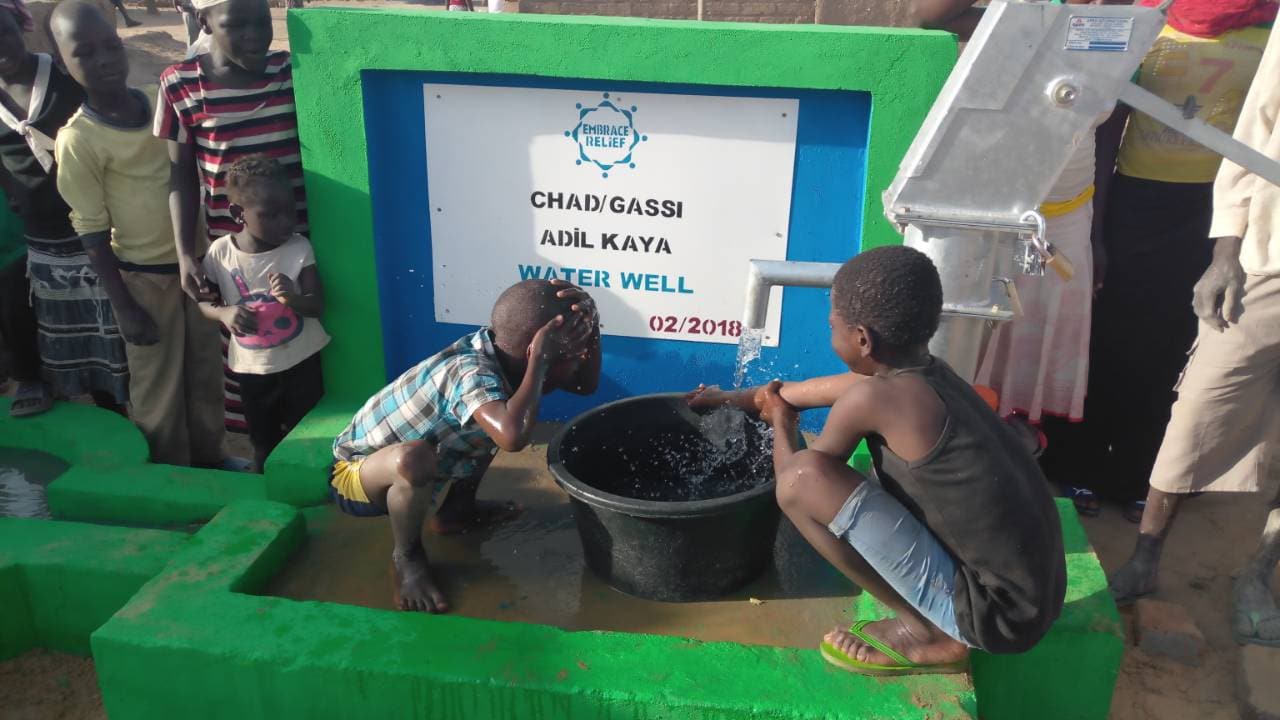
Similarly, SDG 6, “Clean Water and Sanitation” is reinforced in the over 270 water wells built in several countries that have provided clean drinking water to over 270,000 people in the developing world. Also, Embrace Relief has conducted 2,100 cataract surgeries and completed 15,350 health checkups globally, efforts that are essential for advancing SDG 3, “Good Health and Well Being”.
From education programs to hunger relief efforts, every initiative implemented by Embrace Relief is conducive to the foremost objectives of the Agenda for Sustainable Development, eradicating extreme poverty, decreasing human suffering, and ultimately, advancing humanity’s capacity to thrive in an increasingly interdependent world.
Like any of humanity’s inventions, social media is a tool, neither inherently good nor evil. It has the effect of intensifying our natural inclinations. At worst, it can distance users and promote antisocial behavior.[1] Counteracting the negative aspects of social media, NGOs tend to appeal to our better instincts by using various platforms to unite benefactors and facilitate positive change.[2]At its most basic level, NGOs create bonds between donors and recipients.
By nature, humans are social creatures. Our health – mental, emotional, physical – and survival are dependent on our affiliations and positions in our social spheres.[3] Social media naturally appeals to us, because it offers us connectedness and expands our public spheres, where people are more inclined to engage in behavior benefiting the common good. Since NGOs host positive online environments, they empower users and engender altruistic acts.[4]Furthermore, participants who use social media – merging their social sphere with others – are influenced by the “consensus” within that social environment.[5] For example, the Ice Bucket Challenge in 2014 was established in order to raise awareness for a debilitating neurodegenerative disease, commonly referred to as ALS or Lou Gehrig’s disease. Although it originated with the purpose of spreading awareness of the disease, it garnered widespread attention particularly because it became a popular social activity. Participants can nominate others to complete the same challenge and donate afterward. This example is a classic indication of social media’s expertise in diffusing across different social spheres whilst forming a nexus between disparate groups.
The result: The ALS Association raised $115 million[6] over the course of three months.
This is particularly noteworthy considering that the campaign cost little in terms of marketing expense. Interestingly, the credit for creating the Ice Bucket Challenge belongs to Charles Kennedy, a golfer in Florida, who had been nominated by a friend. Connecting the activity to curing ALS, he completed the challenge and nominated others. With the help of his friend, Pete Frates, they brought the challenge to a wider audience by posting a video nominating friends and celebrities such as Patriots quarterback, Tom Brady.[7]
The explanation of this particular campaign’s success can be explained by the results of a study by Gregory Saxton. This study, which examined the effect of social media[8] on small NGOs, has shown that the frequency and magnitude of online donations are affected by the “number of friends” supporting the cause. This prediction is significant because it demonstrates why people donate for reasons other than pure altruism. In fact, it distinctly implies a social pressure, dubbed the “social network effect,” placed on the groups that result in spontaneous altruism.[9]
In “Tweeting Social Change,” researchers Saxton and Guo found that the “highly interactive framework” of, as well as the autonomy afforded by social media, often strengthen constituency engagement, especially when employed across multiple platforms.[10] This structure has a number of benefits, the first being that it builds communities based on mutual interest, which is a prerequisite for generating social innovation.[11]Secondly, the fluidity with which “supporters” can join or exit from an organization demands that NGOs adapt, revise and evolve in order to continually meet the needs of constituents and recipients of their services.
Social media is only as moral as the people who use it. For instance, it can be utilized to cross boundaries – political, religious, national, etc. – and unite diverse peoples in a single cause for a period of time. On a more fundamental level, NGOs use social media to make the person on the other side of the world as real as your next-door neighbor. When that happens, it lays the cornerstone of all social innovation: Empathy.
The human capacity for empathy is ultimately what an NGO that utilizes social media strives to nurture. Connecting humanity in order to benefit people in need is the optimal outcome. However, such platforms are not just to alert donors of tragedies, but triumphs and victories achieved. Ultimately, an NGO uses social media as the groundwork to build bridges of love and kindness.[1] Ma, H. K. (2011). Internet Addiction and Antisocial Internet Behavior of Adolescents. The Scientific World JOURNAL, 11, 2187-2196. doi:10.1100/2011/308631
[2] Parkyn, R. (2017, May 1). The role of social media in development. Retrieved from https://blogs.worldbank.org/publicsphere/role-social-media-development
[3] Young, S. N. (2008, September). The neurobiology of human social behaviour: an important but neglected topic. Retrieved from https://www.ncbi.nlm.nih.gov/pmc/articles/PMC2527715/
[4] Guo, C., & Saxton, G. D. (2013). Tweeting Social Change. Nonprofit and Voluntary Sector Quarterly, 43(1), 57-79. doi:10.1177/0899764012471585
[5] “How Altruism Goes Viral on Social Media.” Cambridge Social Decision-Making Lab, 27 Apr. 2018, www.sdmlab.psychol.cam.ac.uk/news/viralaltruism.
[6] “ALS Ice Bucket Challenge Commitments.” ALSA.org, www.alsa.org/fight-als/ice-bucket-challenge-spending.html.
[7] The Telegraph. (2014, August 20). How the ALS Ice Bucket Challenge started. Retrieved from https://www.telegraph.co.uk/men/the-filter/virals/11046482/How-the-ALS-Ice-Bucket-Challenge-started.html
[8] Saxton, G. D., & Wang, L. (2013, April 23). The Social Media Effect: The Determinants of Giving Through Social Media. Retrieved from https://journals.sagepub.com/doi/abs/10.1177/0899764013485159
[9] Guo, C., & Saxton, G. D. (2013). Tweeting Social Change. Nonprofit and Voluntary Sector Quarterly, 43(1), 57-79. doi:10.1177/0899764012471585
[10] Ibid.
[11] APCO Worldwide Inc. (2014). Social Enterprise Messaging Guideline. Retrieved from https://redf.org/app/uploads/2014/10/REDF_SEMessagingGuidelines_Final.pdf
Sign up for Embrace Relief’s free email newsletter to receive updates on our programs, see our impact, and learn about upcoming events.
Like most websites Embrace Relief use cookies, and in order to continually improve our website, we collect non-personal data through cookies. By continuing to use the website you are accepting the use of these cookies. To find out more read our Cookie Policy.