


Recent

Embrace Relief Supports Victims of Earthquake in Turkey

In the wake of the devastating earthquakes that struck southern Turkey in the early morning hours of Feb. 6, 2023, the Embrace Relief Foundation is hard at work to deliver much-needed humanitarian aid to the people affected by this natural disaster.

Embrace Relief is proud to announce that its first shipment of food aid – consisting of 21 pallets of prepared, ready-to-eat meals – was on its way to the affected areas as of Tuesday evening in Turkey, less than 48 hours after the initial earthquake, said Embrace Relief CEO Osman Dulgeroglu. He added that Embrace Relief is committed to delivering food to those in need every day, for as long as it is needed.

“Since we began operating, disaster relief has been a core part of Embrace Relief’s mission,” Dulgeroglu said. “Any time there is a disaster anywhere in the world, we act right away. We are currently working in cooperation with international nonprofit organizations and local partners to deliver aid to the communities suffering. We greatly value our local partners, who have previously supported us for many projects in Turkey.”

After beginning its fundraising campaign Monday morning, Embrace Relief has raised more than $400,000 in less than 48 hours, Dulgeroglu said, which will provide food and other immediate necessities – including tents for shelter, blankets, and clothing items – to people in the earthquake zone. Multiple community groups are also currently working with Embrace Relief to set up Group Fundraisers, whose proceeds will also directly aid affected people.

The situation on the ground remains difficult in the aftermath of the 7.8-magnitude earthquake and powerful aftershocks that shook Turkey on Monday. Thousands of people are believed to have died with many more injured, and large cities including Hatay, Gaziantep, Adana and Kahramanmaraş have seen widespread destruction, including the collapse of many buildings.

Transportation and communication networks have also been severely disrupted, meaning that outside aid is crucial to the survival of many people in this region.

“The people are in shock,” Dulgeroglu said. “Many people right now cannot contact their families, cannot know if they are safe. Many roads are closed, and large parts of these big cities are not accessible. So many people have lost their homes, lost everything.”

To donate in support of Embrace Relief’s earthquake relief efforts in Turkey, visit https://www.embracerelief.org/donation/help-victims-of-earthquake-in-southern-turkey.

Embrace Relief Foundation is a 501 (c) (3) non-profit organization dedicated to delivering research-based, sustainable solutions to achieve immediate and lasting improvements in situations of humanitarian emergency and improving the quality of life of individuals and communities enduring chronic hardships. Learn more about Embrace Relief at our website, www.embracerelief.org.

Seven things to know about Ramadan

Seven things to know about Ramadan

March 16, 2023

Donate Now

Ramadan 2025 begins at sunset on Friday, February 28, and will end at sunset on Saturday, March 29. For Muslims around the world, it is one of the most important celebrations of each year.

Many non-Muslims may know that the observance of Ramadan involves a daily fast from sunrise to sunset, but may not understand the significance of Ramadan or other ways the holiday is observed.

If you’ve ever wondered about what Ramadan is, here are 7 basic facts that will give you a better understanding of this holy month celebrated by more than one billion people worldwide:

1.Ramadan is the holiest month in the Islamic calendar. The month of Ramadan is a commemoration of the revelation of Islam’s holy text, the Quran, to the prophet Muhammad. This occurred during the ninth month of the Islamic calendar, and the observance of Ramadan has become one of the most important pillars of belief for Muslims.

2. The start and end dates of Ramadan change each year. Similar to holidays in other religions like Easter or Rosh Hashanah, the start and end dates of Ramadan shift each year because its observance is based on a lunar calendar (the Islamic calendar is 354 days long). For example, Ramadan 2026 is expected to begin at sunset on February 17 and end at sunset on March 18.

3. Muslims are obliged to abstain from more than just food and drink. The month of Ramadan is a time for discipline, prayer, and thoughtfulness. Fasting is required, and intended to make people more aware of their relationship with God. Between the hours of sunrise and sunset, no food or drink is permitted. Additionally, Muslims are expected to abstain from sexual relations, smoking, and sinful behaviors like lying and gossiping.

4. Each day begins and ends with a meal. All Muslims are expected to continue on with their normal lives, whether working or going to school, while fasting during Ramadan. This means they must eat enough between sunset and sunrise to have enough energy for the day. An early wake-up call is followed by suhur, a small meal eaten before sunrise and before the first of the day’s daily prayers. Once the sun sets, it is time for iftar (“breaking the fast”), a larger feast traditionally eaten in a family or community setting.

5. Studying the Quran and praying are extra important. Throughout the year, Muslims pray five times every day. During the holiest month of the year, Muslims are expected to become even closer with God through extra prayers and the reading of the Quran. The tarawih are special prayers held each night during Ramadan in most mosques around the world, involving the reading of long portions of the Quran. Many Muslims seek to read the entire Quran, which comprises 30 sections, during the month of Ramadan.

6. The month of fasting ends with a big celebration. Eid al-Fitr (“Feast of breaking the fast”) is the celebration of the end of Ramadan, and occurs at sunset on the night when a crescent moon can first be seen. In America, Eid will begin on March 29, 2025, and conclude on March 30. This is one of the biggest annual celebrations of the Islamic world, typically involving prayers and sermons during the day, followed by large family and community gatherings after sunset. With the obligation to fast lifted, it is a time to eat, drink and be merry!

7. Charity is one of the most important aspects of Ramadan. In addition to fasting and prayer, donating to those in need is one of the core values of Ramadan. Zakat, the giving of a certain percentage of one’s income to the poor, is an obligation for all Muslims who have the ability to give. Many people choose to give during Ramadan, when generosity to the needy is thought to have an even more positive effect on one’s soul.

It can be very difficult to go through a full day without any food or drink, as any person observing the Ramadan fast can tell you. This is a time of year when many people can understand firsthand the struggle and pain of an empty stomach. And unfortunately, hunger can be found in every corner of our planet.

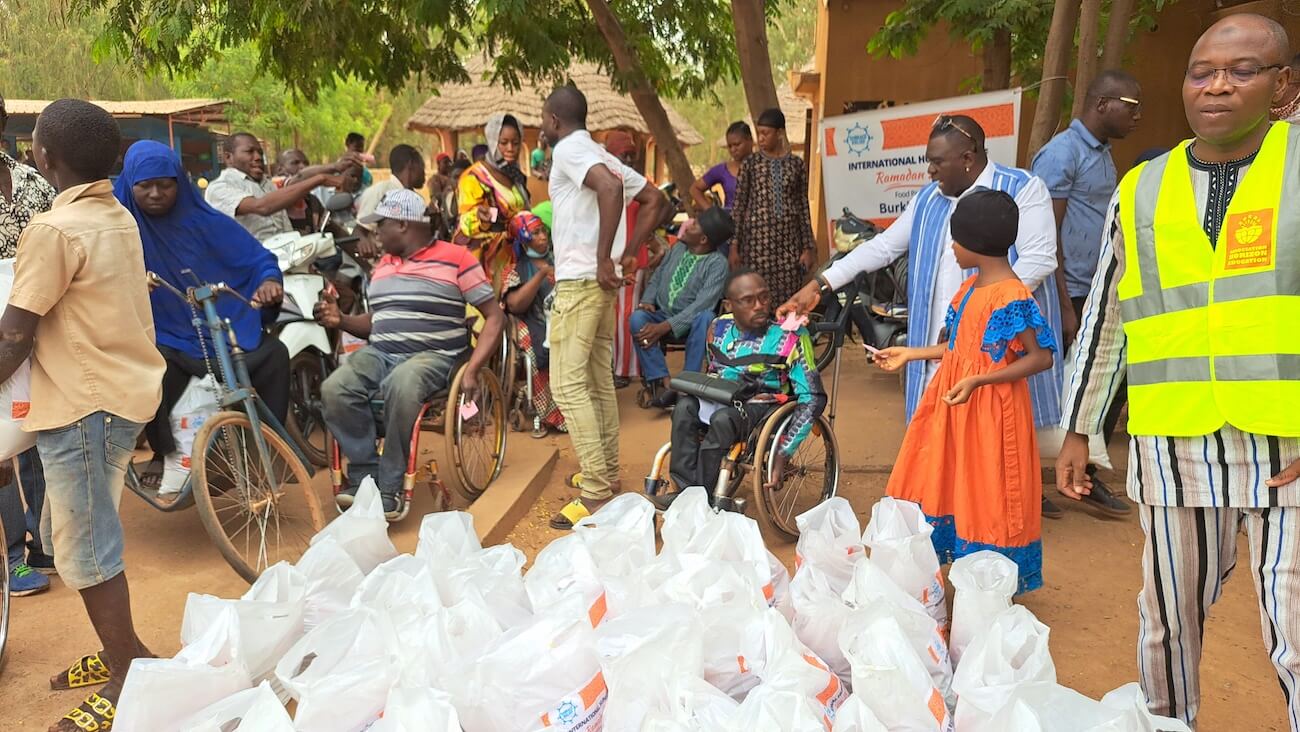
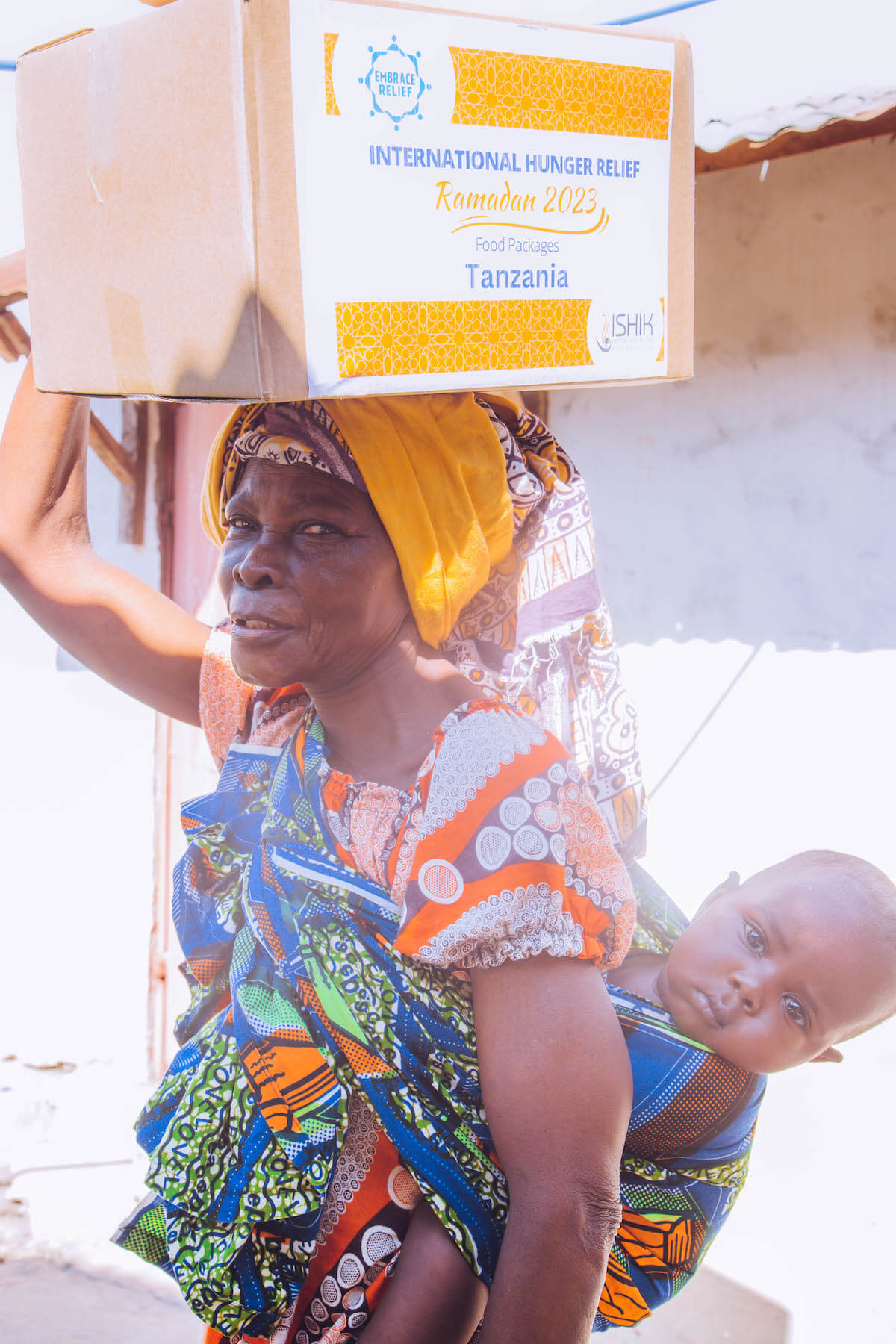
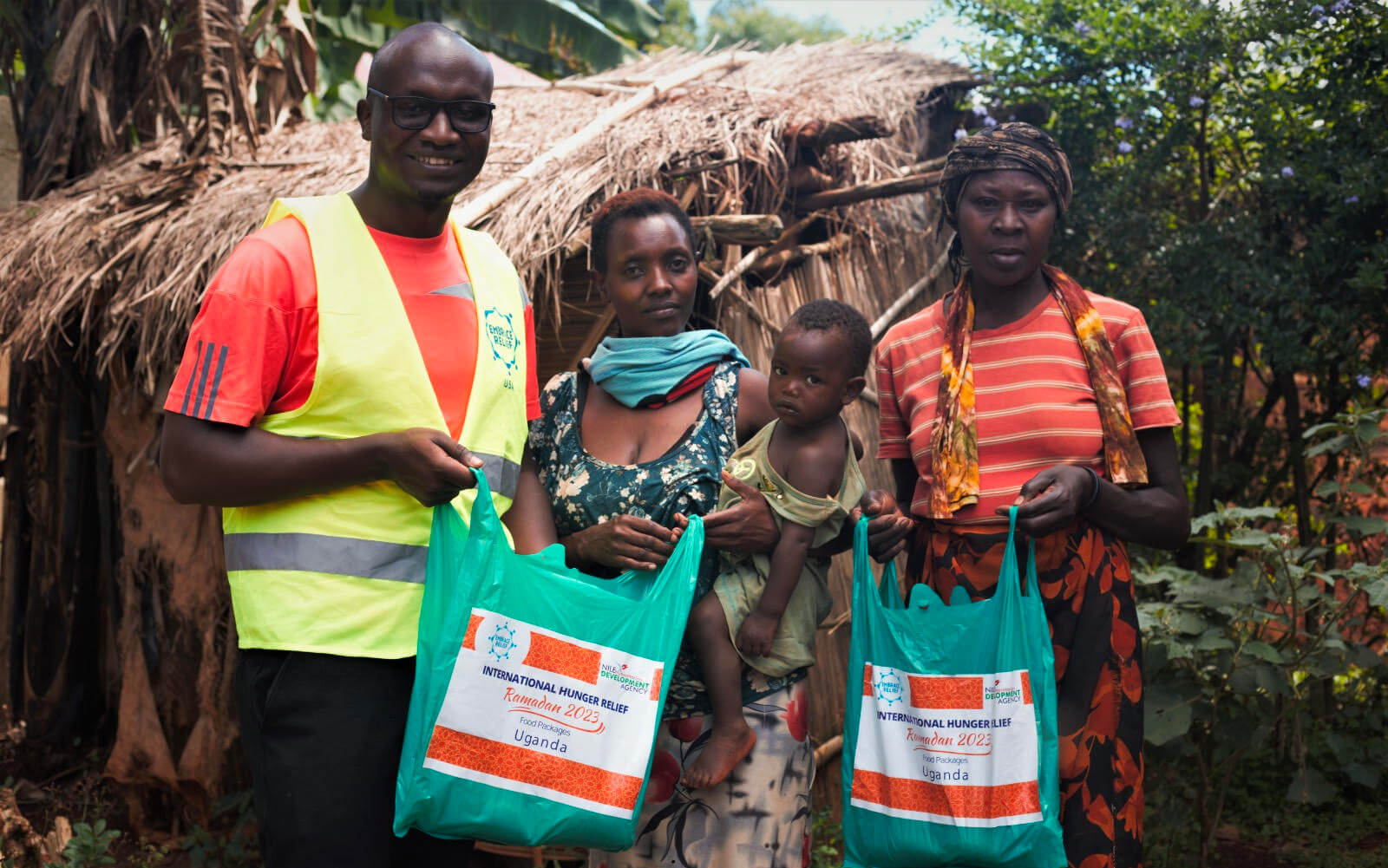
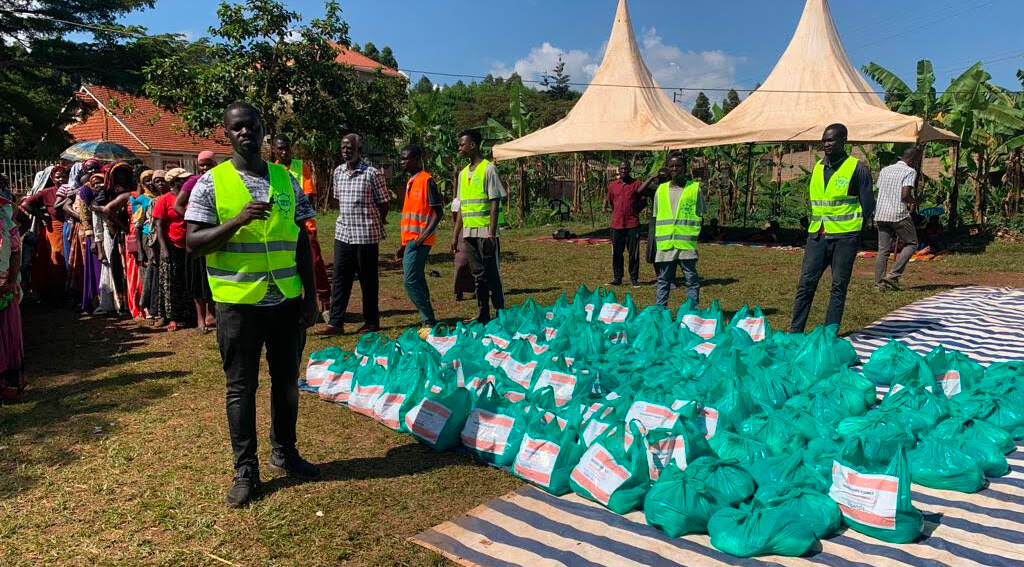
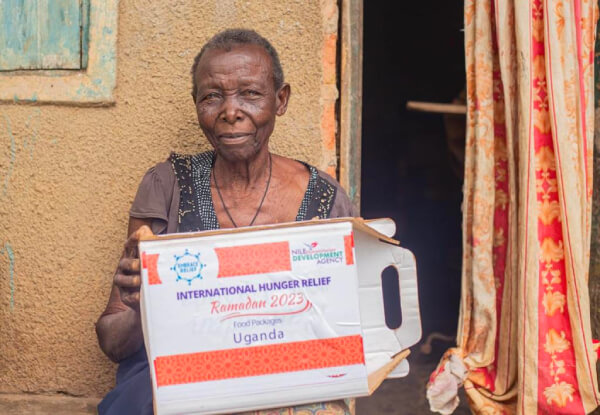
That’s why, each year during Ramadan, Embrace Relief is focused on providing food to those in need through our International Hunger Relief campaign. Through this campaign, we’ve reached hundreds of thousands of people in more than two dozen countries during just the last several Ramadans alone.

If you have the ability, there’s never a bad time to provide a charitable donation that will make a real impact in people’s lives. But this month of reflection, empathy and charity is an especially good time to do so!

Help feed people in need with Embrace Relief

During our 2024 International Hunger Relief: Ramadan campaign, thanks to the generosity of donors like you, Embrace Relief was able to distribute food to more than 68,000 people in 21 countries spanning 5 continents. In 2025, we want to make an even greater impact – but we need your help to do it!

When you give to Embrace Relief this Ramadan, every single dollar you donate will make a massive difference in the life of a vulnerable family. Just $35 can provide a family of five with enough food for a full week, so don’t delay! Donate today by clicking here or using the form below and help Embrace Relief share nutritious food with our friends around the globe.

68,000 People

Reached Worldwide

The Clean Water Crisis: Facts You Should Know

Access to clean water is a crucial issue for people all over the world. According to the United Nations (UN), over 2 billion people worldwide lack access to safe drinking water, leading to numerous health and socio-economic challenges. Here are some of the most important facts and statistics that highlight the extent of the access to clean water crisis:

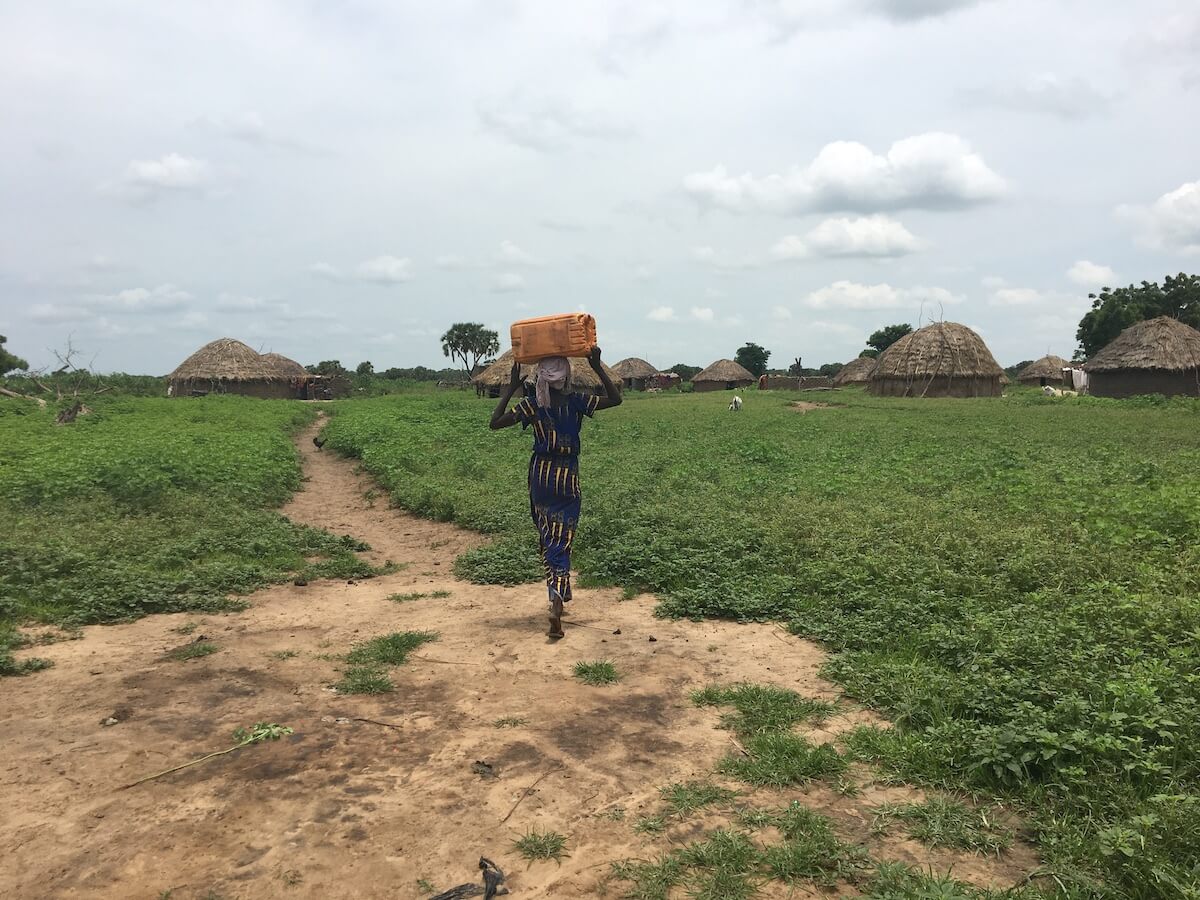
  • Impact on billions of people: A UN estimate shows that nearly 4 billion people, more than half of the world’s population, experiences extreme water scarcity for at least one month out of the year. Many millions live in parts of the world like sub-Saharan Africa, where fresh water is plentiful, but unable to be accessed, leading people to rely on unprotected rivers, lakes, and watering holes. These people face high risk of waterborne diseases, which can have serious health implications.
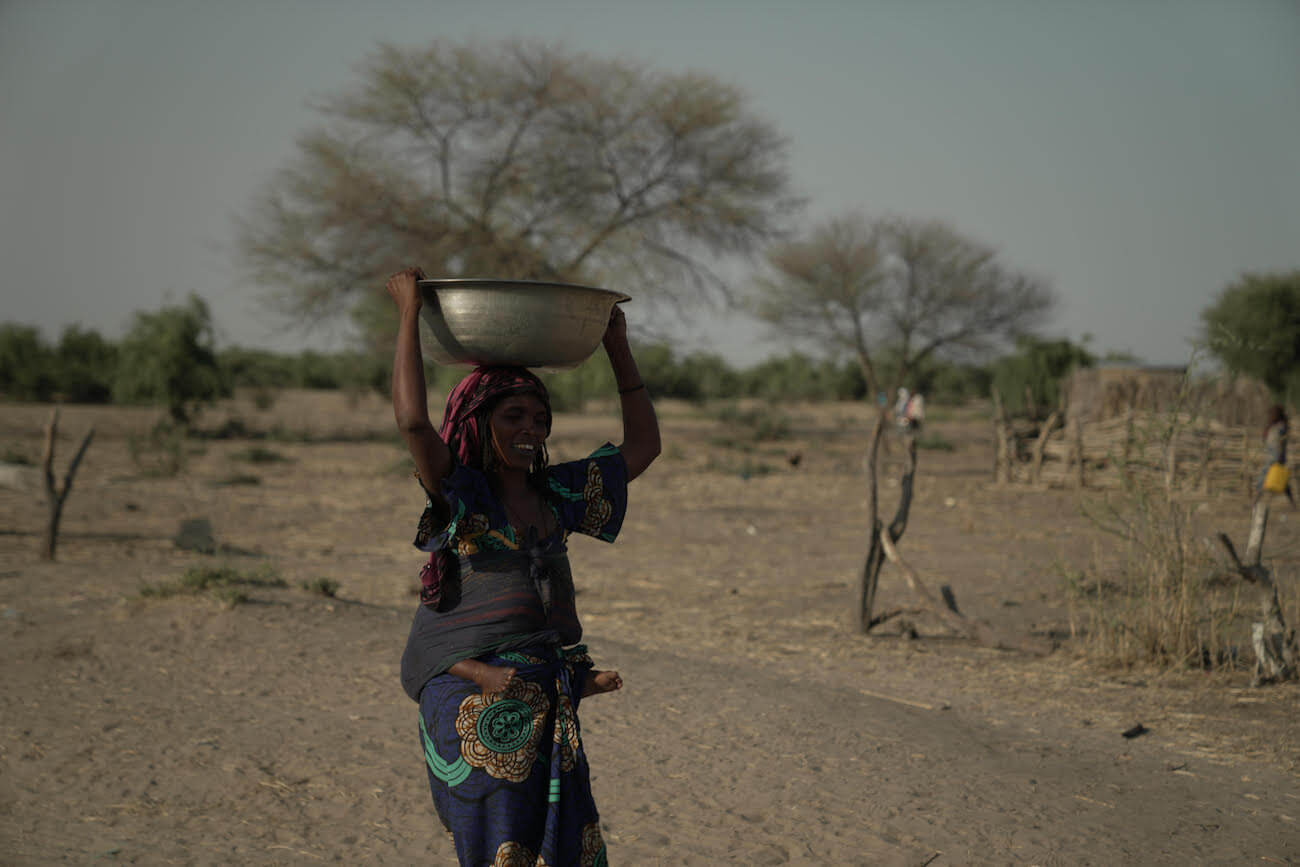
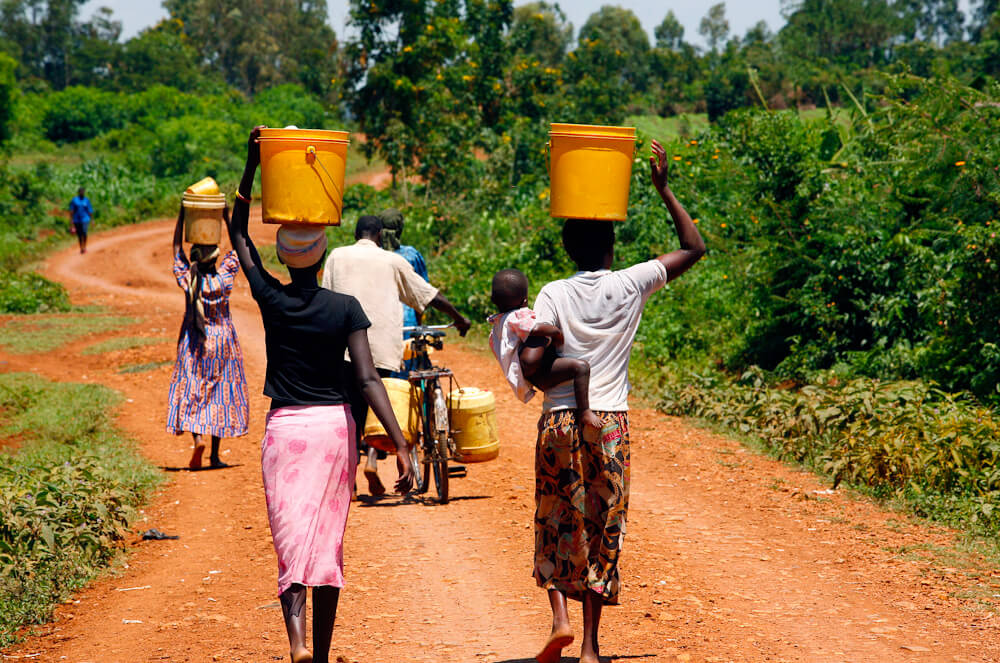
  • Women and children: Women and children are often responsible for collecting water, which can take hours out of their day and keep them from pursuing education or other activities. The UN estimates that 200 million hours per day are spent collecting water. In addition, children are particularly vulnerable to water-borne diseases and malnutrition, which can have long-term consequences for their health and development.
  • Economic development: It is estimated that the water crisis costs the global economy billions of dollars every year, due to the costs of illness, lost productivity, and decreased agricultural yields.
  • Health: Access to clean water is essential for good health, and poor water quality can lead to serious illnesses such as diarrhea, cholera, and other waterborne diseases. It is estimated that over 800,000 people die every year due to these preventable illnesses.
  • Rural communities: Rural communities often lack access to clean water and basic sanitation facilities. This means that people living in rural areas, especially in sub-Saharan Africa, are more likely to suffer from water-borne diseases, and their health and well-being is compromised.

In conclusion, access to clean water is a crucial issue for people all over the world, and these facts highlight the significant impact that the lack of access to safe drinking water can have on health, economic development, and overall well-being. Addressing the clean water crisis will require sustained investment in water and sanitation infrastructure, as well as efforts to improve water management and governance.

Help Embrace Relief end the Clean Water Crisis in Africa

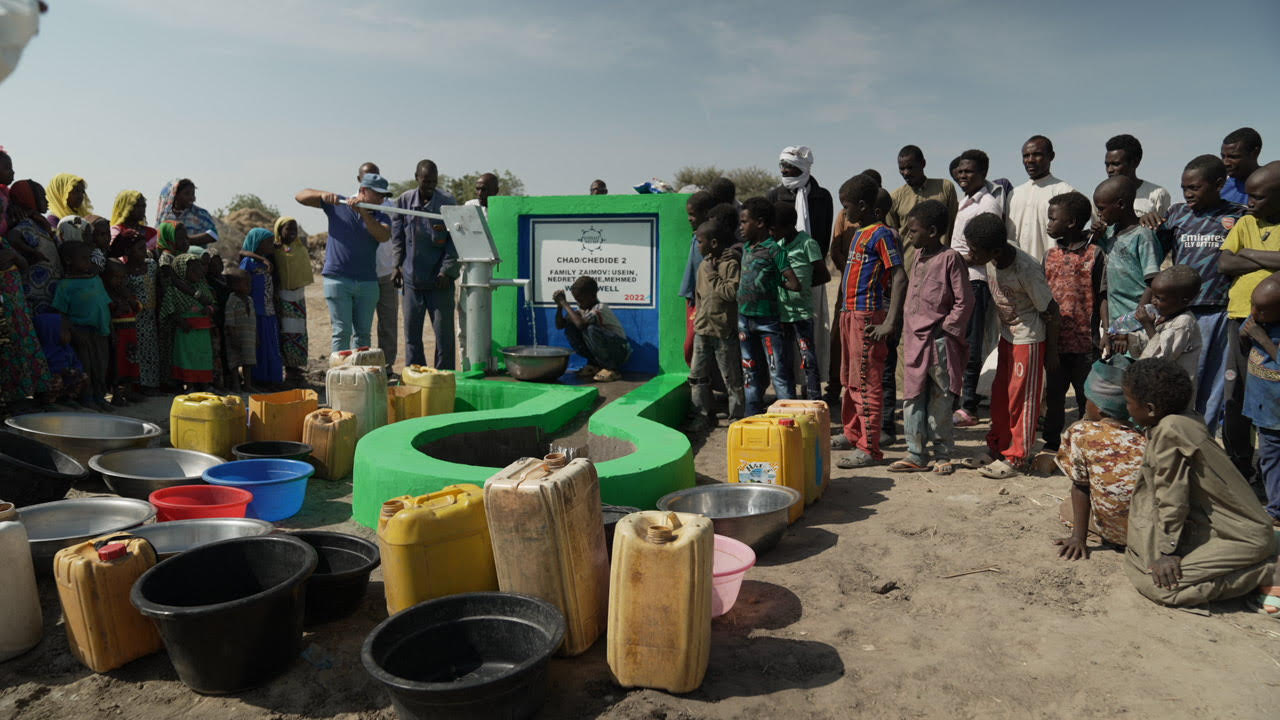
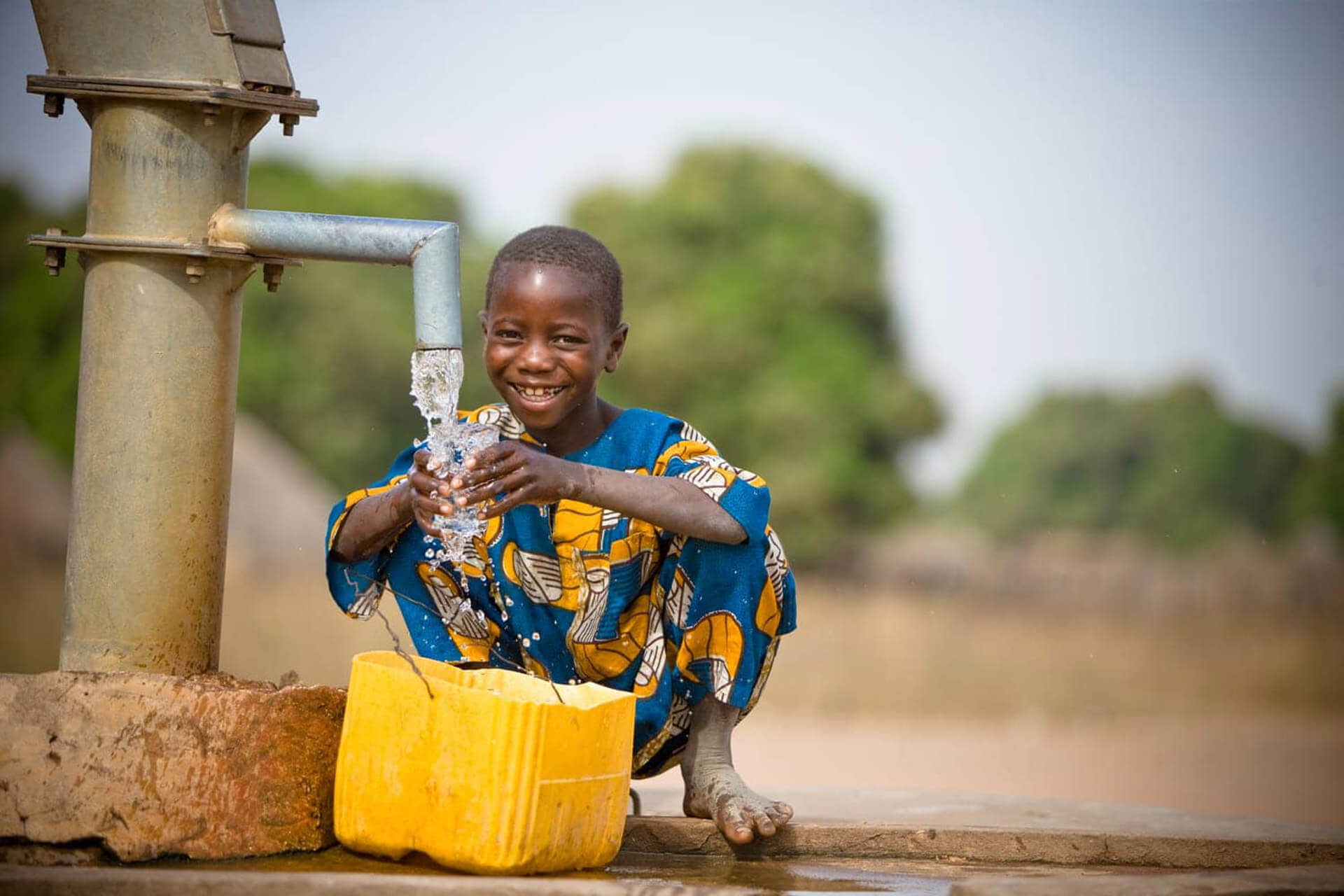
For the last decade, Embrace Relief has been working hard to build exactly this kind of infrastructure in Africa. Through our Clean Water Initiative and Fountains of Hope project, and thanks to the support of donors like you, we have been able to construct or rebuild more than 760 water wells across sub-Saharan Africa, including in Chad, Cameroon, Nigeria, Kenya, Tanzania and Uganda. These wells are currently providing life-giving clean drinking water to more than 760,000 people, and will continue to do so thanks to Embrace Relief’s guarantee to never abandon our wells. Read all about Embrace Relief’s water wells by clicking here.

Donate today to Embrace Relief’s Clean Water Initiative or Fountains of Hope project and you can help us move one step closer to solving the clean water crisis in Africa. Your donation would be one small gift that will impact thousands of people for years to come.

World Hunger Statistics 2022

The world hunger crisis is a pressing global issue that affects millions of people worldwide.

According to the United Nations (UN), the number of undernourished people in the world increased to 828 million in 2022, including a record-high 349 million people facing acute food insecurity, with the majority living in developing countries. This is a significant problem that requires urgent action to address. In order to understand the scale of the world hunger crisis, it is essential to look at key statistics that help identify the problem.

Take, for example, that UN estimate of 828 million people who do not have enough to eat. This numbers represents one out of every nine people on Earth. Meanwhile, more than 900,000 people worldwide are living in famine-like conditions right now, 10 times more than did in 2017. The UN also estimates that more than 30 million children under the age of 5 in the 15 worst-affected countries are acutely malnourished. Malnutrition can have long-term negative effects on the physical and cognitive development of children.

Why is the hunger crisis worsening as the calendar turns into 2023? There are several key reasons:

  • Poverty: The UN estimates that around 98% of the people living with hunger live in developing countries, where poverty is most prevalent. This highlights the strong link between poverty and hunger, as people who live in extreme poverty often lack the means to provide for themselves and their families. And as inflation drove up the prices of food around the globe in 2022, it became harder for less-developed countries to afford enough to feed themselves.
  • Climate change: The UN estimates that climate change could push an additional 83 million people into hunger by 2030. This is due to the impact of extreme weather events such as droughts, floods, and storms, which can lead to crop failures and food shortages.
  • Conflict: The UN reports that nearly 80% of the world’s hungry people live in countries affected by conflict. Food insecurity is often a direct consequence of war and violence, and this exacerbates the problem of hunger in conflict-affected areas.


In conclusion, the world hunger crisis is a significant global issue that affects millions of people worldwide. Key statistics such as the number of people who suffer from hunger, the number of people living in extreme poverty, the impact of climate change, the number of people affected by conflict, and the number of children suffering from malnutrition, all help to identify the problem and understand its scale.

Donate to Embrace Relief and Help Us Fight World Hunger!

Embrace Relief is doing its part to ease the world hunger crisis. In 2022, our International Hunger Relief campaigns provided life-saving food aid to more than 130,000 people in over a dozen countries, including several countries across Africa, Greece, Yemen, and here in the United States.

In 2023, we’re eager to make an even greater impact. But we need your help. Donate today to Embrace Relief’s International Hunger Relief: Ramadan 2023 campaign, and help us ensure that thousands of people around the world will not have to worry about where their next meal will come from. Together, we can share our food with those in need, and make the world a less-hungry place.

Embrace Relief aid efforts continue in Turkey, Syria

February 13, 2023

As the recovery and rebuilding efforts in Turkey and Syria enter their second week following the devastating earthquakes of Feb. 6, the Embrace Relief Foundation can provide several updates on our campaign to aid people affected by this disaster.

As of the evening of Monday, Feb. 13, Embrace Relief can confirm that it has successfully delivered four shipments of food to the earthquake zone, providing ready-to-eat meals to the people of several cities, including Hatay and Malatya, Gaziantep, Adiyaman. A fifth truck, carrying basic essentials like toiletries, paper towels, and diapers, has also arrived in the area, and its contents have also been distributed to people in need. Embrace Relief is committed to continuing this immediate assistance for as long as necessary, and will soon extend these efforts to Syria..

Embrace Relief is also committed to a longer-term aid effort that will allow the people of Turkey and Syria to rebuild their lives and thrive once more. Beginning this week, Embrace Relief will offer crucial housing assistance – including covering rent and purchasing furniture – to those who have been displaced from their homes by the earthquake. This support will be an invaluable gift to the many thousands of people who have lost family members, their homes, their livelihoods, or all of the above. It will allow them to have a stable living situation as they begin to move forward into the next stage of their lives. 

All of this support is possible because of the unbelievable generosity of individuals and communities around the globe, who have committed $900,000 to Embrace Relief’s earthquake relief fund as of 4 p.m. on Feb. 13. Because of the incredible response from our donors, and because the scale of the disaster continues to be much greater than expected, Embrace Relief is extending its campaign fundraising goal to $1.5 million.

“I would like to say thank you to our donors for your generation donations,” said Embrace Relief CEO Osman Dulgeroglu. “You have responded quickly and in a very strong way. They are helping the people greatly. The need is so great right now, but we will do all that we can to meet this need.”

We ask that you please keep the people of Turkey and Syria in your thoughts, and we ask for your continued assistance for our short- and long-term aid in the region. It is only because of donors like you that Embrace Relief can support the people affected by these earthquakes. Together, we will help people recover and rebuild after this tragedy.

To donate in support of Embrace Relief’s earthquake relief efforts in Turkey, visit https://www.embracerelief.org/donation/help-victims-of-earthquake-in-southern-turkey.
Embrace Relief Foundation is a 501 (c) (3) non-profit organization dedicated to delivering research-based, sustainable solutions to achieve immediate and lasting improvements in situations of humanitarian emergency and improving the quality of life of individuals and communities enduring chronic hardships. Learn more about Embrace Relief at our website, www.embracerelief.org.

Disaster relief: Powerful earthquake strikes southern Turkey

A powerful earthquake struck southern Turkey early in the morning of Monday, Feb. 6, 2023, killing thousands of people, injuring many more, and causing widespread damage and destruction to buildings, roads, and other infrastructure.

The 7.8-magnitude earthquake, which began at 4:17 a.m. local time Monday, is being described as one of the most powerful to hit Turkey in nearly 75 years. Aftershocks following the initial quake on Monday registered as high as 7.5 on the Richter scale according to the U.S. Geological Survey, causing further damage.

The epicenter of the original earthquake was located in Gaziantep Province near Turkey’s border with Syria, about 60 miles northwest of the city of Gaziantep. Tremors and aftershocks affected large cities including Kahramanmaras, Hatay, Osmaniye, Adıyaman, Gaziantep, Şanlıurfa, Diyarbakır, Malatya, Kilis and Adana.

Within hours of the disaster, Embrace Relief began collecting donations to provide for the basic needs of the victims of the earthquake. To donate and help us provide food, shelter, clothing, and other essentials to the people of Turkey, click here.

The powerful earthquake could be felt as far away as Jordan, Israel and Egypt, while seismographs in Greenland – 3,600 miles away from the epicenter – also recorded the quake and its aftershocks.

News reports from Turkey have described scenes of chaos and panic in areas affected by the quake. At least hundreds of people are believed to be trapped underneath the rubble of collapsed buildings. Many more have had to flee their homes and seek shelter in mosques and other community centers. Cold January temperatures and wet weather are adding to the misery of those forced from their homes, and hampering rescue efforts, according to CNN.

The southern part of Turkey near the Syrian border is located near the junction of three tectonic plates, whose movement results in earthquakes at a fairly regular interval in this part of the world. Monday’s quake, however, was an exceptionally powerful one, believed to be the most powerful ever recorded in this region, according to the Washington Post.

The death toll is expected to climb, having been reported at more than 1,600 in Turkey as of midnight local time Tuesday. Rescue efforts are ongoing, and international aid organizations are calling for outside aid for the people of Turkey, especially food and medicine.

Every dollar donated to Embrace Relief will go directly to providing this aid to the victims of the earthquake, thanks to our partnership with international aid organizations on the ground in Turkey. Your donation will help people rebuild their lives and navigate through this tragic time.

The location of the initial earthquake in Turkey (blue dot), along with other aftershocks recorded as of 11:50 p.m. local time Monday (orange dots). Images courtesy U.S. Geological Survey.

Life as a refugee: Finding hope and community in Greece

Ayse had built a comfortable life with her husband and children in her native Turkey. A college-educated woman who worked as a teacher while taking care of her family, she has always been a source of strength and support for her family and friends, just as they likewise have been for her. Thanks to the hard work of Ayse and her husband, their family had a home, a car, and all of their basic needs taken care of.

Perhaps you can see yourself in Ayse’s story. Imagine, then, what it would be like to lose it all – overnight. To become isolated, fearful, to lose your support system. To lose hope.

“Everything changed,” she says. “I was in hiding for 5 years. I couldn’t see my family.”

Because of her political and moral beliefs and associations, Ayse was caught up in a wave of persecution by the government. Neither she nor her husband could go out in public without risking harassment or arrest. She had to ask her neighbor to pick up and drop off her son from school each day. When her daughter underwent a medical procedure, Ayse couldn’t sit next to her in the hospital.

After five years of life in the shadows, Ayse and her husband decided that their only remaining option was to leave behind all they had built. They would flee Turkey in the hopes of rebuilding their life elsewhere. He would go to the United Kingdom. She, along with their children, would go to Greece.

From the moment the government began to arrest people like her, Ayse could only trust her closest family members for support. Now, as she crossed the border from Turkey to Greece, an unfamiliar country where she knew no one and could not speak the language, this was even more true. For refugees escaping desperate circumstances, the health and safety of oneself and one’s children come first; everything else, including forming community bonds, is secondary. It can be a lonely existence.

When I came here, I had nothing except for me and my children,” she says. “We lost everything.” 

But after arriving, Ayse soon discovered that there are people and organizations whose mission is to help people like her. And she discovered the community and support network that had been absent in her life for more than five years.

Ayse and her children are some of the thousands of people who have been helped by Embrace Relief’s Refugee Relief program in Greece over the past several years. Thanks to the generous support of our donors, refugees in our program have been provided with emergency housing and rent assistance, food, clothing, education, and other necessities. Taken together, Embrace Relief’s greatest gift has been the gift of hope, as our program has lifted thousands of people out of dire circumstances and given them the time, safety, and stability they need to restart their lives.

“Living in Greece is hard, you need money to do everything – to pay rent, pay bills, buy clothes for your children,” Ayse says. “And these organizations [like Embrace Relief] are helping us in every way. Thanks to them, we can pay our rent and bills, and they also send food packages which are really important for us. Even small chocolates are not hard to buy, but it means so much to us and gives us so much happiness, especially our children. I would like to thank all of the people who support [us].”

Ayse was one of the nearly two dozen refugees we met during Embrace Relief’s most recent journey to Greece. Speaking with us, they described the hardships they endured in their old lives, the risks they took in escaping those hardships, and the love, hope and faith that guided them through their journeys. Their powerful, emotional stories are reminders that we are all human. And their stories deserve to be told.

Support from ‘a global village’

The refugees who benefit from Embrace Relief’s program come from different walks of life, different geographical areas, different socioeconomic backgrounds. Some are children, some are older; some are men, others women. But they share some key values and experiences: they are all well-meaning, hard-working people who had known success in their lives. And they all decided independently to seek their freedom elsewhere. Even though most refugees in our program are only in Greece temporarily on their way to a permanent home, these shared experiences foster a strong sense of community – and hope.

“Being with my friends [that I’ve met in Greece] gives me hope,” Ayse says. “It is like when a freshman goes to university, sophomores support them because they already know how to handle things. Like this, we have friends who have gone before us, and they help and support us. Their support, it makes things easier.

Ayse is very candid about the struggles of everyday life as a refugee in Greece. Her children ask her when they can go back home to visit their grandparents, and they miss their classmates back in Turkey. She struggles with being separated from her husband, who remains in the UK awaiting the completion of paperwork that will allow the family to be together again. Her unfamiliarity with Greek, her need as a single mother to take care of her children, and high unemployment rates in the country have made it difficult to find work and generate income.

But she and her children are safer in Greece than they were before. And Ayse is coming to appreciate the new community she finds herself in – one that, thanks to organizations like Embrace Relief, transcends national boundaries.

“I am from a city that borders Greece, but I never had the opportunity to come and see Greece,” Ayse says. “Now, the world is like a global village. I have friends in countries all around the world, friends in Germany, the UK, the Netherlands, and even you!”

“I wish for a new world like this, a peaceful and kind one where everyone has a good life in a good world.”

‘Leave this all behind me’: A refugee’s journey from prison to freedom

Rukiye was eight months pregnant when she fled her home. A few months earlier, her husband had been arrested by the government for his political beliefs and associations. So Rukiye knew the police would soon be coming for her, too.

What should have been a joyous occasion, the birth of Rukiye’s second child, was instead a time of stress, fear, and anxiety. During her daughter’s first months, Rukiye could not risk leaving her hiding place. To avoid detection, she had to rely on trusted friends to bring her baby to the doctor for checkups and vaccinations. Sometimes, there was simply no avoiding the wider world – Rukiye suffered from chronic health issues including cancer, and she needed to seek medical treatment frequently. 

The release of Rukiye’s husband from jail a few months later made life a little bit easier. But they remained constantly at risk of harassment and arrest, and two years after her daughter’s birth, the police finally detained Rukiye and arrested her. It was the beginning of a terrifying ordeal for this mother of two. Despite committing no crime, she would face inhumane imprisonment and treatment, and witness worse among her fellow political prisoners. Eventually, Rukiye and her husband understood that their family had no real future or security as long as they remained in their native country of Turkey. So they risked their lives to escape their hardships and seek a better life.

“No one wants to leave our country or family or neighbors – no one wants this,” she says from her current home in Greece. “I am at point zero. I have to learn a new language, learn a new way of life in a new country. I feel like a newborn child.” 

Rukiye and her family are two of the thousands of people who have benefitted in recent years from Embrace Relief’s Refugee Relief program in Greece. Through the generous support of our donors, refugees in our program have been provided with housing, food, clothing, education and other necessities, providing these determined people the time, safety and stability they need to rebuild their lives.

Embrace Relief recently journeyed to Greece to meet with some of the refugees who are currently supported by our program. Speaking with us, they described the hardships they endured in their old lives, the risks they took in escaping those hardships, and the love, hope and faith that guided them through their journeys. Their powerful, emotional stories are reminders that we are all human. And their stories deserve to be told.

Mistreatment and abuse in prison

Rukiye’s story is sadly not a unique one. Many of the refugees who spoke with Embrace Relief have spent time in jail because of who they are and what they believe, enduring treatment that ranged from indifference to cruelty, and living in often-squalid conditions. Others described the sense of helplessness they felt as they heard the stories told by their imprisoned spouses.

The fellow political prisoners Rukiye met came from a variety of backgrounds. They were teachers, doctors, students; they are mothers, sisters, daughters. They included many children of the imprisoned, too – like Rukiye’s two-year-old daughter, who lived with her in jail for four months, because there was no one else to take care of her. She said guards would not even permit her daughter to have a toy to help pass the time.

“Before I went to jail, I was constantly thinking about how the teenagers, young women, older women, were in jail and how they were surviving,” Rukiye says. “The first couple of days in jail, I lived this myself and I met these women. Being in jail and meeting these women was like the river meeting with the sea.”

Rukiye told Embrace Relief of one woman she knew in jail who suffered severe burns and was not permitted to seek medical treatment. In order to stay warm overnight in her freezing cell during the winter, the woman had boiled water and put it in a plastic bottle, which exploded. Rukiye also experienced mistreatment firsthand while seeking medical care.

“It was very difficult to convince the guards in jail that I had cancer,” she says. “[Once I convinced them,] the doctor identified the area which had the cancer and told me he would have to cut off my whole leg. I could not accept the treatment plan the doctor gave to me. I refused to lose my leg.”

After eight months in prison, Rukiye was released while awaiting her sentencing by a judge. She was forced to wear an electronic monitoring device, which could only be removed – by a police officer – during the regular treatments of chemotherapy she received. Reunited with her husband, who had also been released ahead of his sentencing, the couple planned to leave the country as soon as they could. 

They were sworn to secrecy, not even telling their children in advance. And they had to move quickly, because police would be coming for them as soon as their sentences were handed down. Rukiye’s husband left first, fleeing towards the Meric River and Turkey’s border with Greece. When officers began searching for her husband, Rukiye felt an increased urgency. Finally, she could no longer wait. Rukiye gathered her children and fled, never looking back.

“Behind us were those who were persecuting us, but the Meric River is giving us a new way forward,” she says. “I will pass the river and leave this all behind me.”

 Starting over

The hardships Rukiye faced didn’t end on the day she reached Greek soil. True, she and her children could rest easy in the knowledge that they would not be persecuted. But with her husband having continued on to the United Kingdom, Rukiye would now have to provide the basics of life for herself and her children in an unfamiliar country with an unfamiliar language.

But though she was now by herself, she was far from alone. The refugee community in Greece, including organizations like Embrace Relief, have given thousands of people like Rukiye the support she needs to afford housing, food, clothing, education, and so much more. Because of this generosity, Rukiye and her children have been able to live safe, dignified, and free lives as they await the completion of the paperwork that will reunite their family.

“We are starting over,” Rukiye says. “I know it will take time. But when we meet, we will start a new life. My first life took 30 years from me. I educated myself. I made my life. Step by step, we will start a new life.”