


Recent

Embrace Relief, Youth Island team up for weekly food drive in Manhattan

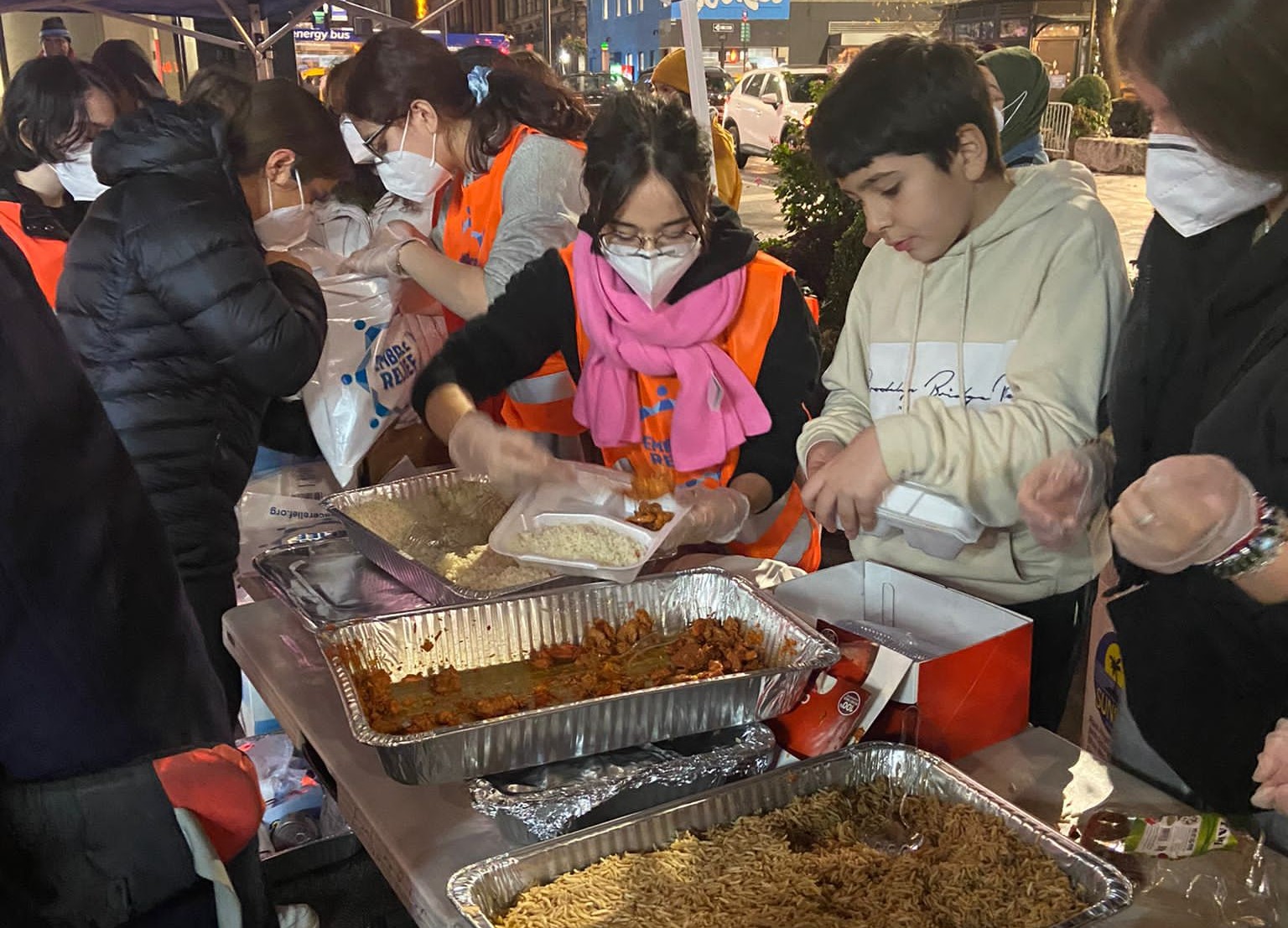
During the weekend of Oct. 22-23, the Embrace Relief Foundation and Youth Island NY teamed up to distribute food, clothing and toiletries to more than 200 people near Herald Square in Midtown Manhattan.

This event is the first of a planned series of regular distribution events that will be held by the two organizations Sunday nights at 7 p.m. near the intersection of West 35th Street and Broadway in New York, which will serve all kinds of people in need, including unhoused people.

“We’ve found, through our work, that there are many organizations distributing food during weekdays in the area, but none on Sundays. And of course people who can’t afford food still need food on Sunday,” said Osman Dulgeroglu, Embrace Relief’s CEO. “This is why it’s very important for Embrace Relief to partner with Youth Island to distribute hot meals. We are planning to be able to do this every Sunday in the near future. Together, we will be able to fill an important role.”

And last weekend’s event, like all future distributions will be, was truly a team effort. Embrace Relief collected many boxes’ worth of donations of clothes and toiletries, and also provided its mobile market food distribution truck. Around 20 Youth Island volunteers gathered together on each of the two nights in the heart of bustling New York City to distribute the items and keep the event running smoothly and ensure that the 200-plus attendees received their items and food in an organized fashion.

Founded in 2017, Youth Island NY is a nonprofit organization aiming to provide spiritual, social and academic support and mentorship for middle- and high-school students. Last weekend’s event allowed its group of student volunteers to make an impact in other people’s lives and reflect on their own, says Sevket Arar, Youth Island’s Director of Education.

“It’s important to organize events like this,” he said. “Not only can we help others in need, but our volunteers become more empathetic and understand how blessed they are.”

“Life can be very difficult for people who are homeless,” Dulgeroglu says. “Some are unable to break the cycle of poverty, others have been unfortunate in different ways. We must all work to ensure that everyone has their basic needs met, no matter their situation.”

The planned weekly Sunday night distribution in Manhattan will mark the continuation of a successful partnership between Embrace Relief and Youth Island, which now dates back more than five years. In past years, with Embrace Relief’s support, Youth Island students have been able to travel to Uganda and Haiti to distribute food, conduct health screenings, and teach local students.

The best way for you to support future food distribution events is by donating either money or clothing. Donating to Embrace Relief’s Hunger Relief program will keep our mobile market food truck running, while Youth Island requests that interested donors contact them via their website, www.youthisland.org.

Embrace Relief is a registered 501(c)(3) humanitarian nonprofit organization based in Fairfield, NJ, and dedicated to providing aid to people and communities in need in the United States and around the world. The Foundation operates programs in eight different humanitarian areas: disaster relief, hunger relief, clean water, health, education, children, refugee relief, and women’s empowerment. For more information on Embrace Relief’s programs, visit www.embracerelief.org.
Water wells in Chad: ‘With this, our life will be easier’

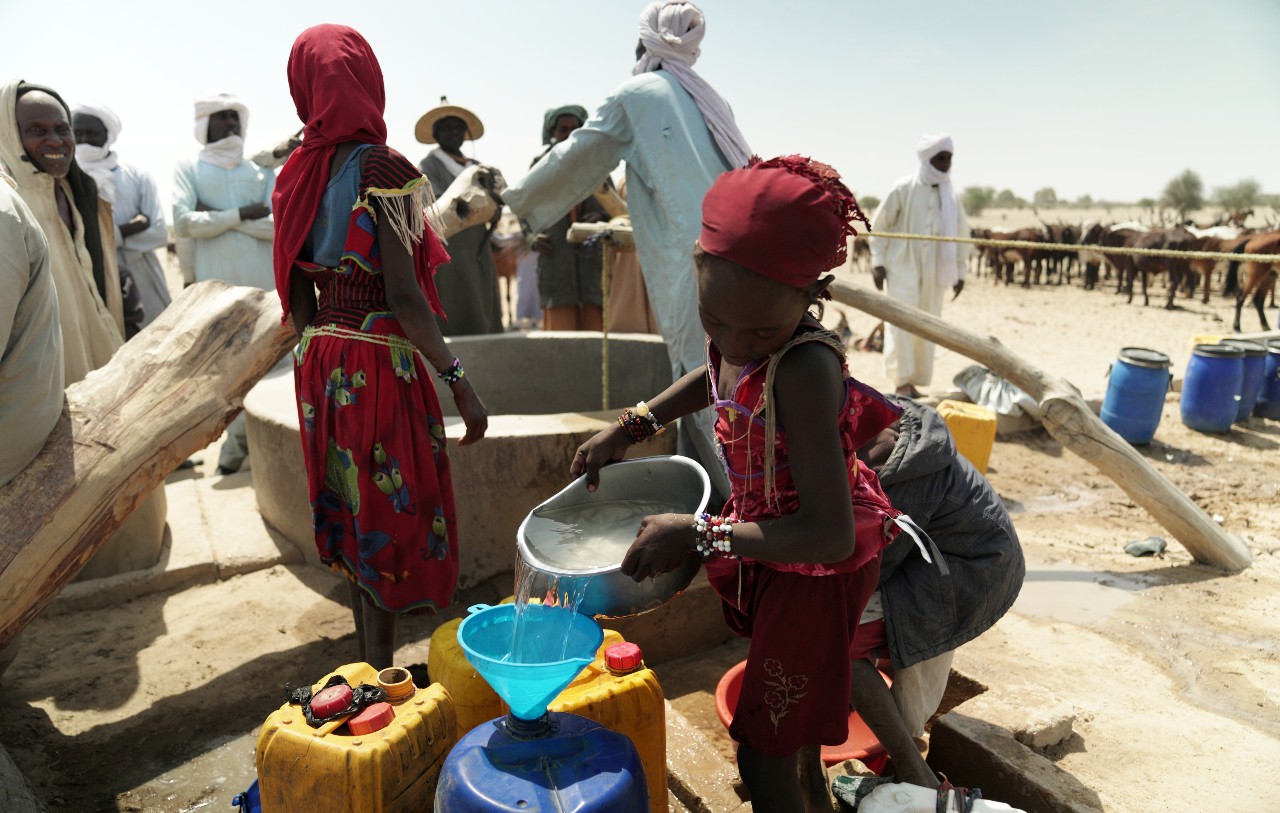
For many years, the people of Chedide 2 village, located in the central African nation of Chad, have spent up to eight hours each day fetching water. The small rural village of approximately 80 families simply has no other option. Safe, clean water is one of life’s most basic necessities – without it, humans can’t grow their own food, can’t live in a hygienic environment, and can’t survive.

“Water is life,” says Gambo Idriss, the village chief in Chedide 2. “It is our breath.”

But life in this part of the world is very different from America, where clean water is continuously piped into every home. In Chad, every day is organized around basic questions that we may never need to consider: Where can we find water? And how much of my day will it take to bring home?

If water is life, then the scarcity that requires a daily, hours-long walk to the nearest water source is a threat to the survival of the people of Chedide 2, as well as those in the many thousands of villages in sub-Saharan Africa who live in similar conditions. There is plenty of clean water in this part of the world. But most of it is located underground – and without the money and machinery to build a well, the villagers can’t access it. So they have to make do with water wherever they can find it, however long it takes.

“We are walking every day for four hours [one way] next to Lake Chad for agriculture,” Gambo Idriss says. “But the lake is getting smaller, and we need to travel a longer distance every year to reach water for planting.”

This process, repeated daily in thousands of villages across sub-Saharan Africa, is often undertaken by young girls and women, and altogether wastes millions of hours each year that could be instead spent taking care of families, receiving an education, or starting a business.

For their drinking water, the villagers of Chedide 2 fetch water from an open well during Chad’s dry season, about nine months in a year. During the rainy season, they collect rainwater directly from the puddles that fill holes in the ground. In both cases, the unprotected water they drink is susceptible to contamination by bacteria and parasites, which cause the waterborne diseases – like cholera or typhoid – that kill millions of people each year.

It’s an untenable situation for the villagers’ long-term health, happiness, and productivity. It’s also the exact problem that Embrace Relief’s Fountains of Hope project aims to solve.

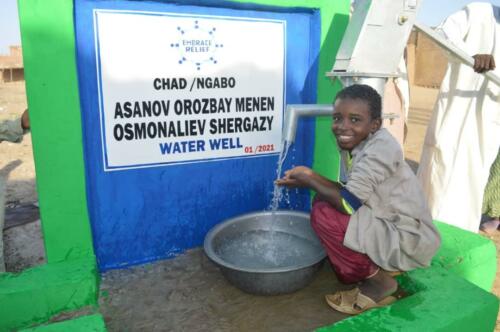
Through coordination with our partners, Embrace Relief identified an abandoned water well located much closer to Chedide 2. If it could be reconstructed to meet our strict design standards, this well would dramatically reduce the amount of time villagers needed to fetch water, while also ensuring that it would be free from contamination. And so, with the help of our donors, Embrace Relief did just that.

“The broken well you just reconstructed has been there for eight years,” Gambo Idriss said. “With this well our life will be easier, Our children have time for education, even cooking becomes easy.”Embrace Relief has built more than 500 new wells in sub-Saharan Africa, and the well near Chedide 2 is one of more than 100 existing wells that we’ve rebuilt under the Fountains of Hope initiative. Reconstructing a well saves precious time, money and resources, and can be done for a third of the cost and time needed to build a new one.

But more importantly, the construction of a new well, or the reconstruction of an abandoned well, will give the villagers hope for a better future. Because of donors like you, they’ll be healthier, more educated, more agriculturally productive, wealthier. We can unlock a sustainable and successful future for the people of Chedide 2, and for the many millions of people in villages like it. And by doing so, we can make the world a healthier, happier place.

Mali Medical Clinic: Doctors dedicated to others

Read on to hear from Dr. Adama Fomba, a pediatrician working at the Humanitarian Medical Clinic in Bamako, Mali, who has dedicated his life to providing medical care to children who can’t afford it. Dr. Fomba and his colleagues rely on Embrace Relief and our donors to continue providing this life-saving service for thousands of people each year. You can support them by donating to Embrace Relief’s Mali Medical Center today!

What inspires people to spend their lives in service of others? For Dr. Adama Fomba, a pediatrician working in the West African country of Mali, it’s the memory of where he came from.

“There are so many things that motivated me to study in the health sector,” Dr. Fomba says. “I am from a village where children suffer a lot, and they don’t have access to health treatment. I saw this firsthand, and it really impacted me. I wanted to help them.”

After earning his medical degree, Dr. Fomba searched for a place to work as a pediatrician, helping children in the greatest need of medicine and care. When he heard about the Clinic Gaoussou Fofana in Mali’s capital city, Bamako – one of three clinics supported by Embrace Relief – it was his clear choice.

“I was informed that Clinic Gaoussou Fofana is working as a humanitarian clinic which motivated me to come here,” Dr. Fomba says. “In many areas around Bamako, people do not have access to [healthcare]. This can be due to financial and distance problems. But I want to work as a humanitarian.”

More than 40 percent of Mali’s population lives below the poverty line, and the country faces a critical shortage of hospitals, doctors, and other medical personnel, with just 1 doctor for every 10,000 people. (The global average is 18 per 10,000; in the United States, there are 26 doctors per 10,000). As a result, less than 10 percent of Mali’s 21 million people are able to access basic healthcare services. The country thus faces severe challenges to the wellbeing and happiness of its people: Mali ranks 186th out of 191 countries in the UN Human Development Index, and its average life expectancy is just 60 years, the 11th-lowest of any country on the planet.

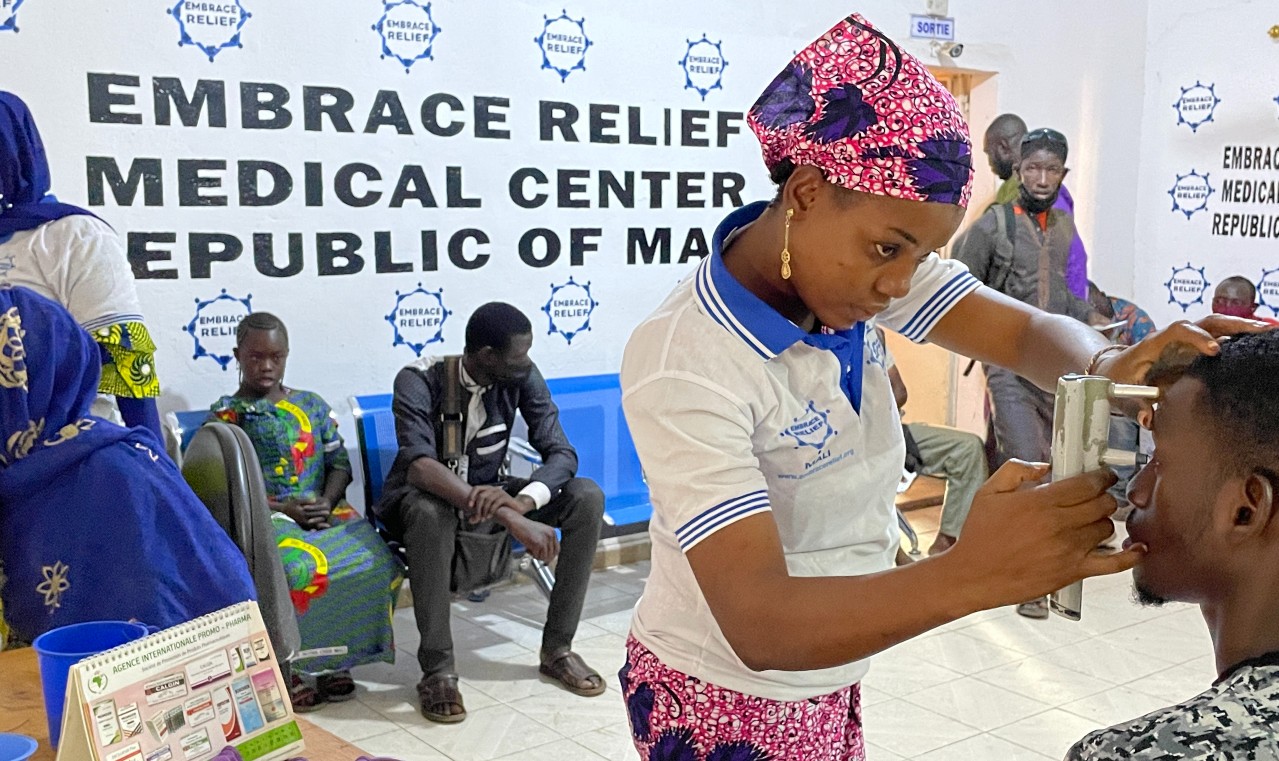
Embrace Relief has identified Mali as a place where investment in healthcare can make a real difference. That’s why we support three clinics in Bamako, staffed by a rotating group of volunteer doctors from around the world. The clinics are equipped to provide a full suite of care, including ophthalmology, dentistry, gynecology, ear/nose/throat services, pediatrics, urology and general internal medicine.

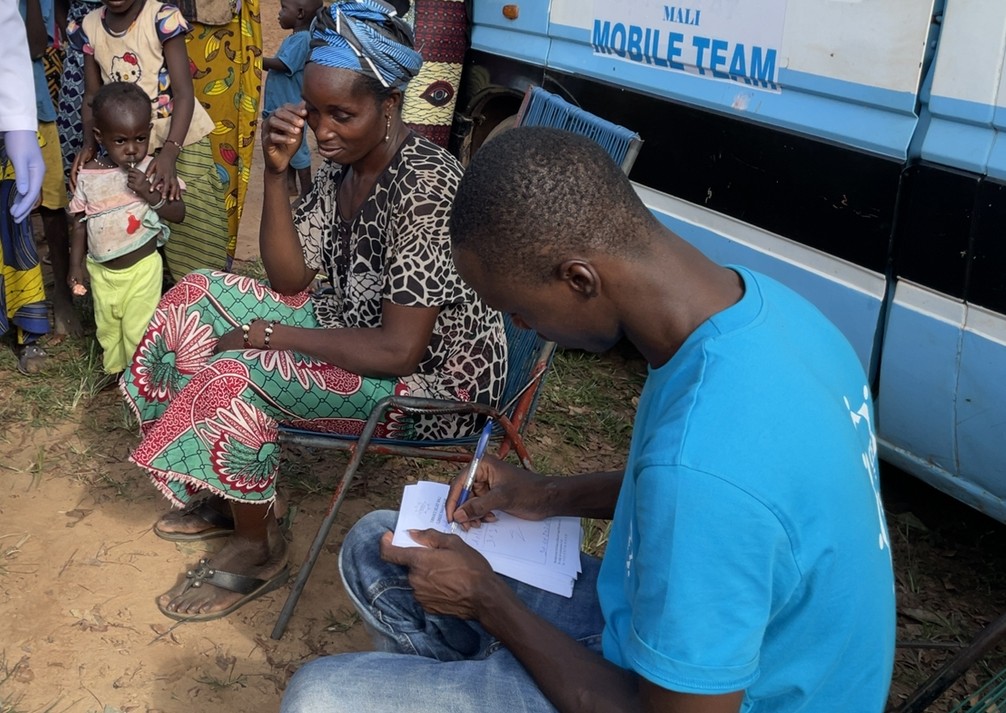
These clinics – as well as a mobile health unit van and a mobile clinic truck funded by Embrace Relief, which bring care directly to people outside the capital city – have provided more than 500,000 preventative health screenings since 2013, and have conducted more than 36,000 cataract surgeries, addressing the country’s high rate of people living with vision loss.

Cataracts, a clouding of the eye lens, are the world’s leading cause of blindness, typically developing in older people. But cataracts, like many other health conditions, can also occur in the eyes of younger people and children because of malnutrition. Mali’s population is at particular risk to health conditions exacerbated by a lack of food: two-thirds of the population is food insecure and one in four children under the age of 5 are chronically undernourished.

“Nutritional problems are the base of child sickness,” Dr. Fomba says. “We should put pressure on this problem. If they have healthy food, they will be safe. The other sicknesses can develop if there continue to be nutrition problems. Kids are very vulnerable so you have to take care of them because their parents’ bodies can defend themselves from sickness, but children cannot.”

And so while the world focuses on the long-term structural issues facing Mali, the doctors at the Humanitarian Medical Clinic (formerly known as Gaoussou Fofana) continue their work, easing the suffering of thousands of individuals each year, enabling people of all ages, who otherwise might not be able to afford healthcare, to live a longer and more dignified life free of chronic ailments.

Donating to Embrace Relief’s Mali Medical Center will give Dr. Fomba and his colleagues the support they need to continue saving lives and improving quality of life for the people of Mali. Every dollar you donate goes directly towards keeping these clinics functioning and providing the high quality of care that all people deserve.

“I thank and congratulate our partners and invite them to do more health projects to help the people in developing countries,” Dr. Fomba says. “Because we are in need. Thank you, all of you.”

Changing lives for years to come: Embrace Relief’s water wells in Chad

The water beneath the ground in the African country of Chad is like buried treasure. If you know where to look and how deep to dig, you can find something immeasurably valuable.

But for civil engineer Omer Karaca, drilling into the ground and digging a well that will allow entire villages in this developing country to access water – for sanitation, agriculture, cooking, cleaning and more – is just part of the task. He and his fellow engineers also have to ensure that their wells are built to last.

“If you follow all processes of constructing correctly, [a well] will provide clean water for at least 30 years minimum,” Karaca says. “Because Chad has one of the largest underground water reservoirs in the world. It is an infinite water source.” 

Earlier this year, Karaca was one of the engineers working to build water wells in Chad as part of Embrace Relief’s Clean Water Initiative. To date, Embrace Relief has built or reconstructed 610 wells, providing life-giving clean water to more than 610,000 people in Chad and neighboring Cameroon.

Hundreds of millions of people worldwide lack access to a basic, improved source of clean water. In parts of the world like Chad, many people – especially women and children – must walk for miles each day to fetch water, often from a lake, pond or hole in the ground whose unprotected water could be breeding grounds for deadly bacteria and viruses.

“The villagers around this area need clean water,” Karaca says, as he overlooks the future site of a well in a village two hours north of Chad’s capital city, N’djamena. It’s a dry, hot day in February, and the dirt beneath Omer’s feet is a beige and dusty, the landscape broken up by green shrubs here and there.

“The only water source here is rainwater lakes. Villagers drink this contaminated water, but they need clean drinking water.”

‘Long life:’ How Embrace Relief builds its wells to last

A water well is a life-changing addition to any village. When communities have a reliable and accessible supply of water, Karaca explains:

  • They’re healthier, being less susceptible to the waterborne illnesses that kill millions worldwide each year. 
  • They’re more productive and wealthier, thanks to their new ability to grow (and sell) greater quantities and varieties of crops.
  • And they’re more educated, as the time children spend on fetching water can instead be spent in the classroom.

Because a well is so important to a community, the design and construction are crucial for ensuring that this water supply is sustainable over the long term. An poorly-conceived well could become obsolete and useless – or worse, contaminated – in as little as six months, Karaca says. This is why every Embrace Relief well is built to a high standard, following design practices researched with our partners on the ground in Africa. 

Boreholes are dug 45 meters (about 147 feet) into the ground, below the natural water level but deep enough to naturally filter any surface contaminants. This clean water then enters our sturdy PVC pipe, with sandblasted filter pipes removing any sediments. The villagers can then access this water at any time through the use of a hand-operated pump. Simple, effective, and sustainable.

“If you would like to have clean drinkable water, you should dig deep enough and install the sandblasting correctly,” Karaca says. “It also gives long life to your water well.”

And Embrace Relief’s commitment to the communities we serve goes beyond just the construction of the well. We pledge to never abandon a water well, and our donors’ support guarantees a minimum five-year guaranteed warranty that includes regular maintenance, annual checkups, and replacement of all operational parts of the well, which will ensure another five years of nonstop water flow capacity.

Water wells have the power to change the world and make life safer and better for millions of people in developing countries. And when we lift up our friends around the world, our world is stronger for it. Donating to Embrace Relief’s Clean Water Initiative is a relatively small investment that will improve thousands of people’s lives.

“Water is life. When a village has clean drinkable water life is completely changing,” Karaca says. “I found it very important to visit this area and open a water well for these people.  I am strongly advising you to come and visit Chad and understand their plight. Thank you.”

Breaking bread with Yemen for Giving Tuesday

Bread is perhaps the closest thing we have to a universal food. It’s a part of every culture’s culinary tradition, a reliable staple in good times and bad. Bread can be baked anywhere, and its abundance can ease hunger everywhere.

This holiday season, when you’re sitting down with friends, family and neighbors at meal time, don’t take that loaf of bread for granted! Halfway around the world, a loaf just like yours will be providing a family in Yemen with the nutrition they need to get through their day.

To address the ongoing humanitarian crisis in Yemen, where conflict has left millions of families without their homes, incomes, and often without enough food, Embrace Relief has been supporting a daily bread distribution in the country since February 2022. This program provides free bread to 1,500 people each day, giving untold numbers of families a chance to survive, rebuild, and one day thrive again.

Akram Al-Khaishani, a humanitarian volunteer working with Embrace Relief on the ground in Yemen, sees the joy and relief that Embrace Relief and our donors provide to people on a daily basis.

“You can describe the impact on the people when you see children come to get the bread and they feel so happy,” he says. “You can describe the impact on the people when you see the widowed women and old women ask God to bless you, and to give you unlimited good, and to build a nice house for you in Paradise. You can describe the impact on people when you see orphans smile as they get their bread.”

More than half of Yemen’s population does not consume enough food on a daily basis, and just under 50 percent of children under 5 are chronically malnourished. Thanks to a severely weakened economy caused by the conflict, as well as the rising prices of food around the world, the UN World Food Programme describes the current level of hunger in Yemen as “unprecedented.” 

“To compare this issue to the last 6 months, we found that the situation in Yemen is getting worse and worse every day,” Akram says. “And the number of poor families is increasing every day.”

The conflict and instability mean that the Yemeni people need support from their neighbors and friends around the world to end this hunger crisis. And just as all people around the world eat bread, we all are willing to share our food when we see people going hungry.

That’s why Embrace Relief is spotlighting our Yemen food distribution in conjunction with Giving Tuesday, the day set aside each year for people to support the causes and communities they care about. And that’s why we’re asking you to support our hunger relief efforts and help us save thousands of lives.

“I hope this program will continue for a long time,” Akram says. “[We are in need of] as much as you can support. I hope every one of us can help these poor families.”

Every dollar donated to Embrace Relief’s Yemen hunger relief supports the work of volunteers like Akram as they share bread with grateful families and alleviate some of the suffering in that part of the world. We’re all working together to save lives in Yemen, so join us and donate today

Cataract surgeries: A life-changing operation

Cataracts are a disease that cause the lens of your eye to become cloudy, with symptoms including hazy or blurry vision, seeing faded colors, having poorer vision at night, or seeing a “halo” around objects. The leading cause of reversible vision loss in the United States, cataracts are a common ailment related to aging – more than half of all Americans will have had cataract surgery by the time they turn 80 – but can also occur as a symptom of other ailments, like diabetes, or be a congenital disease present at birth.

Because cataracts progress over time, you may be able to live life relatively normally for some time after they appear. Better lighting and eyeglasses can be a temporary solution. But the only way to get rid of your cataracts permanently is to have them surgically removed.

Don’t worry, however! This is an exceedingly common and safe surgery:

  • More than 10 million cataract surgeries are performed each year, including two million in the U.S. alone.
  • The procedure takes 30 to 45 minutes on average, with a 15-to-30-minute recovery period before you can return home.
  • Recovering from a cataract surgery can take a bit longer, about eight weeks on average, though a doctor should guide you through each step of recovery.
  • But there is a wonderful reward at the end of this wait: fully restored vision that allows you to go about your life freely.

If you or someone you know is suffering (or has suffered) from cataracts in the past, you know how disruptive they are to everyday life. They can make it difficult to see the face of a friend sitting next to you, or cause you strain and headaches while reading a book or watching television, or make it impossible to drive. Fortunately, this simple and widely available surgery is within the financial reach of most Americans.

But what if you had to live with cloudy, blurry vision for the rest of your life because you couldn’t afford cataract surgery?

This is the situation in the African country of Mali, where 2.1 million people – more than 10 percent of the population – live with impaired vision. Like in America, cataracts are a leading cause of blindness in Africa. But in a country where medical care is sparse and expensive, that means potentially a lifetime of blindness for people like nine-year-old Maymuna. 

Maymuna is a nine-year-old girl living in a small village around 45 minutes way from Bamako, Mali’s capital city. She has lived with cataracts her entire life, and she can’t dance, play, or learn the same way her friends can. She can only sit on the side and listen to their laughter. Her family didn’t even know that Maymuna’s vision loss was reversible through a simple procedure.

But that’s all changed now, thanks to Embrace Relief. We work with three health clinics and one mobile clinic in Mali’s capital city, Bamako, to help people like Maymuna. Our Cure Cataract program funds these clinics, which provide a variety of healthcare services free of charge, specializing in cataract surgeries. Thanks to the generosity of Embrace Relief’s donors, Maymuna was able to undergo cataract surgery and get her vision back. She’s been given the freedom to see, do and experience things she could only have dreamed of previously.

There are untold numbers of people just like Maymuna in Mali: children, young adults, working-age adults, mothers and fathers, grandmothers and grandfathers, all of whom can have their lives returned to them by one eye surgery. But they need your help. You can give the gift of sight to three people in Mali right now with a donation of just $360. Every donation makes the world just a little bit brighter and a little less cloudy.

How You Can Help: The Gift of Sight

A simple cataract surgery, which costs only $120, can transform a life. With your support, our Embrace Relief’s health clinics can provide these surgeries to those in need, giving them the gift of sight and the opportunity for a better future. Here’s how your donation can make a difference:

  • $120 Donation: Funds one complete cataract surgery, restoring sight to an individual in need.
  • $240 Donation: Supports two surgeries, doubling the impact.
  • $360 Donation: Helps three people regain their vision, enhancing their quality of life and ability to contribute to their communities.

Your donation can make a significant difference in the lives of those suffering from cataracts in Mali and Burkina Faso. For just $120, you can fund a cataract surgery and give someone the precious gift of sight.

Help us light up lives and drive away the darkness caused by cataracts. Donate now and be a part of this life-changing mission.

$

Inside Sky Academy’s humanitarian visit to Tanzania

When students from the Sky Academy, a youth organization based in Wayne, N.J., saw the state of the bathroom facilities at the primary school in Buma, Tanzania, they were “almost shell-shocked.”

“For them, it was like a whole new experience to see people, children, live like that,” said Sami Kuloglu, a mentor at the Sky Academy. “Seeing it, it was almost just like a sense of, ‘How do people live like this?’ They were almost speechless. The bathroom was basically two holes with walls around it. And one hole is for teachers, one is for students, both right next to each other.”

This is not an uncommon situation, especially in developing countries like Tanzania. More than two billion people worldwide lack access to basic sanitation services, according to UNICEF. Poor sanitation in communities and schools leads to the spread of disease and other negative health outcomes, and impedes children’s education.

While we may take them for granted in America, proper bathroom facilities can make an enormous positive impact on quality of life, development, and prosperity – especially for children. That’s why Embrace Relief works with partner organizations in Tanzania to build modern bathrooms facilities in local schools.

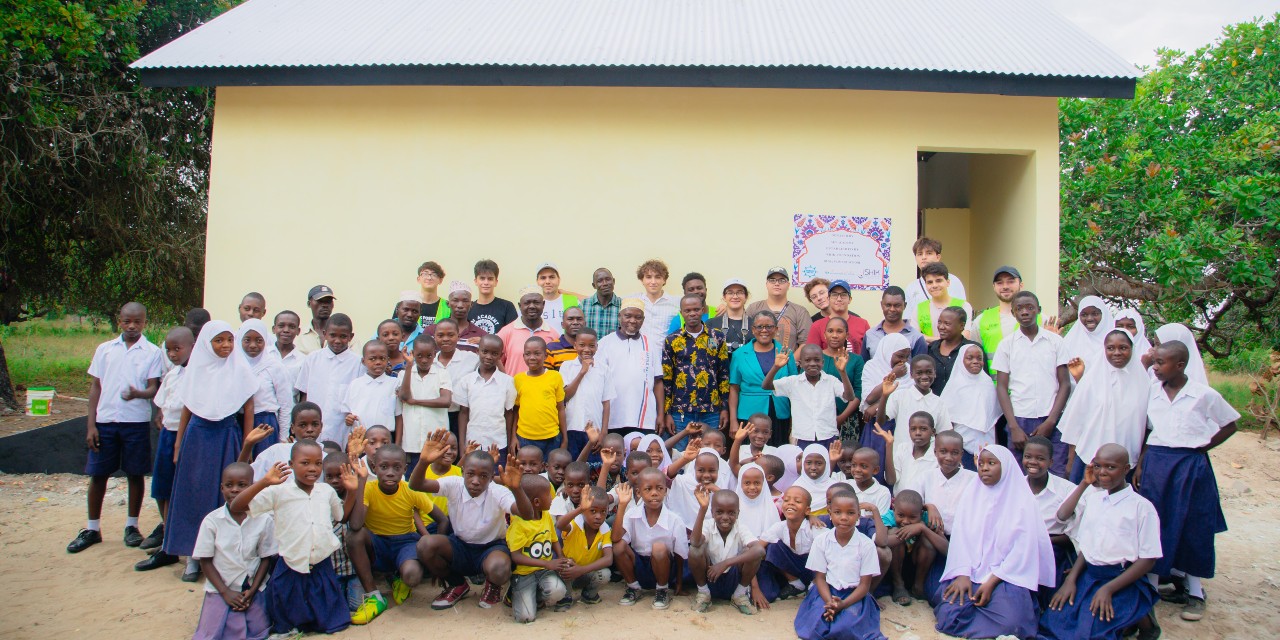
Buma, located several hours away from Tanzania’s capital, Dar Es Salaam, was the site of Embrace Relief’s latest project. Most of the construction was finished by the time they arrived, and so the 12 high school-aged Sky Academy students, including their chaperones like Sami, helped put the finishing touches on the building by painting the exterior. They also had the opportunity to interact with some of the local children.

“You could see our kids really enjoyed being with the Tanzanian kids,” Sami said. “We could really see how much they needed this bathroom. They gave us a tour of their school, and we walked through a number of villages, talking to people wherever we could. We played soccer for the children for a little while. It was really great.”

The new facility is clean, colorful and modern, and can accommodate up to four people at once. It offers a sink for hand-washing, another important step towards good health, as well as a ramp to allow access for wheelchair-bound people. Most importantly, the bathroom is attached to a sewer system, which keeps waste away from the local water supply. All of this will keep schoolchildren and their teachers healthier and safer from disease, reducing the number of interruptions to learning.

During their visit, the Sky Academy contingent also met with village leaders and government officials, who explained the importance of this project. And in addition to their work in the village, the students were also to sample the culture and natural beauty of Tanzania,  engage in a cultural exchange, visiting a number of sites in the country 

The bathroom in Buma is just one example of Embrace Relief’s use of partnerships to help people wherever they are in need around the world. Through our connection to people on the ground in Tanzania, Embrace Relief could identify people and communities in need. Through our network of donors, Embrace Relief provided the funding that built this crucial bathroom facility. Finally, Embrace Relief was able to coordinate with our partners at Sky Academy to provide volunteer support on the ground, while also providing the American-based high school students an opportunity to engage in cultural exchange and demonstrate their humanitarian spirit.

“Sky Academy came to us for help and structure with this trip,” said Sarah Bond, Embrace Relief Clean Water program coordinator. “We didn’t provide monetary backing for this trip, they did that on their own, but we could offer a lot of know-how because of our experience in creating programs like this. We were able to help them envision a group structure, help them develop their short- and long-term planning, and provide some professional support for getting the word out.”

Working together is the hallmark of every single Embrace Relief project, and the result is beneficial for all. Embrace Relief and our partners in Tanzania have developed an even closer relationship; the Sky Academy students helped people and received a one-of-a-kind experience; and most importantly, the children of Buma now have a brighter, healthier future ahead of them.

Nine-year-old Maymuna Cataract Surgery Story

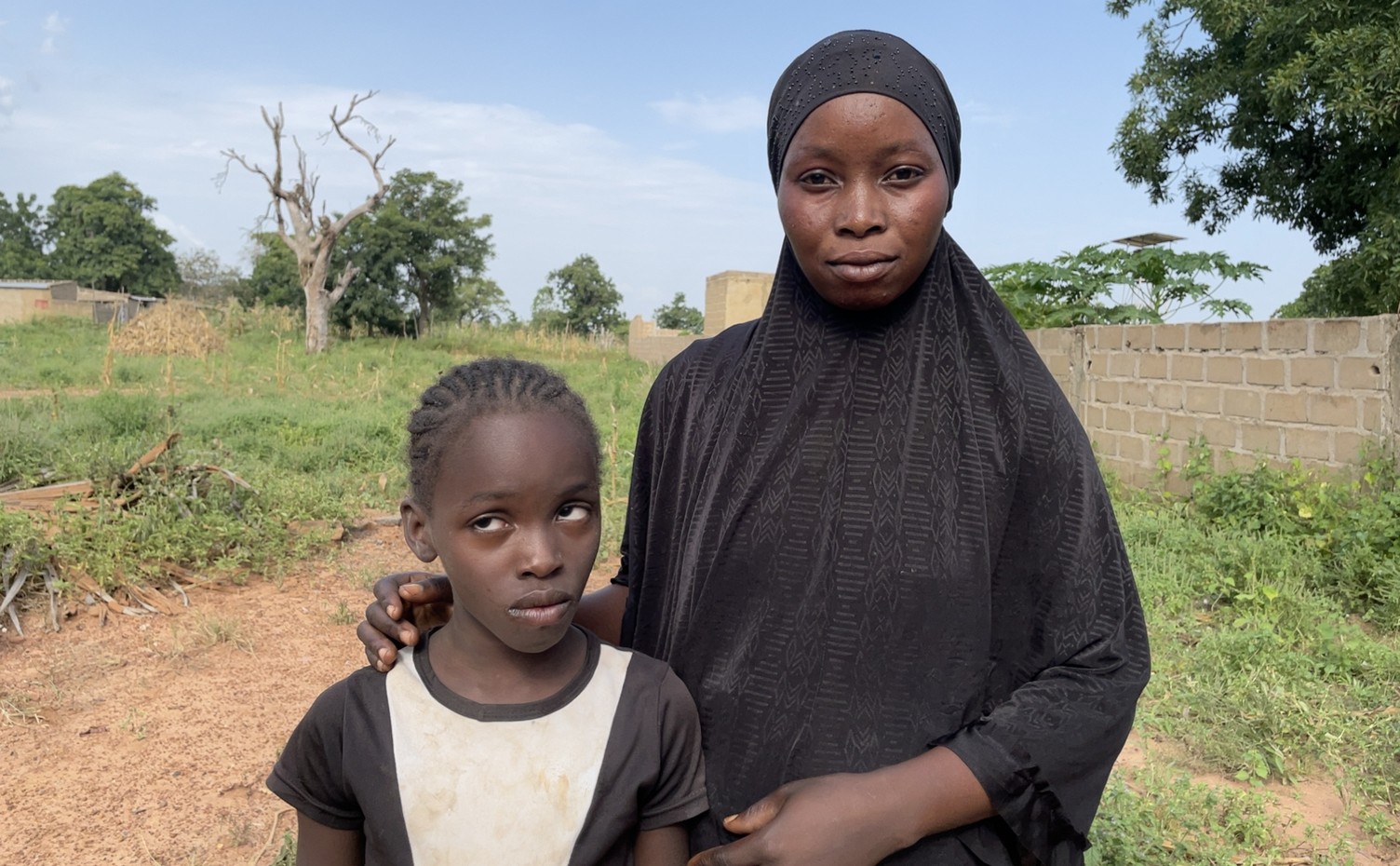
Nine-year-old Maymuna couldn’t hold back her smile as she heard the commotion of her friends playing, dancing and laughing together. Even though she couldn’t see them, she wanted to be part of the fun.

Maymuna lives in Djissoumabougou, a mid-sized village of about 200 people, located approximately 45 minutes outside of Bamako, the capital of the West African country of Mali. She is one of the 2.1 million Malians – more than 10 percent of the population – who live with impaired vision. According to her aunt, Maymuna suffers from cataracts in both of her eyes, and has had resulting vision problems all her life. Her condition has worsened over time, eventually becoming so severe that she was forced to be taken out of school.

Impaired vision can have obvious negative effects, but it is particularly devastating to young children. Early-onset vision loss is heavily correlated with delayed motor, language, emotional, social and cognitive development. Children with impaired vision are more likely to fall behind in their education, and thus put at a disadvantage relative to their peers. These cascading effects can be avoided with a simple surgical procedure to remove the cataracts. But this is often not an option in Mali, where basic, accessible healthcare services are unavailable for nine out of every 10 people.

Solving this problem can unlock the potential of untold numbers of people in Mali. That’s why Embrace Relief supports a network of health clinics, which can treat all manner of ailments and diseases, but specialize in ophthalmology. This network includes three clinics located in Bamako, the capital, which serve the city’s 2 million residents. It also includes two Mobile Health Unit vehicles, which can travel several hours away from the capital in all directions, bringing healthcare directly to people who otherwise could not access it.

When Embrace Relief’s Mobile Health Unit visited Djissoumabougou, they provided health examinations to any villager who requested one. Maymuna sat down for an examination with Dr. Almaz, who identified her cataract issue immediately. Her family and neighbors did not know that one surgical procedure could allow Maymuna to see again. Nor did they know that the surgery was free, provided thanks to a gift of just $120 from an Embrace Relief donor.

When Dr. Almaz explained that they would bring her to the Clinic Gaoussou Fofana in Bamako, and restore her vision, Maymuna lit up. Suddenly, an entire life’s worth of possibilities had reopened for her. Soon enough, she will be able to join in with her friends as they dance and play. She’ll be able to return to school, complete her education, and follow a life path of her choosing.

But that will come in time. For now, Maymuna says she’s most excited for something simpler: she can’t wait to see her mother’s face again.

Thousands of people in Mali are waiting to undergo eye surgeries like the one Maymuna will receive. To date, Embrace Relief has given more than 4,200 people the gift of eyesight, and we’re just getting started. But we need your help. Every $120 you donate to Embrace Relief’s Cure Cataracts campaign ensures that one more person will be able to live a better life, and will be able to face the world with clear eyes. Join Embrace Relief and donate today!