


Recent

What is food insecurity?

Food insecurity occurs when a person does not have regular access to the amount of safe and nutritious food required for normal growth and an active, healthy life.

People who are food-insecure typically either lack the resources, like money, required to obtain food, or live in parts of the world where food is scarce for one reason or another, such as drought or conflict.

In either case, people who consume less food than their body needs, or who are forced to eat cheaper but less-nutritious foods, over an extended period of time are at risk for short- and long-term health issues.

The United Nations’ Food and Agricultural Organization (FAO) measures food insecurity along a scale, from mild to severe. The closer to the “severe” side of the spectrum a person is, the more a person’s health and well-being is endangered by hunger. The different levels of food insecurity include:

  • Food security: A person has access to a sufficient amount and variety of food of their choice, which is both safe and nutritious, at all times.
  • Mild food insecurity: A person occasionally lacks the ability to obtain sufficient amount and/or variety of food of their choice. This may include eating the same foods over and over, or occasionally eating foods considered undesirable.
  • Moderate food insecurity: A person does not have sufficient money or resources to sustain a healthy diet. Moderately insecure people may often eat the cheapest food available, which may not be nutritious, or they may regularly skip meals or cut back on the size of the meals they consume.
  • Severe food insecurity: A person involuntarily goes an entire day (or more) without eating, or runs out of food entirely.

The hunger statistics measured by world organizations like the FAO focus on these latter two categories when they talk about the crisis of world hunger. And it is a crisis: the FAO projects that between 720 and 811 million people were either moderately or severely food-insecure in 2020. The countries most affected are in sub-Saharan Africa, with more than 50 percent of the population in some countries in that region being food-insecure. 

But hunger is a problem across every continent and, to at least some extent, in every country on Earth.

Hunger is projected to increase in the coming years as structural and environmental factors – poverty, the ongoing COVID-19 pandemic, supply-chain issues resulting from the pandemic, climate change, conflict – impact millions of people and disrupt normal life.

Donate today to help us feed thousands of people during Qurbani 2022

The scale of the problem requires us all to work together to support our fellow people, wherever they may be in need of food. 

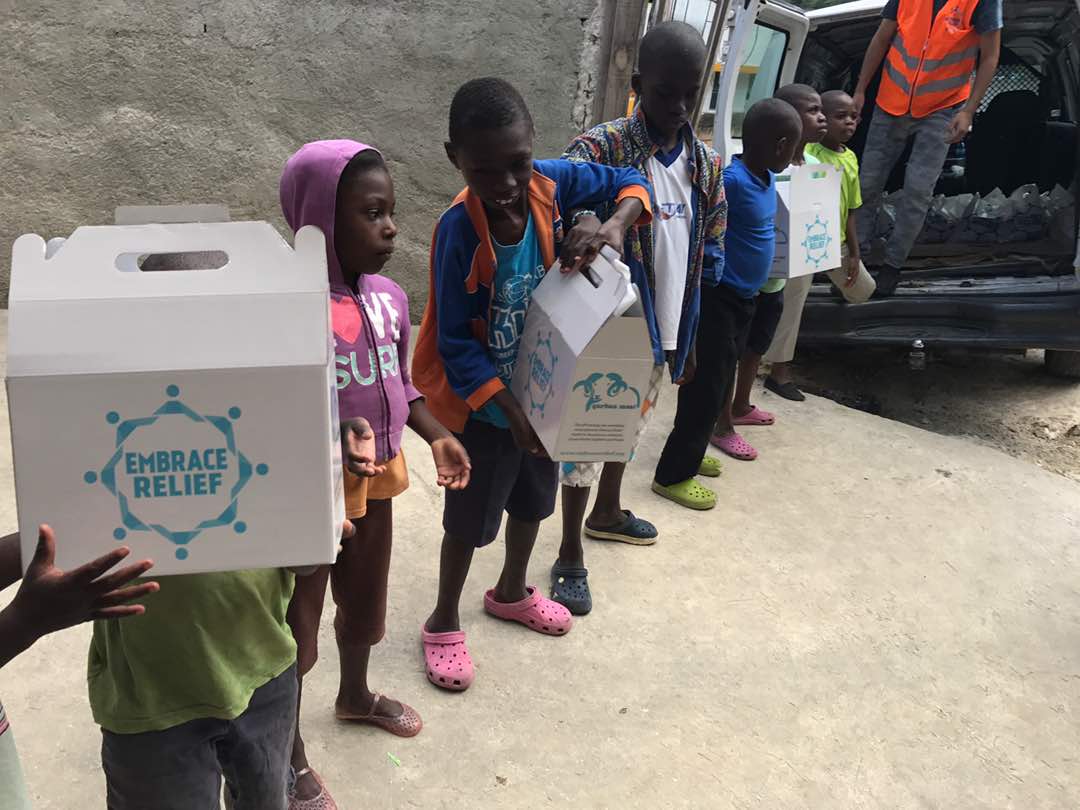
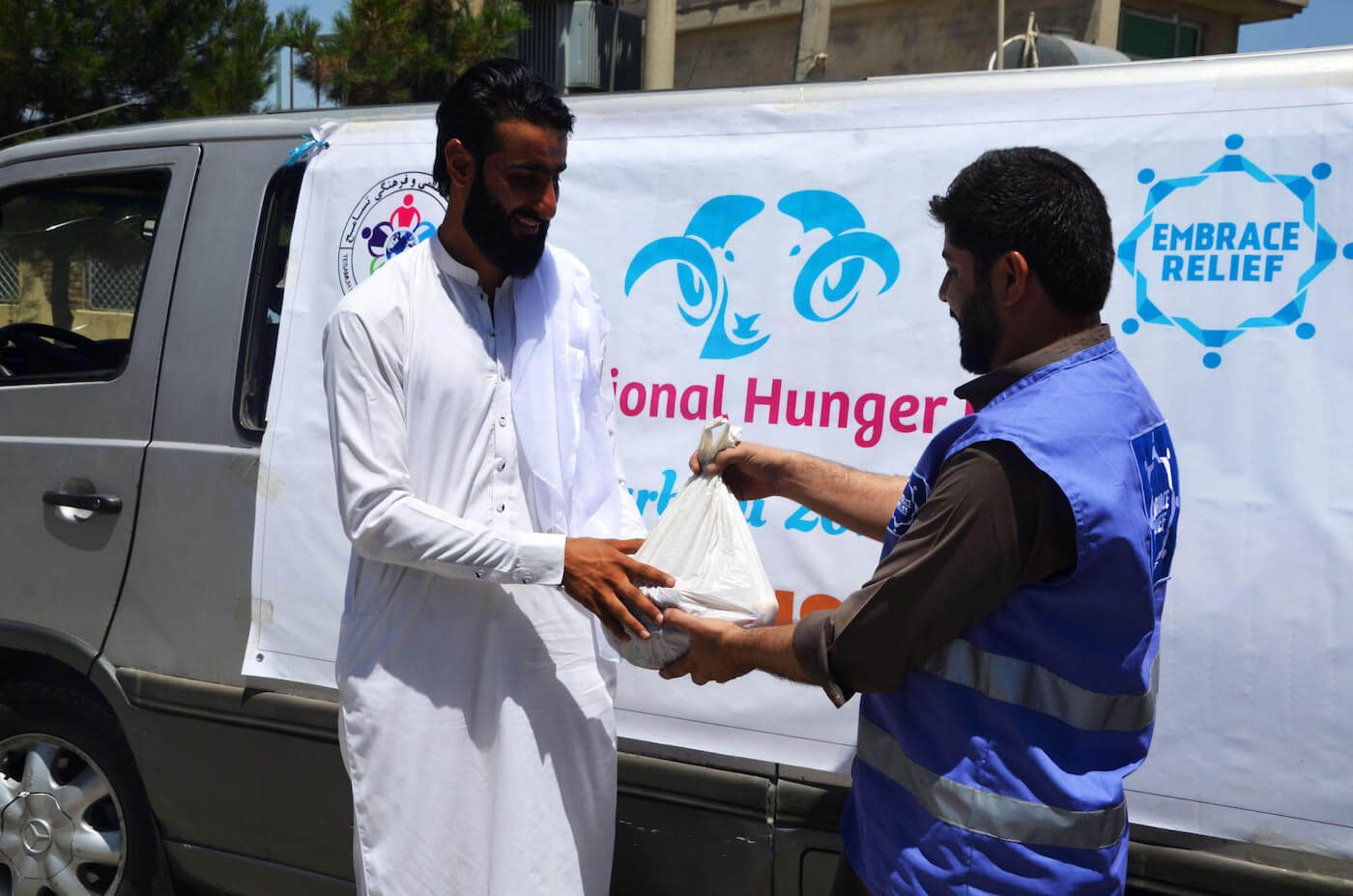
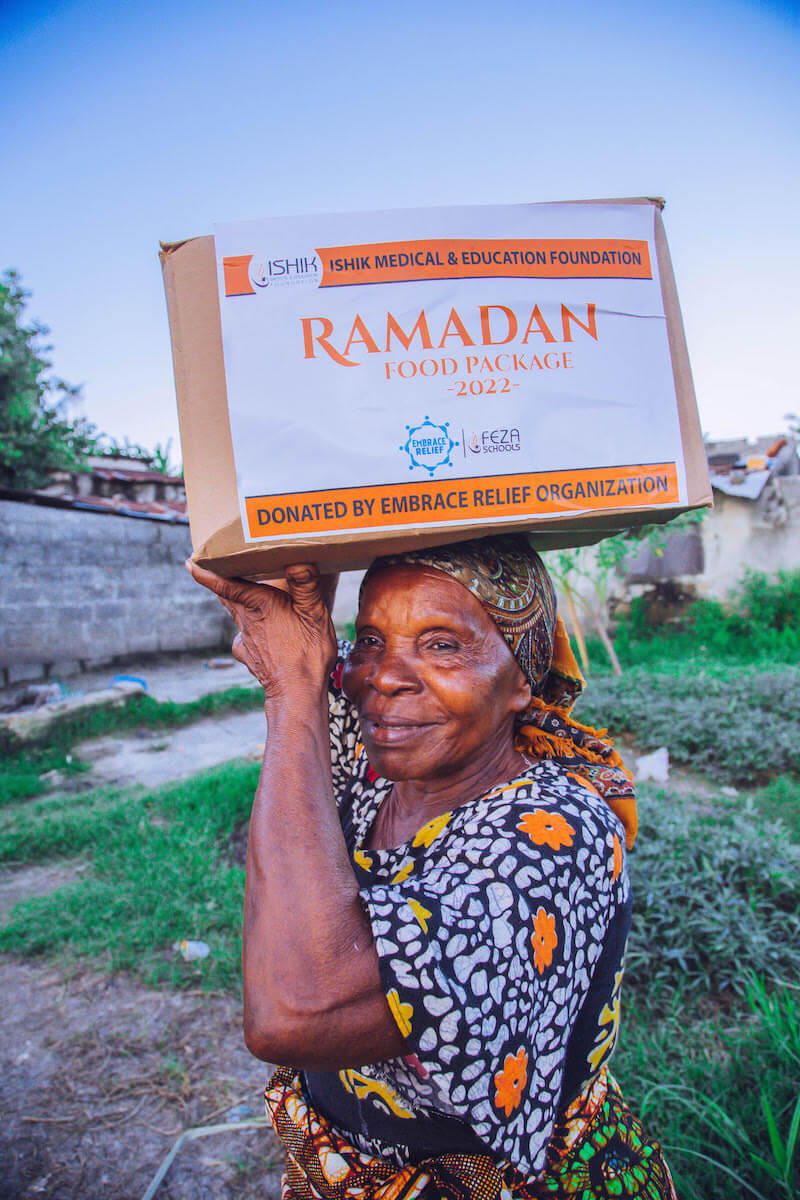
That spirit of togetherness, and the commitment to fighting hunger wherever it exists on the planet is one of the foundations of Embrace Relief’s work. To mark Qurbani and Eid, Embrace Relief’s International Hunger Relief: Qurbani 2022 campaign plans to provide food packages to tens of thousands of needy people in more than a dozen countries.

Embrace Relief’s Qurbani packages will contain sheep, cattle or goat meat, all of which has been 100% humanely and hygienically slaughtered. This meat is high in fat, protein, minerals and vitamins, which are vital in fighting malnutrition, particularly for growing children.

Each Qurbani meat package from Embrace Relief feeds eight families! And when you donate to provide a Qurbani package for those most in need, we will notify you once it has been sent and delivered.

The cost for each package in each area we serve depends on the local market price for the meat. Here’s how much it would cost for you to lessen the burden of hunger for eight families this Qurbani:

  • Africa: $175
  • United States: $265
  • Greece: $265
  • Yemen: $265

With your help, we can combat food shortages and provide hope to people in need in places like sub-Saharan Africa, Yemen, Greece and the United States. Every contribution you make helps one more family go to bed on a full stomach, and brings us one small step closer to ending world hunger.

Wema Mkamba

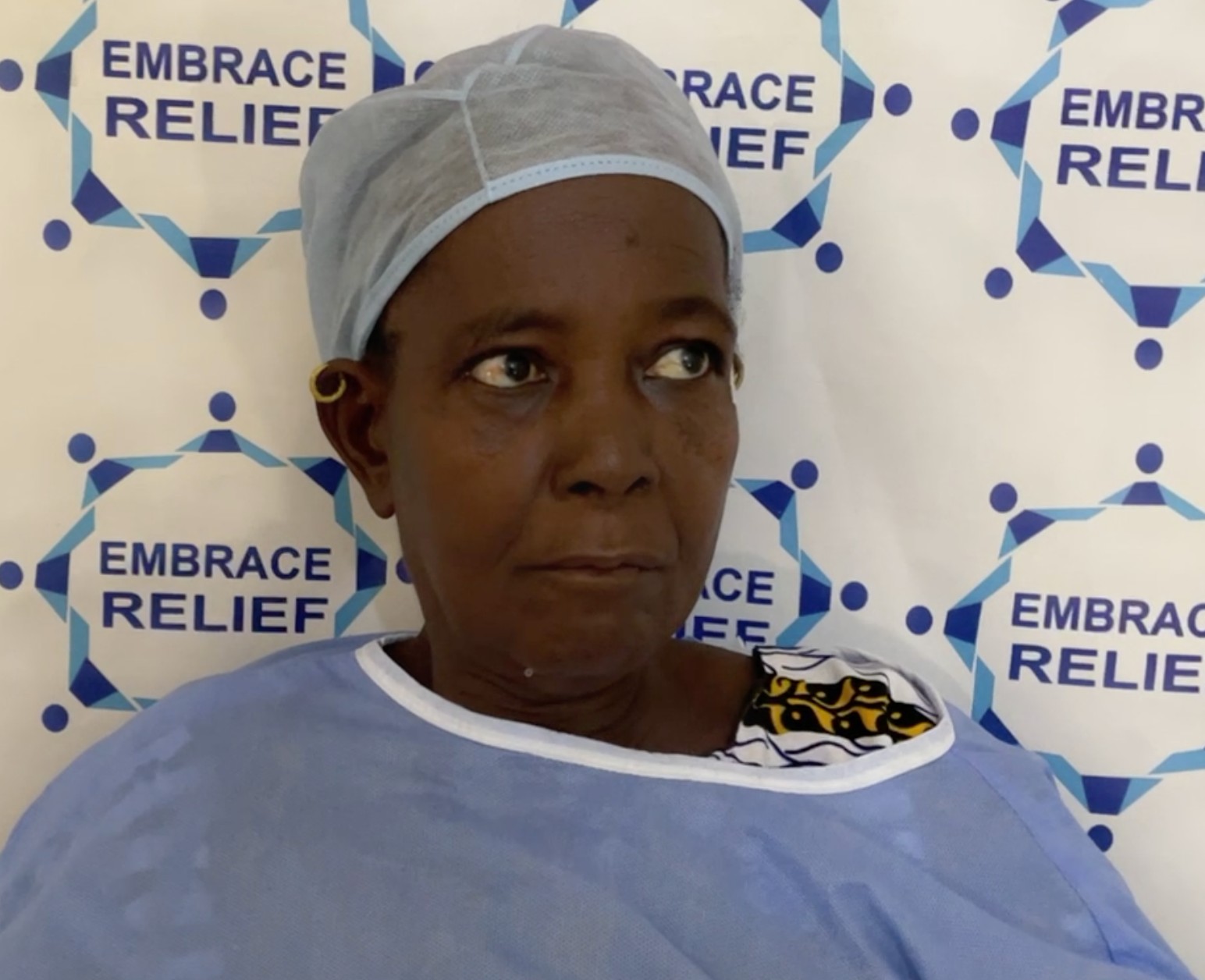
Wema Mkamba doesn’t take her responsibilities lightly.

A primary school teacher at the Kitomanga Primary School in Lindi, Tanzania, Wema shoulders the responsibility of raising a young daughter while working professionally. She is also driven to work hard and improve her skills in the hope of creating a better life for herself and her family.

After a successful first semester in her studies at the ADEM School in Bagamoyo this year, Wema became one of the first 24 recipients of a scholarship from the Embrace Relief Foundation, which will pay her tuition fees and other expenses during the second semester.

Wema is taking courses to become an expert in ICT (information, communication and technology) tools, which will provide her a path to teach important skills to the next generation of Tanzanians.

“It’s my desire to be at ADEM because I want to become a good leader,” Wema says. “This scholarship is so important to me, as a mother. I have a responsibility to my daughter, to pay for her school, and to my family. They depend on me. This scholarship has made it easier for me to afford my responsibilities.”

Embrace Relief’s scholarship program at the ADEM School is designed to empower women in Tanzania, who remain under-represented in leadership positions in many fields. For women like Wema who are pursuing careers in education, Embrace Relief’s support can make the difference between being able to afford an education and not. 

When Wema completes her degree, her qualifications will open the door to advancing into leadership roles in the Tanzanian education system. With advancement comes stability and a sustainable income that will support her family. Meanwhile, she’ll also have the opportunity to shape the lives of young people in her region and country through her work.

Wema doesn’t take this responsibility lightly, and plans to work even harder to make the most of her scholarship.

With the support of our donors, Embrace Relief aims to provide annual scholarships to more and more women in Tanzania as part of our Women’s Empowerment program. This first class of students – Wema’s class – is only the beginning of what we hope will be a long, successful partnership.

“I thank the Embrace Relief organization,” Wema says. “It’s not easy for me to accept this scholarship. There are many women who need this scholarship, who work hard and have ambition. We need this because of our economic situation, where we come from, and because of our responsibilities. I ask that you please do not only do this for me, but to also help others next year, and the next year, and the next year. Thank you.”

Easter Joel

As is the case in many other countries, teaching is a stable if not lucrative career in Tanzania. The average primary school teacher in the country earns the equivalent of $230 US dollars per month, slightly more than Tanzania’s median income. 

But for a group of people whose role in society is so important, and who work long hours to ensure their students’ success, most teachers are just about making ends meet. Many struggle to afford housing, food, and other necessities. And for teachers who wish to better themselves and advance their careers, paying for advanced education is an additional expense – and perhaps not a feasible one.

Easter Joel, a school teacher at the Igoma Primary School in Mwanza Region, Tanzania, is one of those teachers seeking knowledge and a professional path forward. She is studying to earn a diploma in School Quality Assurance from the ADEM School in Bagamoyo. 

Her success in the classroom during the first semester of the school year led to her being named one of 24 recipients of a scholarship from the Embrace Relief Foundation, which will pay her tuition fees and other expenses during the second semester.

Embrace Relief’s scholarship program at the ADEM School is designed to empower women in Tanzania, who remain under-represented in leadership positions in many fields. For women like Easter who are pursuing careers in education, Embrace Relief’s support can make the difference between being able to afford an education and not. 

“Getting this scholarship makes things easier for me,” Easter says. “I can use the tuition money for other things, which makes life easier. “

With the support of our donors, Embrace Relief aims to provide annual scholarships to more and more women in Tanzania as part of our R.I.S.E. (Reach.Inspire.Support.Educate.) women’s empowerment program. This first class of students – Easter’s class – is only the beginning of what we hope will be a long, successful partnership.

“This scholarship is helping me continue my studies without any disturbance,” Easter says. “We have many things that we need to that cost money. And so [the scholarship] is very good to me. I can say thank you so much, Embrace Relief, for this support. May God bless you

Domila Plasid

Public schools in Tanzania have been free for primary- and secondary-school students, and their families, since 2016. In a country where half the population exists below the international poverty line, that’s an important step towards ensuring an educated populace with the skills to be productive, successful adults.

It also means that the people designing and operating the public school system are crucial to making it all function.

Domila Plasid, a teacher at Jude Secondary School in Tanzania’s capital city, Dar-es-Salaam, is studying for an advanced degree in School Quality Assurance because it will give her the opportunity to impact the lives of future generations of Tanzanian citizens.

Domila is enrolled at ADEM College in Bagamoyo, about 90 minutes’ drive north of Dar-es-Salaam, where she is part of a one-of-its-kind program in school expertise. And after a successful first semester of her 2021-22 school year, she has been awarded one of 24 full scholarships, covering tuition and other school costs, from the Embrace Relief Foundation.

Embrace Relief’s R.I.S.E. (Reach. Inspire. Support. Educate.) scholarship program at the ADEM School is designed to empower women in Tanzania, who remain under-represented in leadership positions in many fields. For women like Domila who are pursuing careers in education, Embrace Relief’s support can make the difference between being able to afford an education and not.

“My hope is to become a school quality assurance officer, who can help the government in my country to produce a good, educated people,” Domila says. “I want to thank God, because he has helped me to struggle, and to work hard, in order to get this scholarship. And I want to say thank you so much to Embrace Relief for this support.”

Once she completes her courses, Domila will have the qualifications to pursue a path in the Tanzanian national school system, and the insight necessary to develop and adjust the curriculum of Tanzania’s public schools.

In addition to serving the next generation through her work in the school system, Domila can also be a trailblazer and a role model for girls in Tanzania. Her success in breaking into the male-dominated leadership of Tanzania’s school system can open doors for the young girls and women who follow.

“Our graduates, these 24 ladies, will be our ambassadors in different regions of Tanzania,” says Mohamed Kitendo, Charity Department Coordinator at Ishik Medical and Education Foundation Tanzania, and an Embrace Relief partner. “Because one part of this program is we want our graduates to give back to society after they graduate. And it will be easy for them to give back to support, because they’ll have been supported. Embrace Relief came out and supported us, and so we are [developing] people who will be there to help others. This is the goodness of this project.”

With the support of our donors, Embrace Relief aims to provide annual scholarships to more and more women in Tanzania as part of our R.I.S.E. women’s empowerment program. This first class of students – Domila’s class – is only the beginning of what we hope will be a long, successful partnership.

“We need this program to continue,” Domila says. “We need to get more knowledge. I’m hopeful I can continue on after my studies, and after finishing my diploma. [With this scholarship], Embrace Relief is pushing me to continue and gain more knowledge.”

5 Best Gift Ideas for Father’s Day 2022

Father’s Day 2022 is coming up soon, on June 19, so time is running out to get Dad that great gift that he’ll love. But that doesn’t mean you’re limited in your choice. Here are five classic ideas for several different kinds of Dads. These gifts won’t bust your wallet, but they are practical, enjoyable, and might be just the thing he wanted this year:

  1. Cooking tools for the perfect mea

If Dad’s the grilling type, give him the best tools to help him cook the perfect meal this summer! There are an endless variety of options depending on what he likes to cook – meat, poultry, fish, vegetables, etc. Maybe the most useful thing you can do is to find a good quality tool set.

Grill sets should include, at a minimum, a pair of tongs and a two-pronged fork to pick up food items, a slotted spatula for food flipping and removal, and a brush for cleaning. You may also want to find a set that includes tools like a meat thermometer, a basting brush, skewers, corn holders, or many others.

Ask Dad what he cooks, then find a set that will cover everything he needs, like the Romanticist or Cuisinart tool sets. Search around and you’ll easily find something Dad will appreciate.

  1. A backyard golf set so he can practice at home

If Dad is a golfer, or just an aspiring one, why not give him something that will let him work on his game without driving to the nearest driving range or course?

A variety of practice nets and cages are available at sporting goods stores and online, all of which can be set up on any flat surface, indoors or outdoors, depending on where you have space. Setup is a breeze, and the protective netting means Dad can practice tee shots to his heart’s content – without worrying about broken windows or angry neighbors.

Dad might also appreciate some help with his short game, too, so you may also want to look into backyard putting greens, which can fit in the garage, office, backyard, or anywhere else around the house.

  1. A water bottle that stays hot (or cold), even overnight

If Dad is a morning person, he probably likes his coffee hot. So, get him something that will keep his coffee hot until the last drop, even when he’s busy and on the go. Insulated water bottles are an economical and practical gift for a busy Dad. They keep hot liquids hot for 12-to-24 hours, and cold liquids cold for even longer than that. 

Some water bottles, like the S’well stainless steel bottle, specialize at keeping your hot drinks hot: one test saw the temperature of a coffee remain at 178 degrees Fahrenheit (down from 200) six hours after being poured into the bottle.

Others, like the RTIC or Yeti water bottles, work just fine with hot beverages, but really shine at keeping ice-cold water, iced tea, or other beverages frosty.

  1. Walk together and help Embrace Relief provide clean water in Africa

If Dad’s an outdoorsy type, how about giving him a Saturday full of fresh air, exercise and quality time overlooking one of America’s most famous landmarks?

If you’re in the New York metropolitan area, why not bring Dad out to Liberty State Park in Jersey City, NJ, on June 25, 2022, and join Embrace Relief’s H2Ow Far Can You Walk Walkathon

The 5K (3.1-mile) walkathon course will traverse one of the NYC area’s most beautiful green spaces, featuring views of (and ferry access to) the Statue of Liberty, historic New York Harbor, and downtown Manhattan. It’s the perfect site for a post-walkathon picnic, too.

Not only is Embrace Relief’s 5K Walkathon a great way to spend a summer Saturday, you can also make a real difference in people’s lives. Registration is between $15 and $30 and comes with different levels of free and fun gifts. All money raised at the 5K will go directly towards Embrace Relief’s program of building water wells in sub-Saharan Africa. Every single dollar donated will provide 2,000 gallons of clean drinking water to people in need. 

  1. A donation in Dad’s name for clean water

If Dad’s a charitable kind of guy, and Jersey City’s not a feasible day trip, you can always make a donation in his name to a good cause. Perhaps, say, Embrace Relief’s Clean Water Initiative!

A donation to the Clean Water Initiative – or any of Embrace Relief’s other humanitarian programs – in Dad’s name would be a wonderful way to make an impact in the lives of real people. And the certificate sent in return would show everyone that Dad is a thoughtful, caring person who wants to help others.

So far, Embrace Relief has built or reconstructed 500 water wells in Africa, providing clean water to a half-million people for the next five years. Every donation we receive will bring us closer to our next goal of building 750 wells, and you can help us get there.

What are the different methods of preserving meat and poultry long-term?

Buying meat in bulk can be a very enticing option for grocery-shoppers looking to get the most bang for their buck. Of course, there is one obvious drawback: fresh meat spoils very quickly. And consuming spoiled meat can put you at risk for bacterial diseases like botulism, which can cause serious health issues up to and including death.

To combat this, you could buy less meat, more often. But that’s not an ideal option for everyone working with a budget, or for people who don’t have the time to visit the grocery store multiple times in a week.

Luckily, humans have spent thousands of years designing different ways to preserve meat and make it last for weeks, months, and even years at a time. Some are simple and obvious. Others take some skill and practice. All are worth knowing for a budget-conscious meat eater! Here are the top 4 ways to preserve meat:

  • 1) Freeze it.

    For most people in America, this will be the most obvious and easiest solution. Meat stored at sub-zero temperatures in a freezer will remain safe to eat indefinitely, though some types of meat will keep their taste and quality longer than others. A steak will keep its delicious taste for up to eight months after freezing, and an entire chicken can last for nearly a full year. On the other hand, ground beef or raw sausage links may only remain high quality for four months.

    Of course, your refrigerator and freezer requires electricity. What if you have a power outage? An extended outage of more than two hours can cause food to thaw and spoil, meaning all of that saved food will go to waste. There are other methods of preserving meat that can be alternatives in the event of a power outage, or a living situation in which a freezer is not available.
  • 2) Dehydrate it.

    One of the biggest factors in meat spoiling is the moisture found in meat, which offers a breeding ground for dangerous bacteria. By removing that moisture, you can extend the shelf life of your meat. For some types of lean meat – including beef, venison, pork and turkey – one option for long-term preservation is to turn your meat into jerky through a process of dehydration.

    This can be a time-consuming and relatively labor-intensive process with a delicious reward at the end. Jerky will keep its quality at room temperature for up to two weeks, and it will be good to eat for two to three months if refrigerated.

If you have leftover meat that you want to put to use, trying some new textures or seasonings instead of throwing it in the freezer, making jerky might be worth a shot.

  • 3) Can it.

    Like the making of jerky, canning food is a bit more labor-intensive and time-consuming than simply freezing your meat. But the benefits of canning can be longer lasting – a pressure-sealed can or jar will keep meat fresh and retain its quality for between 2 and 5 years if stored in a cool and dry place, according to the USDA. And canned meat is typically more tender and flavorful than frozen meat.

    Canning does require additional equipment, namely a suitable pressure-canner. In addition to learning how to operate the pressure-canner, you’ll need to clear out the 90 minutes-to-2-hours it will take to pressurize your can. And each type of meat will have a slightly different series of steps to achieve maximum quality. There are many institutions and online experts who offer their own methods, and it’s worth searching out the best one for you.
  • 4) Cure it.

    Finally, we turn to a method of preserving meat that humans have used for centuries, if not millenia. People in every part of the world have long used salt to cure their meat and fish, allowing for long-term storage that would enable people to consume protein during long, cold winters, or while navigating long-distance journeys across the seas. In fact, in areas like large portions of sub-Saharan Africa, where electricity is not always available or outages are common, this is still a primary method of preserving meat today.

    Curing meat involves the application of both regular non-iodized salt and “pink salt” (saltpeter). These salts remove moisture from the meat, preventing bacteria from growing. When kept in low-humidity containers, this relatively primitive method can preserve meat for weeks and months. Cured meat can also be smoked, which prevents bacteria from getting into the meat in storage; this can extend the shelf life of your meat even further.

    Once again, there are many different methods for how to cure your meat, and every meat expert will have their own variations.

Donate today to help us provide meat to tens of thousands of people

Not only will these methods of preserving meat provide you and your family with a source of protein over the long term, it may just give you an appreciation for what it’s like to live in a part of the world like Tanzania where meat is a luxury. Because meat there is affordable to most people only on special occasions, long-term preservation is crucial to maintaining a balanced diet and proper nutrition.

Tanzania is one of the countries Embrace Relief is targeting during our International Hunger Relief: Qurbani 2022 campaign, in which we will provide food packages to tens of thousands of needy people in more than a dozen countries.

Embrace Relief’s Qurbani packages will contain sheep, cattle or goat meat, all of which has been 100% humanely and hygienically slaughtered. This meat is high in fat, protein, minerals and vitamins, which are vital in fighting malnutrition, particularly for growing children.

Each Qurbani meat package from Embrace Relief feeds eight families! And when you donate to provide a Qurbani package for those most in need, we will notify you once it has been sent and delivered.

The cost for each package in each area we serve depends on the local market price for the meat. Here’s how much it would cost for you to lessen the burden of hunger for eight families this Qurbani:

  • Africa: $175
  • United States: $265
  • Greece: $265
  • Yemen: $265

With your help, we can combat food shortages and provide hope to people in need in places like sub-Saharan Africa, Yemen, Greece and the United States. Every contribution you make helps one more family go to bed on a full stomach, and brings us one small step closer to ending world hunger.

The Effects of Waterborne Diseases

Waterborne diseases are a leading cause of death worldwide. In 2019, more than 2 million people died from waterborne illness, including more than 1.6 million people who died from diarrhea and its related diseases. Diarrhea is also the second-leading cause of death for children under the age of 5, with an annual death toll of more than 500,000.

The vast majority of these diseases are caused by contact with or consumption of water contaminated by bacteria, viruses, or parasites. The World Health Organization estimates that 1.8 billion people on Earth get their drinking water from a source contaminated with human and animal waste.

Some of the most common issues from drinking contaminated water include:

  • Diarrhea: An intestinal infection characterized by watery stools, diarrhea is a common ailment around the world. But in areas of the world without clean water, it can be deadly. Diarrhea involves a rapid loss of fluid from the body. Without the clean drinking water to replace those fluids, the body can become seriously dehydrated, leading to serious health issues, up to and including death. Young children are particularly susceptible to serious consequences from diarrhea if untreated.
  • Dysentery: An intestinal infection whose defining feature is the passing of blood or mucus in stool. Similarly to diarrhea, it is an easily treatable disease in areas with abundant clean water. But in areas lacking clean water, extreme dehydration caused by the disease is a risk multiplier that can result in serious health complications.
  • Cholera: An intestinal infection whose symptoms include diarrhea, vomiting, leg cramps, and, in more serious cases, rapid dehydration and shock. Mostly eradicated by industrialized countries over 100 years ago, this disease continues to exist in developing countries that lack robust clean water infrastructure. An estimated 1.3 to 4 million cases of cholera occur each year, resulting in as many as 143,000 deaths, according to the World Health Organization.
  • Typhoid: A highly transmittable bacterial disease causing a number of symptoms including high fevers, malaise, headaches, constipation or diarrhea. An estimated 20 million cases of typhoid are reported each year, with an average of 200,000 people dying from the disease.
  • Schistosomiasis: A disease caused by parasitic worms found in contaminated drinking water. Affecting mostly poorer and rural communities in Africa, South America, the Caribbean, Asia and the Middle East, this disease is characterized by symptoms including abdominal pain, diarrhea, and blood in the stool or urine. Kidney and liver damage are also caused by the disease, which is believed to kill 200,000 people per year. In 2015, more than 66 million people were treated for schistosomiasis.

Waterborne illness is particularly an issue in sub-Saharan Africa, where more than 300 million people do not have a source of drinking water that is both accessible and clean. Many people in this part of the world must drink water that has been acquired through significant physical labor – daily journeys, on foot, averaging six kilometers a day while carrying 70 pounds of water.

Many others instead source their drinking water from unprotected, untreated sources like rivers, lakes, ponds, and open watering holes. People in this situation risk their health and wellbeing every day, every time they drink a glass of water. And most importantly, these risks are entirely preventable.

Solving this crisis and eradicating waterborne illnesses in Africa is a significant challenge, one that requires investment in infrastructure. That infrastructure must tap into Africa’s vast reserves of groundwater and be able to supply entire communities of people. But it also must be sustainable and easily maintainable, providing a lasting source of clean water for years to come.

Help Embrace Relief deliver clean water to people who need it

At Embrace Relief, our solution is to invest in the building of hundreds of water wells. We’ve made incredible progress already, providing clean water to more than 500,000 people in the African nations of Cameroon, Chad, and Nigeria. 

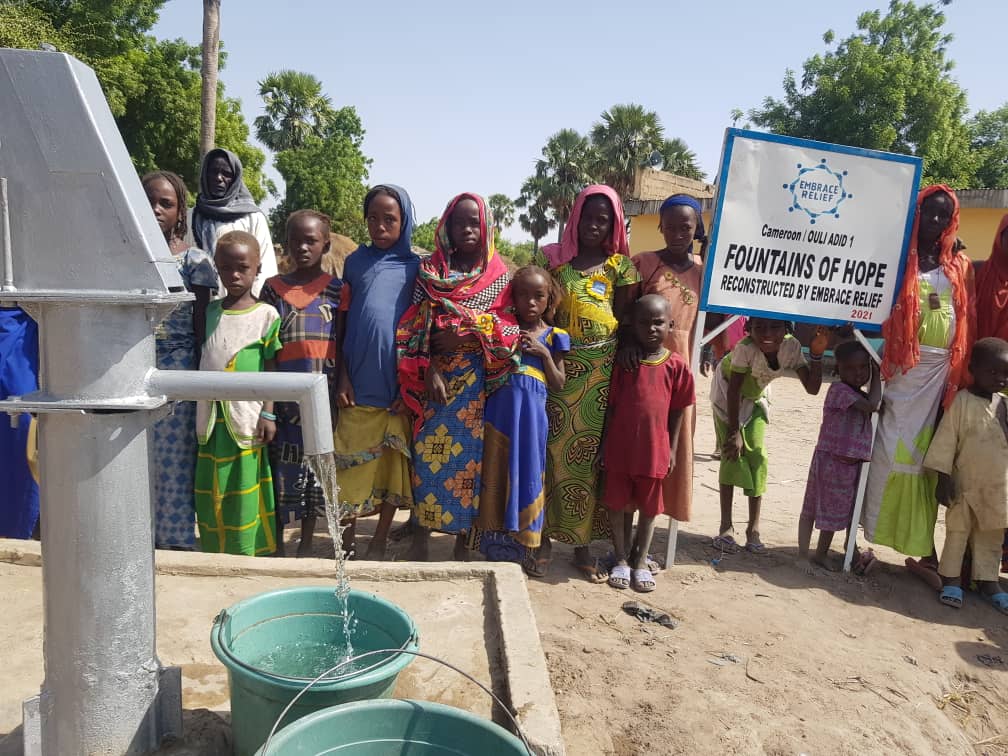
Through our Clean Water Initiative, we have funded the construction of 450 new water wells in those countries. And through our recently launched “Fountains of Hope” project, we’ve reconstructed 50 abandoned or non-functioning wells.

To aid more people, we need your help.

Donating to Embrace Relief’s Clean Water Fund and our “Fountains of Hope” project is the single-best way to ensure that thousands of people will get the water they need.

But there are more ways for you to help Embrace Relief fight the clean water crisis. On Saturday, June 25, we will be hosting our inaugural H2Ow Far Can You Walk: 5K Walkathon at Liberty State Park in New Jersey. This family-friendly event is open to people of all ages and abilities, and will help raise awareness and money for building and rebuilding water wells in Africa.

Every dollar donated during our 5K Walkathon will provide more than 2,000 gallons of clean, drinkable water for those in need. For more information, and to register, click here. We look forward to having some fun in the sun with you as we help improve hundreds of thousands of lives.

Feeding those in need: International Hunger Relief Qurbani

Summary

  • More than 800 million people worldwide live with hunger every day.
  • In developing countries, the price of many kinds of nutritious food are unaffordable to much of the population.
  • Learn how you can provide nutritious meat for people in need with Embrace Relief.
Summary
Sharing food is one of the most important ways we can support our neighbors in need. Humans produce far more food than we need for everyone to have a healthy, sustainable diet. But because of a variety of factors – including conflict, climate change, poverty, a lack of infrastructure – there are parts of the world where not enough food is reaching people.
The result is an ongoing hunger crisis affecting more than 800 million people, according to the United Nations. That’s more than one out of every 10 people in the world. Solving the hunger crisis requires the addressing of both supply of food and its distribution. In many developing countries, the food supply is adequate to feed everyone. However, the cost of food can force people of fewer means to select less nutritious, less expensive food. In Tanzania, for example, a kilogram of meat – roughly 2.2 pounds – costs roughly $3.70. That’s an exorbitant cost in a country where one in four people earn less than $2 in income per day. The cost of meat makes it a luxury for most Tanzanians, and so many people miss out on the protein, vitamins and minerals that make meat nutritious. Sharing meat with one’s neighbors in particular is an important idea as we approach Eid al-Adha and the qurbani. For many people in Africa and south Asia, qurbani is the only time of year they get the nutritional benefits of eating meat, thanks to the generosity of their community. There is no more basic fundamental human right than the adequate supply of food for all people. And so it’s incumbent on all of us to take any action we can to reduce world hunger and provide food to people who need it.
Africa Qurbani

Donate today to help us feed thousands of people during Qurbani

That spirit, and that commitment to fighting hunger wherever it exists on the planet is one of the foundations of Embrace Relief’s work. To mark Qurbani and Eid, Embrace Relief’s International Hunger Relief: Qurbani campaign plans to provide food packages to tens of thousands of needy people in more than a dozen countries. Embrace Relief’s Qurbani packages will contain sheep, cattle or goat meat, all of which has been 100% humanely and hygienically slaughtered. This meat is high in fat, protein, minerals and vitamins, which are vital in fighting malnutrition, particularly for growing children. Each Qurbani meat package from Embrace Relief feeds eight families! And when you donate to provide a Qurbani package for those most in need, we will notify you once it has been sent and delivered. The cost for each package in each area we serve depends on the local market price for the meat. Here’s how much it would cost for you to lessen the burden of hunger for eight families this Qurbani:
  • Africa: $175
  • United States: $265
  • Greece: $265
  • Yemen: $265
With your help, we can combat food shortages and provide hope to people in need in places like sub-Saharan Africa, Yemen, Greece and the United States. Every contribution you make helps one more family go to bed on a full stomach, and brings us one small step closer to ending world hunger.
Give Qurbani With Embrace Relief

In 2024, Qurbani will occur on June 16-19. During this time, sheep, goats, and cattle are humanely and hygienically sacrificed in adherence with common dietary restrictions. At this important time of year, join Embrace Relief and provide food for people in need in Africa (including the countries of Tanzania, Kenya, Uganda, Mali, Ethiopia, Burkina Faso, and Democratic Republic of Congo), as well as Yemen, Greece, and the United States, by donating to Embrace Relief’s International Hunger Relief: Qurbani 2023 campaign.