


Recent

How many people can I help by giving Qurbani?

Summary

  • When you give Qurbani, you may wonder how much impact your gift will have.
  • Learn about how Embrace Relief uses your Qurbani gift to feed multiple families, including a breakdown of how much meat each family will receive.
  • Make your Qurbani donation easily with Embrace Relief, and help us reach our goal of distributing meat packages to 150,000 people around the world.

Giving Qurbani: An Opportunity to Help Those in Need

The holy time of Eid al-Adha (“Feast of Sacrifice”) represents one of the most solemn, The time of Qurbani is a time for Muslims around the world to show their devotion to Allah. This annual ritual emulates the obedience and devotion of the Prophet Ibrahim, who was to sacrifice his son Ismail at God’s command, only for God to reward their faith by substituting a ram for Ismail at the last moment.

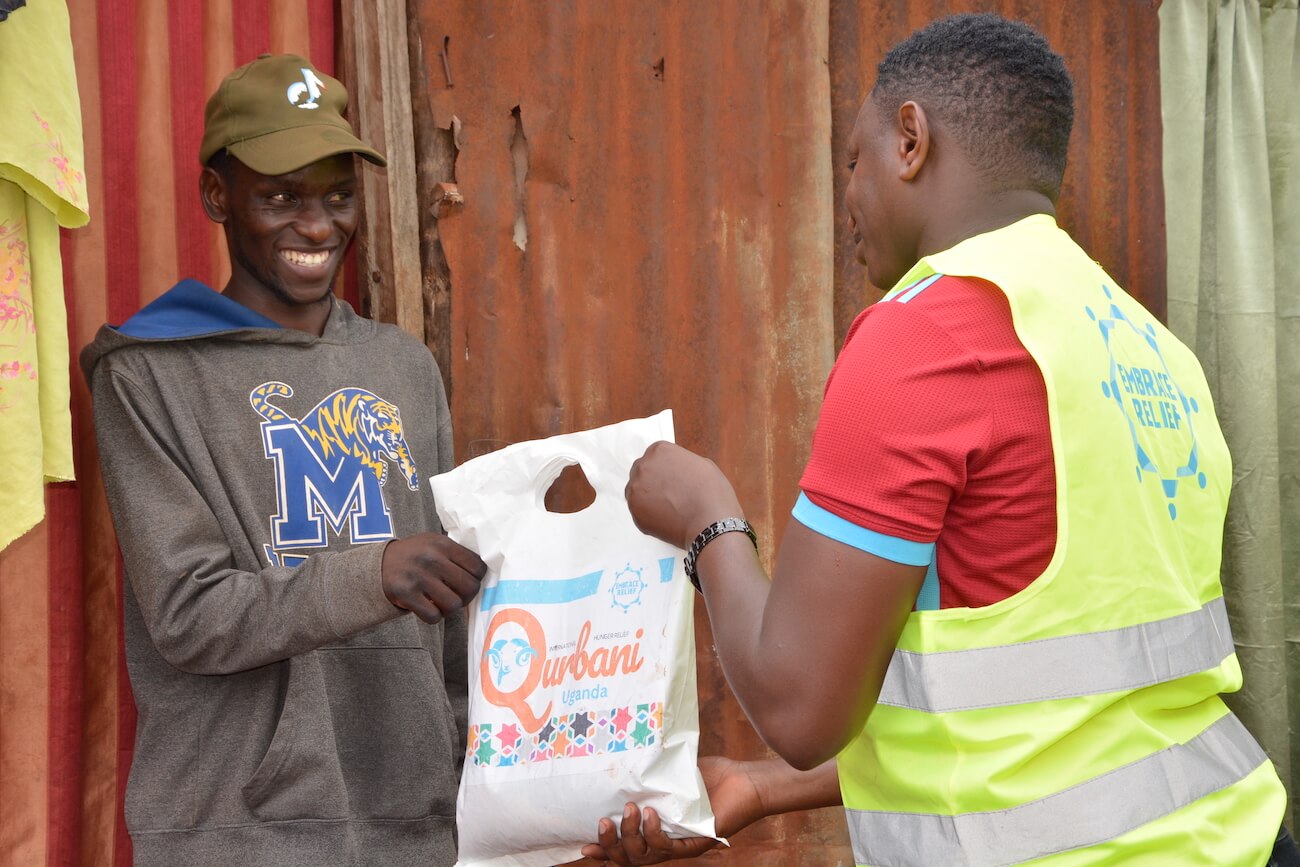
Today, Muslims around the world commemorate this act of devotion by sacrificing a livestock animal and distributing its meat among those less fortunate. For those who have the means to give a Qurbani gift, this distribution is a remarkable act of charity, helping provide nourishment, hope, and a shared sense of humanity for people in need in communities around the world. It is truly an opportunity for Muslims everywhere to make a positive impact on the lives of their neighbors, whether they be near or far.
How many people will my Qurbani gift help?

How many people will my Qurbani gift help?

If you are a Muslim seeking to give your Qurbani gift soon, you may wonder exactly how much impact you can make.

The price of a Qurbani share varies according to local market prices, and may also vary depending on the practices of the charitable organization where you give your Qurbani. To help you understand exactly how far your gift can go, Embrace Relief would like to share our standards and requirements for Qurbani sacrifices.

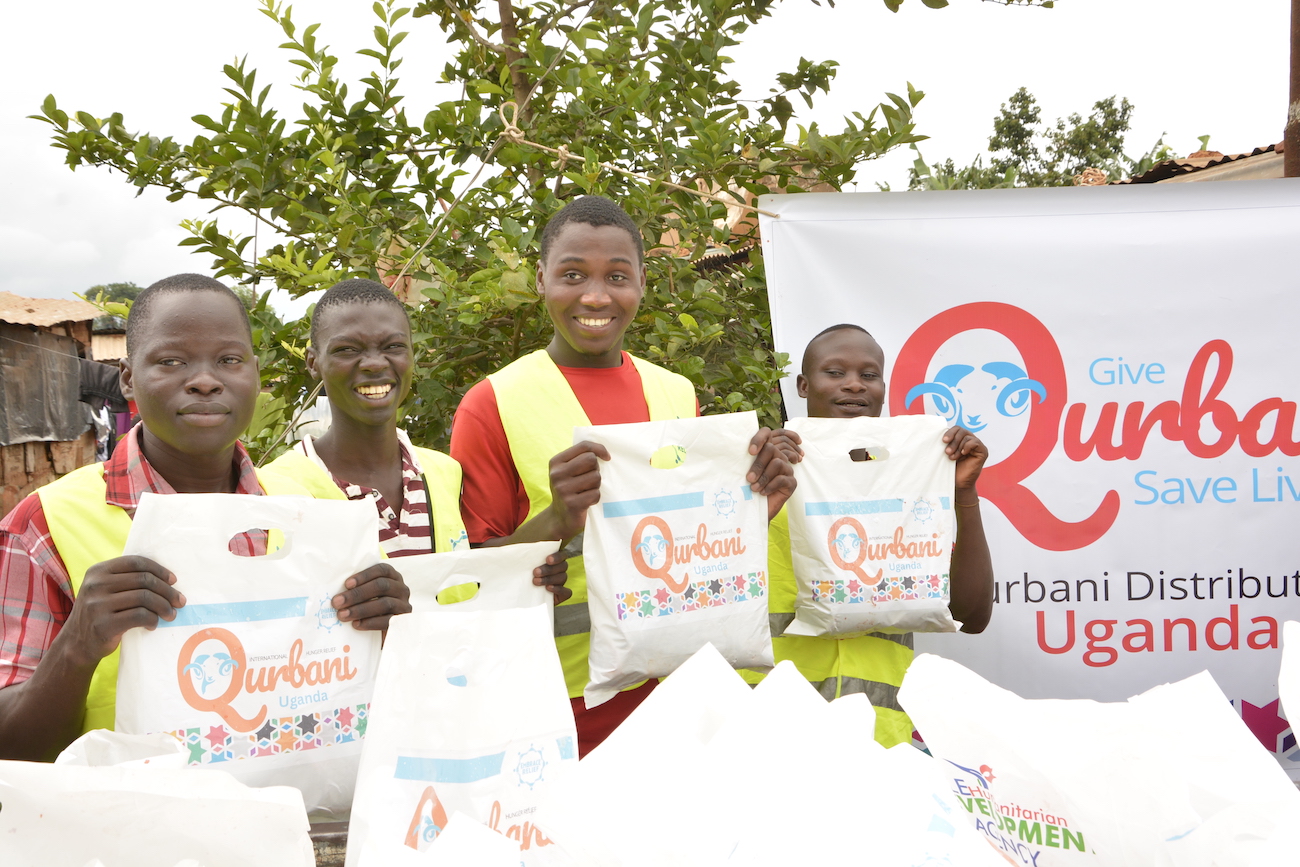
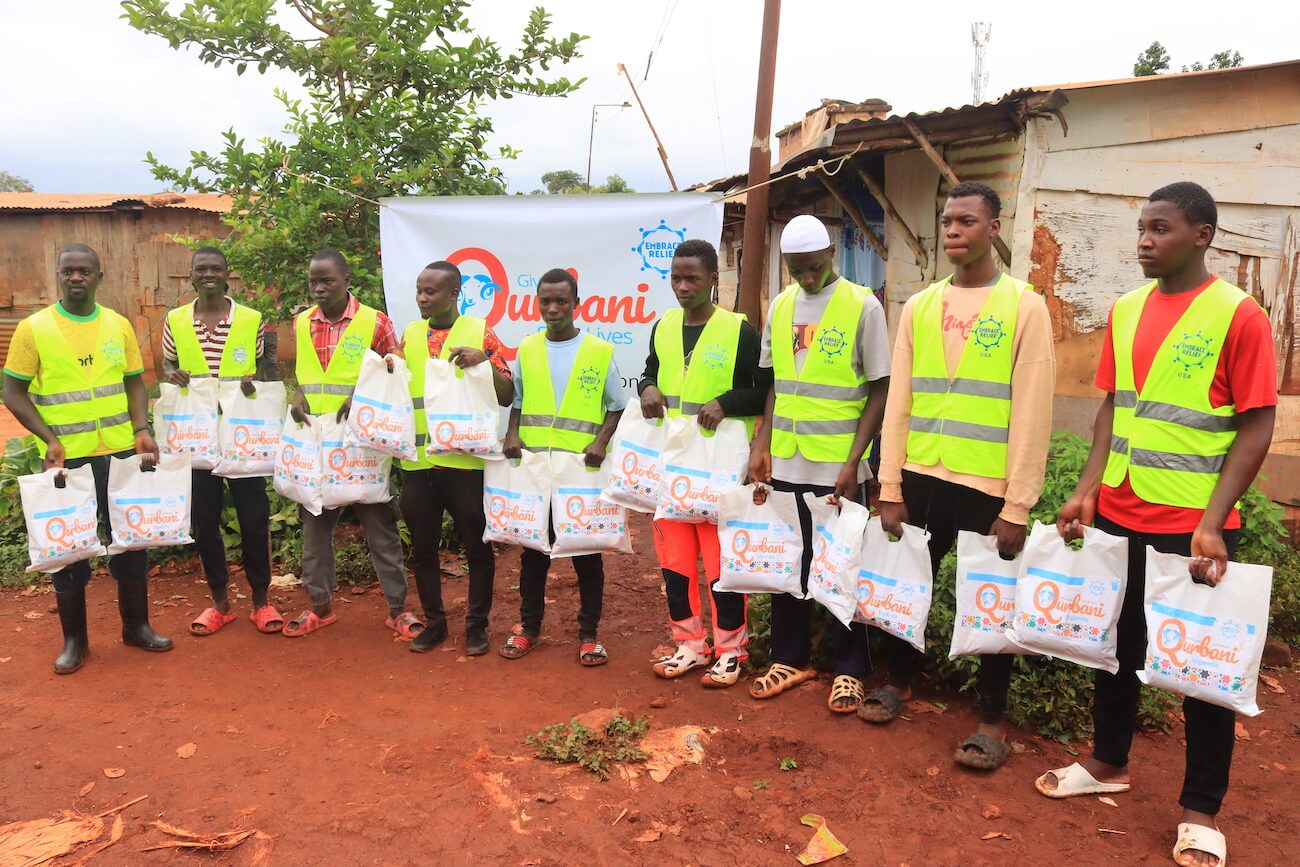
Embrace Relief works with partner organizations in nearly two dozen countries to provide Qurbani meat to those in need. In 2023 alone, we were able to distribute meat to more than 122,000 people. For most countries where Embrace Relief will distribute food this Qurbani, a donation of $110 will provide one Qurbani share. In accordance with Islamic tradition, one Qurbani share is equivalent to one-seventh of the meat from a sacrificed head of cattle.

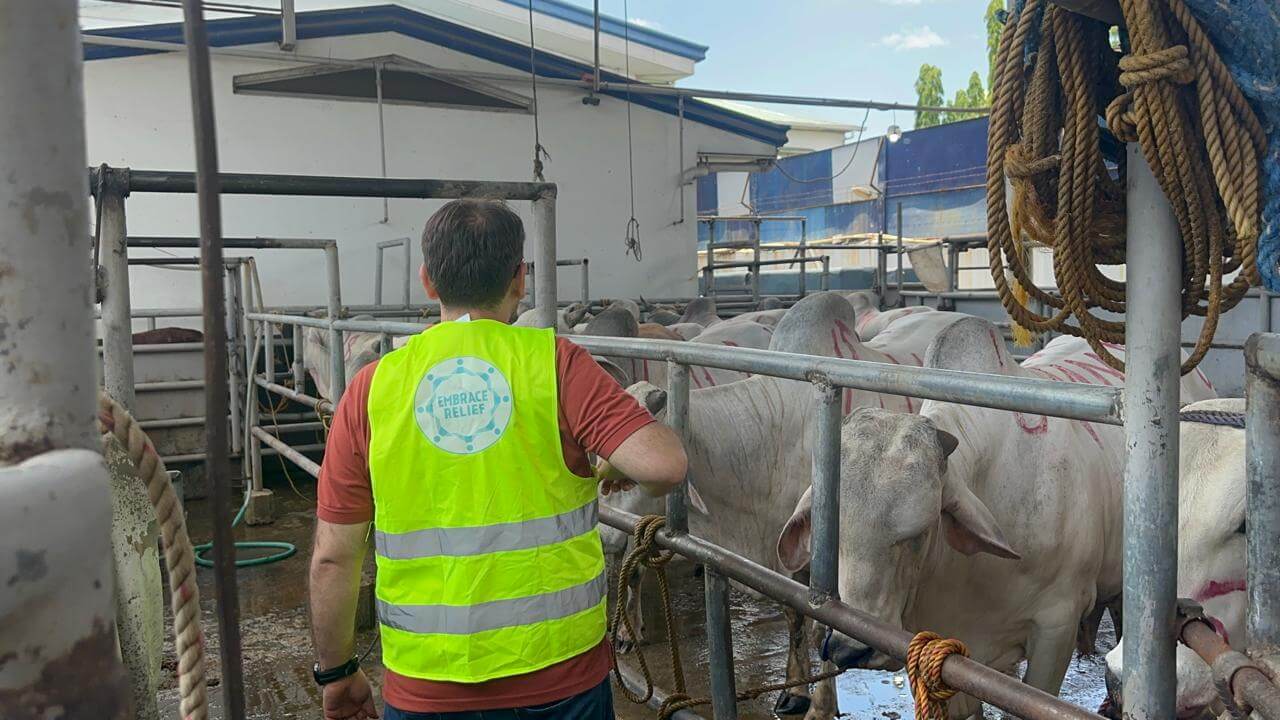
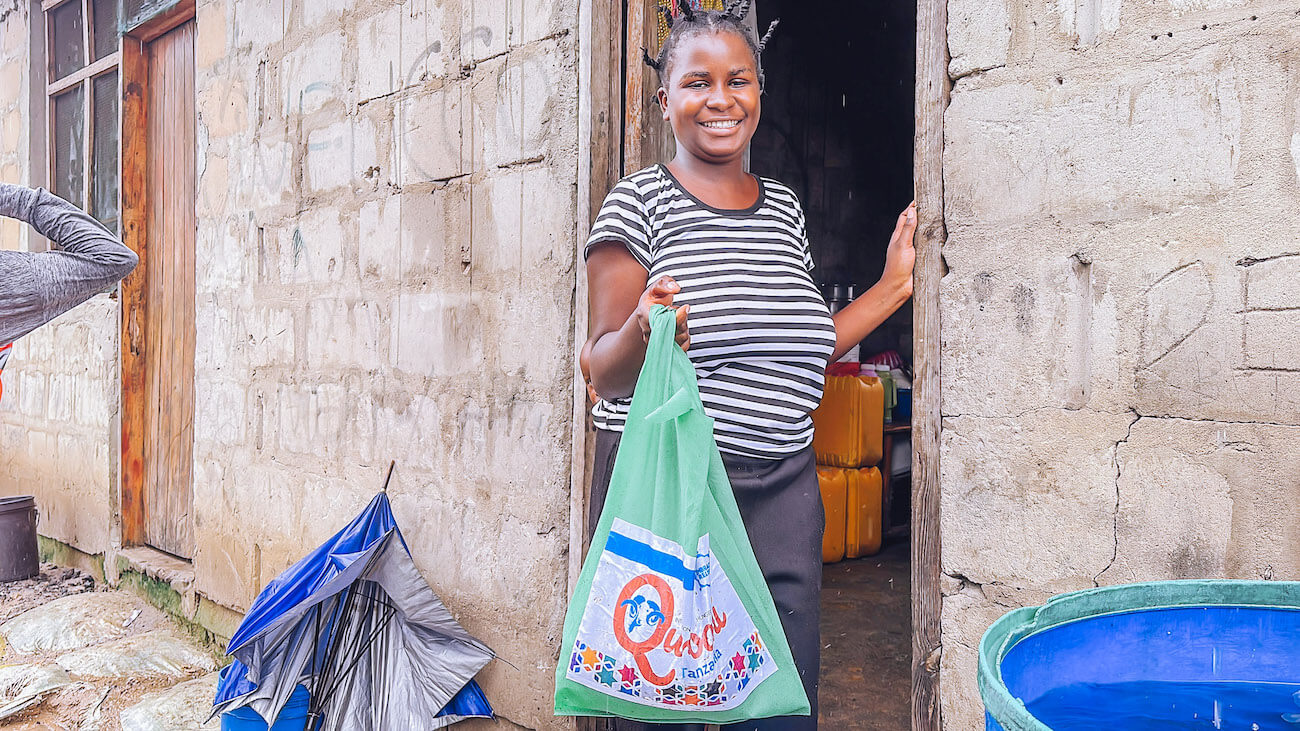
In tandem with our partners, we ensure that the healthiest, highest possible quality cattle are selected for the sacrifice. After the slaughter is carried out in a hygienic and ritual fashion, each cattle provides approximately 280 to 300 pounds of meat. That means that each Qurbani share is equivalent to about 40-43 pounds of meat for your $110 donation. This meat is then separated into six or seven packages, totaling approximately six pounds each, each of which is distributed among families in need.

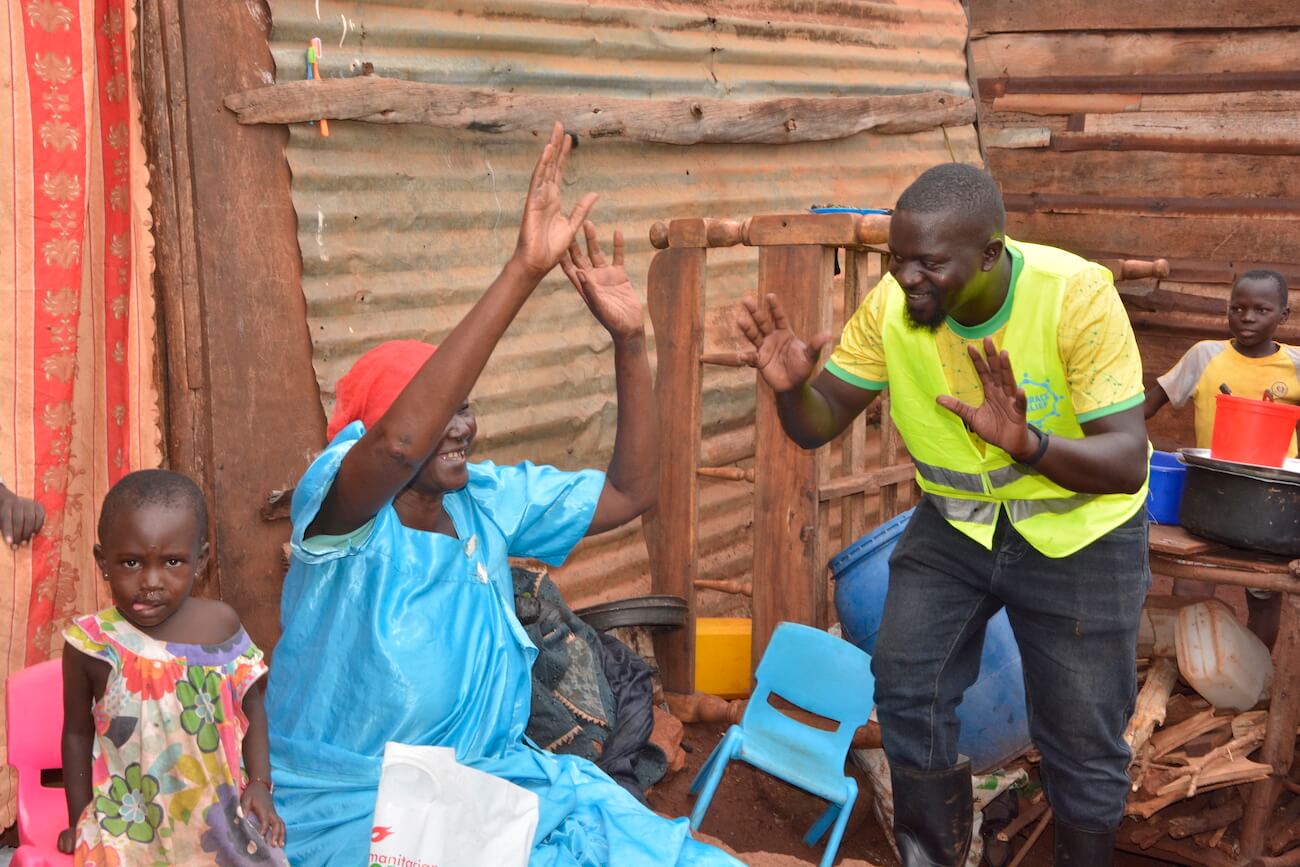
Put it all together, and your gift of just one Qurbani share is providing up to seven families with nutritious meat that will ease their hunger for days and weeks to come. Should you choose to give more than one Qurbani share, your impact will be even more widespread.

Give your Qurbani today with Embrace Relief

As Qurbani 2024 approaches, Embrace Relief stands ready to help you make a real difference for our friends living with hunger and food scarcity around the world. Building on our outstanding impact last year, Embrace Relief has set an ambitious goal of providing food packages to 150,000 people during Qurbani 2024. But we need the help and generosity of people like you to achieve this goal.

Give your Qurbani using the donation box below to support our International Hunger Relief: Qurbani 2024 campaign, and share your blessings with those in need. As outlined above, each share you give will provide several families with the nourishing food they need. This is the time of year when you can make a powerful impact that will touch entire communities.

Let us mark Eid al-Adha 2024 by sharing our blessings, our joy, and our goodwill with all.
Give your Qurbani today with Embrace Relief

Nurturing Hope: Embrace Relief’s SEED Program Thrives in Ethiopia

Ethiopia, like many developing nations, faces significant economic challenges and rural poverty, necessitating initiatives for sustainable development. Embrace Relief recognizes the importance of such endeavors and has been actively involved in addressing these issues through its SEED (Sustainable Entrepreneurship through Eggs and Dairy) program not only in Ethiopia but also in other countries like Uganda, Nigeria, Kenya, and Afghanistan. The SEED program seeks to empower women and families in rural areas by providing them with resources and opportunities for sustainable income generation.

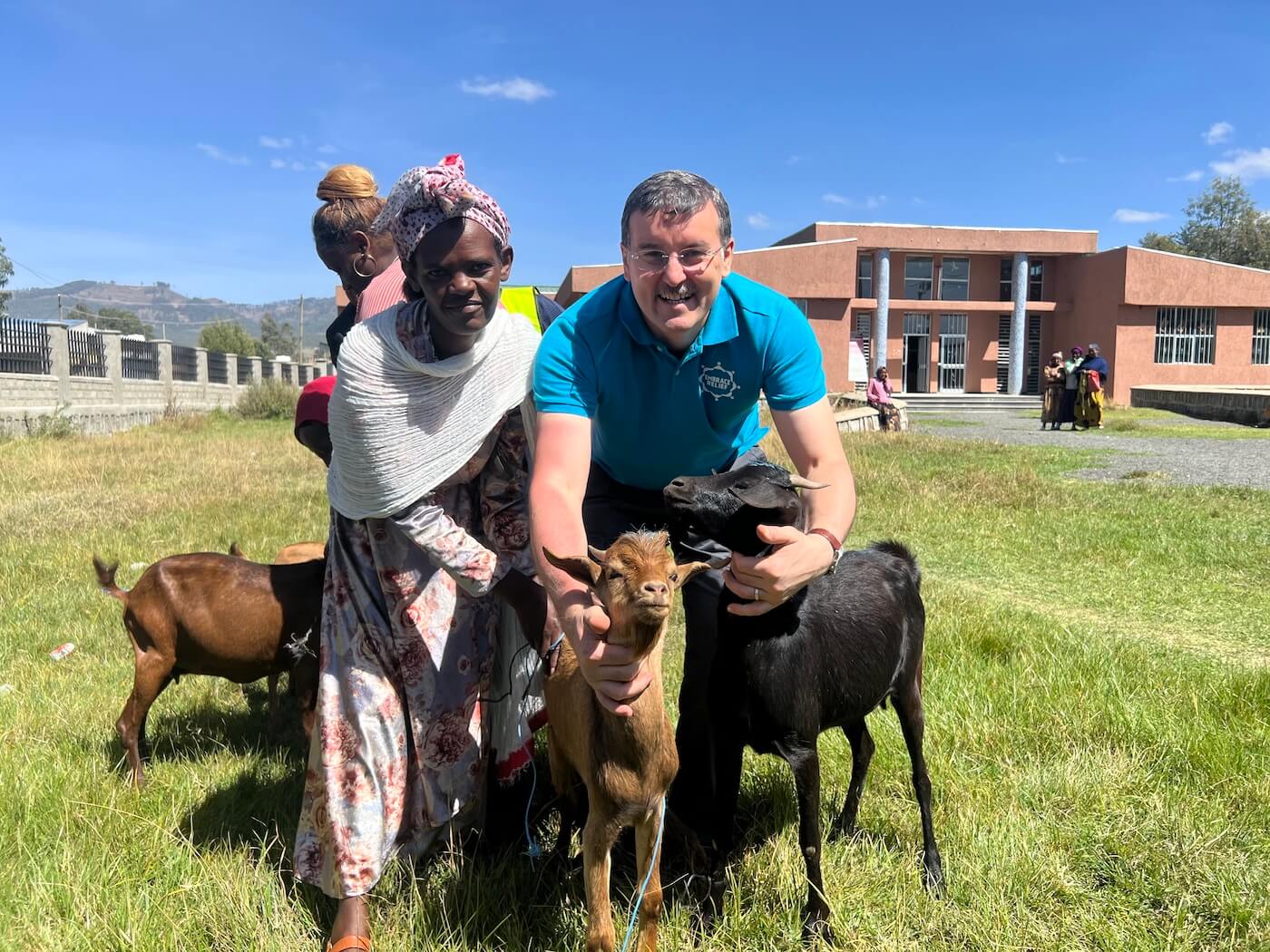
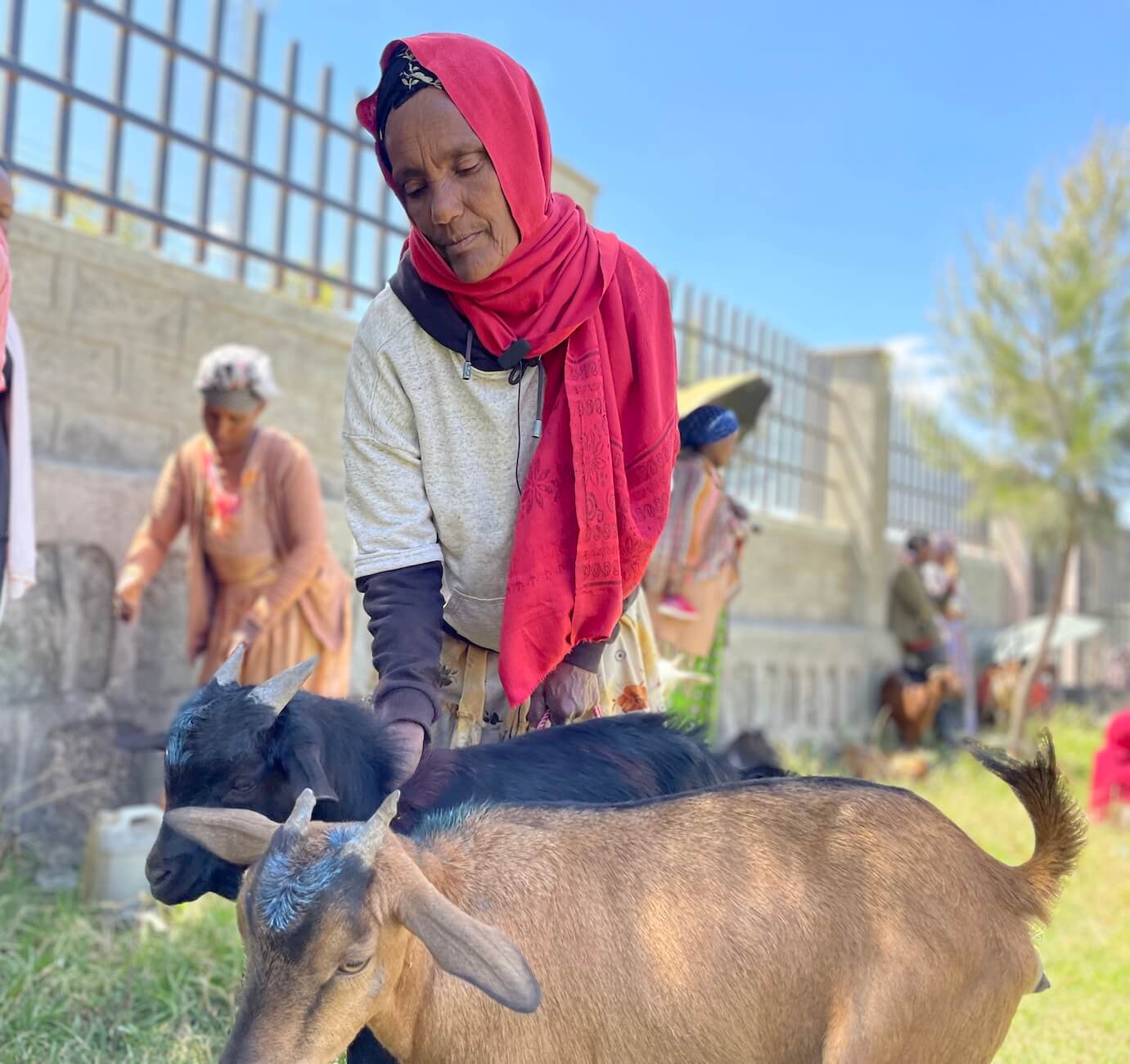
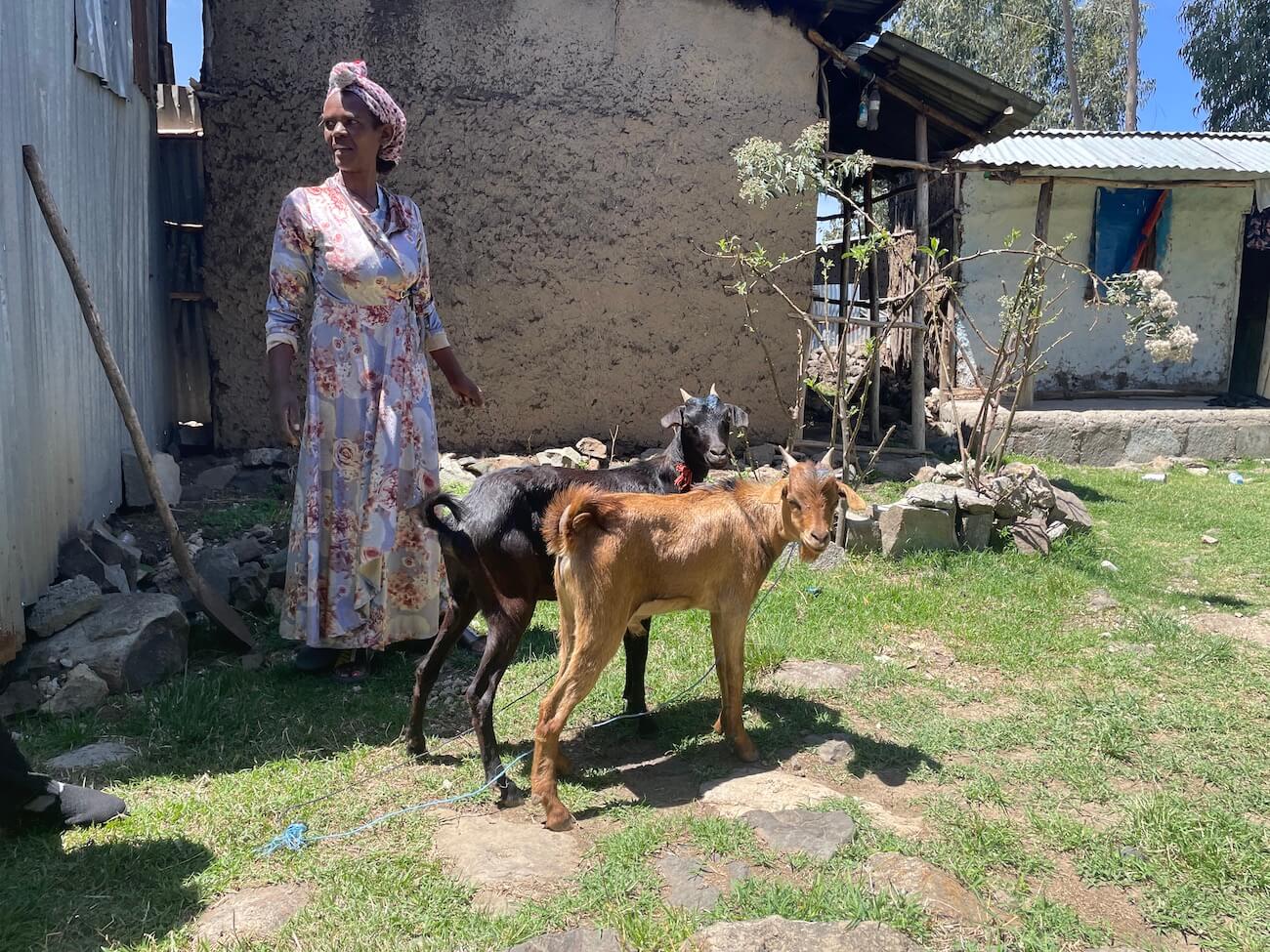
As part of this program, Embrace Relief organized a goat distribution initiative on February 2nd, aiming to equip beneficiaries with the means to start their own livestock businesses and improve their livelihoods. Following the initial distribution, a recent follow-up visit to the distribution site provided an opportunity to assess the progress and impact of the program, accompanied by officers from the FDRE Agency for Civil Society Organization. Their positive reception and appreciation for our efforts served as a validation of the project’s significance in empowering women and promoting economic development in the region.

During this visit, conducted on May 11th, it was heartening to witness the progress made since the project’s inception. Some beneficiaries have already welcomed new offspring from the goats, while others are eagerly anticipating the arrival of newborns. This tangible sign of growth symbolizes not only the expansion of livestock but also the promise of economic stability and self-reliance for participating families.

On this particular Saturday, the bustling open market provided a glimpse into the newfound economic activities of our beneficiaries. Many families had left their homes and headed to the market, seizing the opportunity to showcase their goats and explore potential avenues for trade. Already, the program has fostered entrepreneurship and economic empowerment within the community.

Voices from the Field: Beneficiaries Share Their Stories

Woinshet Seifu, a beneficiary of the SEED program, expressed her gratitude for the opportunity it has provided. “The project may or may not succeed,” she remarked, “but thinking about me, giving me this opportunity by itself is a great honor and that is enough.”

Meseret Tafesse, a single mother and militia member, echoed this sentiment, sharing her hopes for financial stability through goat breeding. “I do believe that getting these goats will give me hope,” she affirmed.

Desta Idossa, a mother of three, emphasized her commitment to becoming a role model for her village through goat farming. “I want to be exemplary for my community and for our Social Affairs Department,” she declared.

As the SEED program continues to flourish in rural Ethiopia, the breeding of goats serves as a beacon of hope and opportunity for participating families. Through sustainable entrepreneurship, beneficiaries are witnessing firsthand the transformative power of livestock ownership in improving livelihoods and fostering economic independence.

Women Empowerment Education

Embrace Relief remains steadfast in its commitment to empowering rural communities and creating lasting change in Ethiopia. By providing opportunities for economic self-reliance and entrepreneurship, we are laying the foundation for a brighter and more prosperous future for all. Together, we can continue to uplift families and communities, one goat at a time.

For more information on the Embrace Relief S.E.E.D. program, click here.

Donate For Women’s Empowerment

$
Donate Now

Do I need to give Qurbani?

Summary

  • With Qurbani approaching, you may be wondering whether or not you must give a Qurbani donation in accordance with Islamic practice.
  • Learn how you can find out if you must give Qurbani this year, and read on to understand who your Qurbani donation will benefit.
  • If you are obliged to give Qurbani in 2024, you can do so with just a few clicks here at Embrace Relief. Your donation will help us feed families around the world, giving people in need the food and hope they need to thrive.

Who must give Qurbani?

Qurbani, also known as Udhiyah, is a significant ritual in Islam performed during the festival of Eid al-Adha. It involves the sacrifice of an animal as an act of obedience and devotion to Allah, and the distribution of meat among family members. It is considered a compulsory obligation for all Muslims of sound mind who are not travelers, and who are in possession of a certain level of personal or household wealth.

How do I know if I owe Qurbani? If you are an adult Muslim in reasonable physical and mental health, and you are not a traveler, then your level of personal wealth determines whether you must give Qurbani. If you possess wealth beyond a certain threshold, known as Nisab, then you must give Qurbani. (The nisab is also the threshold used to determine if a person is eligible to pay Zakat, which is one of the five pillars of Islam.) The nisab threshold is equal to 3 ounces of gold; as of May 2024, this is equivalent to about $7,000 in cash.

According to Islamic teachings, individuals who possess wealth exceeding the Nisab value are obliged to perform Qurbani. This obligation applies to Muslims who are financially capable and possess the required assets during the specified time of the year, typically during the Islamic month of Dhul-Hijjah.

In 2024, the month of Dhul-Hijjah will begin on Friday, June 7. Eid al-Adha, the holy time when Qurbani sacrifices must be performed, is slated to begin during the evening of Sunday, June 16, and conclude on Thursday, June 20.

Who Will Receive My Qurbani Donation?

The distribution of Qurbani meat holds immense importance in Islam. Muslims who give Qurbani are asked to split their meat distribution in thirds, with one part shared among family members, one part shared among friends, and one part given charitably to those in need. This last aspect of Qurbani is critical: by sharing our food with those less fortunate, we improve the overall quality of life for people, and we make our communities stronger. For those who have wealth exceeding the nisab, making a Qurbani donation is a powerful way to make a real impact on people’s lives.

Various categories of individuals are eligible to receive Qurbani donations, including:

  • People living in poverty: This category includes individuals who do not have the means to provide for themselves or their families adequately. Qurbani donations provide them with essential sustenance and alleviate their financial burden, allowing them to eat high-quality, nutritious meat and celebrate Eid with dignity.
  • Orphans and widows: Orphans and widows are among the most vulnerable members of society. Qurbani donations offer them support and comfort during a time that may otherwise emphasize their feelings of loss and isolation.
  • Refugees and displaced persons: Those who have been forced to flee their homes due to conflict, persecution, or natural disasters often face dire living conditions. Qurbani donations contribute to meeting their basic needs and offer them a sense of stability and hope during challenging times.
  • Economically disadvantaged communities: In impoverished regions where access to food and resources is limited, Qurbani donations play a vital role in addressing hunger and malnutrition. By providing nutritious meat, these communities can enjoy a nutritious meal and improve their overall well-being.
Embrace Relief’s Approach to Qurbani

Give your Qurbani today with Embrace Relief

As Qurbani 2024 approaches, Embrace Relief stands ready to help you make an enormous impact in the lives of people living with hunger. To do so, simply make your Qurbani donation to Embrace Relief’s International Hunger Relief campaign by using the donation box below! Each Qurbani donation will provide enough meat for eight families, ensuring that your impact will be felt by entire communities.

In 2023, the generosity of donors like you allowed Embrace Relief to distribute Qurbani meat packages to more than 122,000 people in 19 countries across five continents. For the many families worldwide who struggle to afford nutritious food, this program represents a beacon of hope and support. We’re aiming to expand our impact in 2024 – but we can’t do it without your help.

Give your Qurbani today with Embrace Relief by using the donation box below. Let us mark Eid al-Adha 2024 by sharing our blessings with a family in need, spreading joy and goodwill to all.

The Dual Benefit of Qurbani

Empowering Communities Through School Water Wells

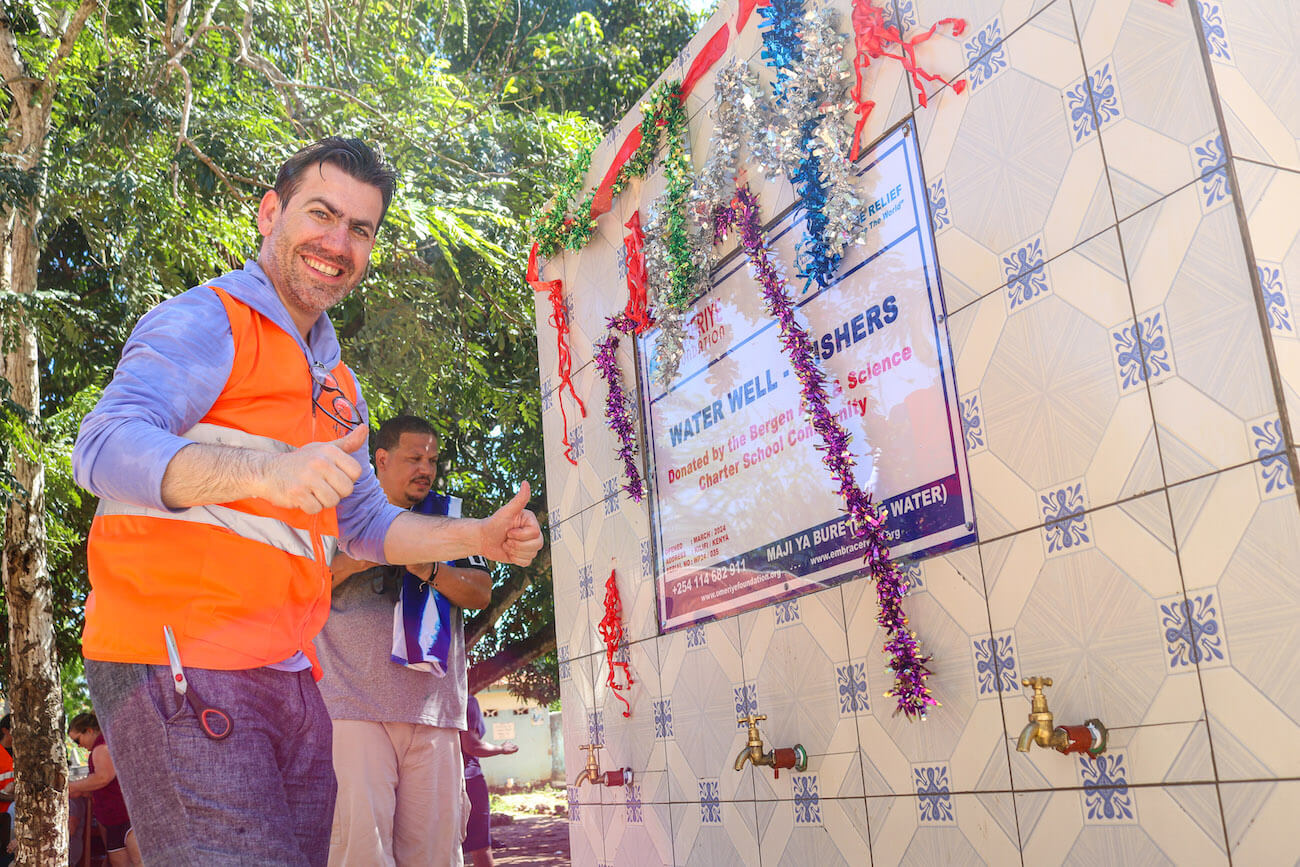
A profound need for clean water lies in the heart of Africa. For many communities, access to this basic necessity is not merely a convenience but a matter of survival. Recognizing this critical need, schools like Bergen Arts and Science Charter School have taken bold steps to make a tangible difference through Embrace Relief’s Group Fundraising program. Their recent humanitarian trip to Kenya exemplifies the transformative power of opening water wells in schools, not just as a source of hydration but as a catalyst for empowerment and opportunity.

The Significance of School Water Wells

In regions where clean water is scarce, the absence of this essential resource perpetuates a cycle of poverty and hardship, particularly for vulnerable populations like children. Without access to safe drinking water, students face not only health risks but also educational barriers, as they must often travel long distances to fetch water, sacrificing valuable learning time. By installing water wells directly within school premises, communities gain a reliable and sustainable source of water that not only quenches thirst but also fuels the thirst for knowledge.

Bergen Arts and Science Charter School’s Humanitarian Trip

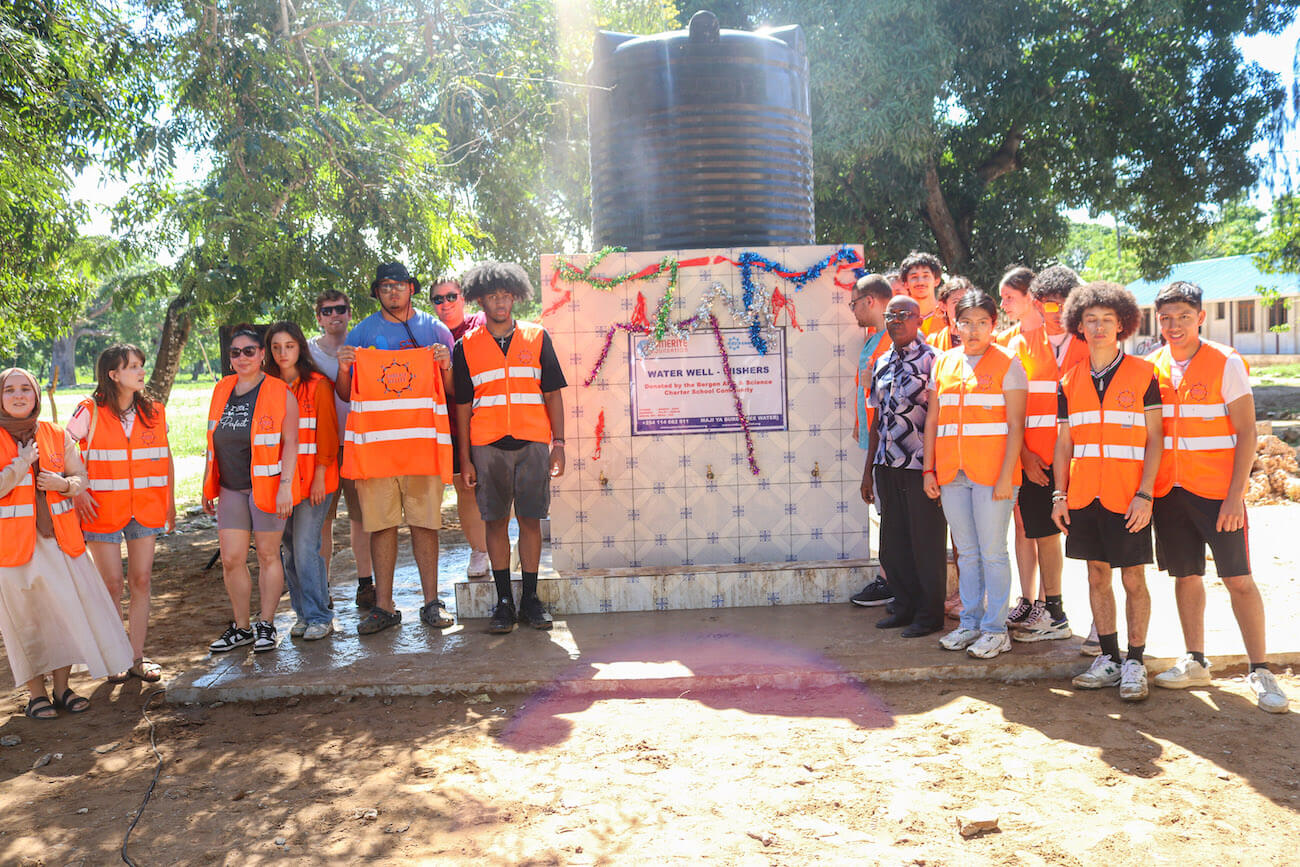
During their humanitarian trip to Kenya, a group of dedicated individuals from Bergen Arts and Science Charter School embarked on a mission to enact meaningful change. Through Embrace Relief’s Group Fundraising program, they raised funds to support the construction of a water well in a local school. This initiative not only addressed the immediate need for clean water but also symbolized a commitment to nurturing the educational aspirations of future generations.

Women Empowerment Education

Empowering Communities Through Education

By integrating water wells into school infrastructure, communities are empowered in more ways than one. Beyond the obvious health benefits, access to clean water within school premises creates a conducive learning environment where students can thrive academically. Moreover, it alleviates the burden on families, particularly women and girls, who traditionally bear the responsibility of water collection. With this burden lifted, students, especially girls, are more likely to attend and remain in school, breaking the cycle of poverty and inequality.

The Ripple Effect of Generosity

The impact of opening a water well in a school extends far beyond its physical boundaries. It sends a powerful message of hope and solidarity, demonstrating that compassion knows no borders. As communities witness the transformation unfolding within their midst, a ripple effect of positivity emerges, inspiring others to join the cause and pay it forward. What begins as a single act of generosity blossoms into a movement of change, echoing across continents and generations.

Empowering Women Through Education: The Role of RISE, LEARN, KEEN, and SEED

Conclusion

In the quest for a brighter future, access to clean water stands as a cornerstone of progress. Through initiatives like Bergen Arts and Science Charter School’s partnership with Embrace Relief, we witness the transformative power of collective action. By opening water wells in schools, we not only quench thirst but also ignite the flames of education and opportunity. Together, let us continue to unlock the potential of communities around the world, one drop at a time.

To start your own Group Fundraising project, click here.

Ending World Hunger: The Role of Qurbani

In the face of global hunger, a crisis that affects over 800 million people worldwide, the act of Qurbani (sacrificial slaughter) during the Islamic festival of Eid al-Adha is more than a religious observance; it’s a potent tool in the fight against hunger. Embrace Relief, with its commitment to humanitarian aid, harnesses the power of Qurbani to feed thousands of needy families across the globe.

Understanding Qurbani’s Impact

Qurbani represents a profound act of charity, a requirement for capable Muslims to share their blessings by sacrificing livestock and distributing meat to the less fortunate. This practice not only fulfills a religious command but also addresses the pressing issue of hunger in underprivileged communities, particularly in developing countries where Embrace Relief operates.

Embrace Relief’s Approach to Qurbani

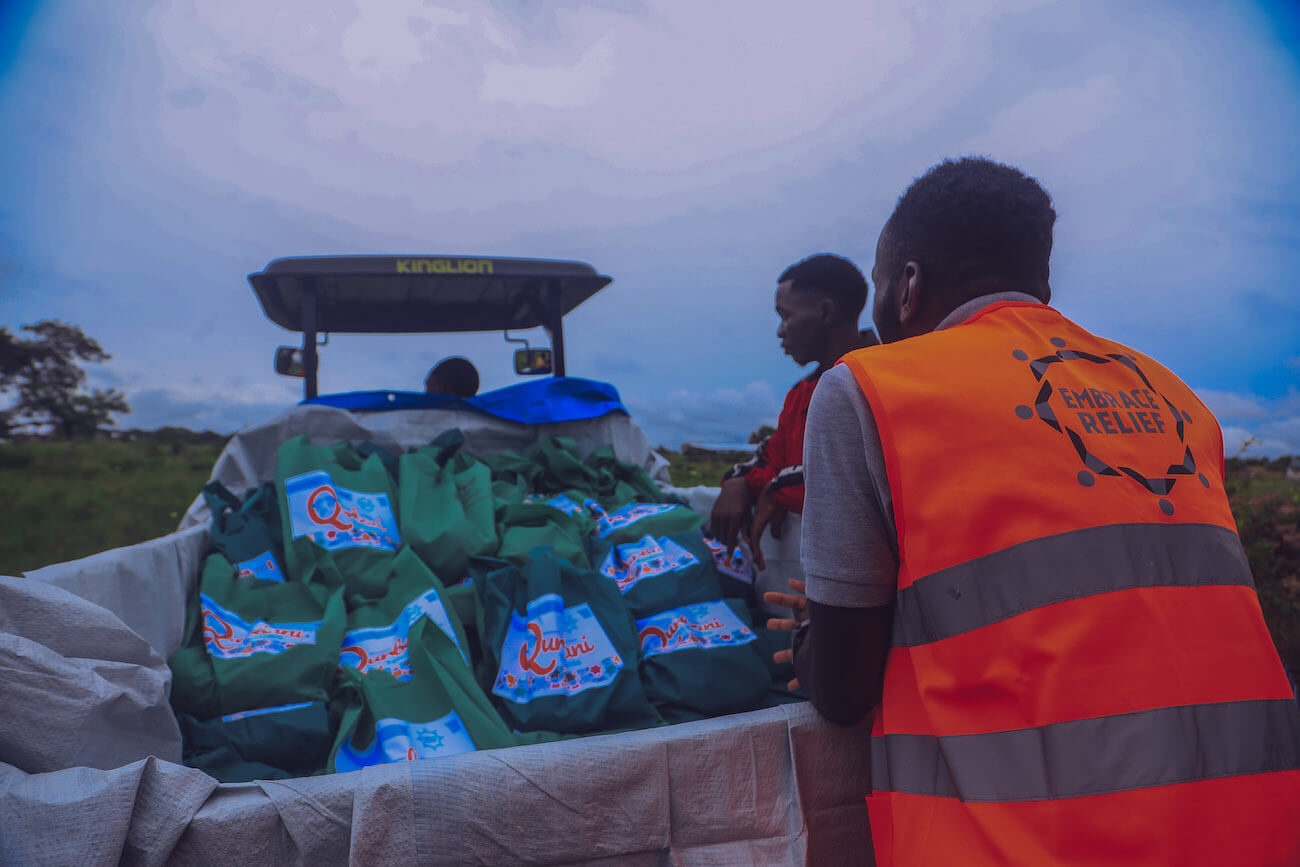
Each year, Embrace Relief organizes Qurbani meat distributions that deliver thousands of pounds of meat to families who often lack access to sufficient nutritious food. Here’s how Embrace Relief maximizes the impact of Qurbani donations:

  • Strategic Selection of Regions: Focusing on areas with the highest rates of malnutrition and poverty, Embrace Relief targets its efforts to ensure that the aid reaches those most in need.
  • Local Procurement of Livestock: By purchasing animals locally, Embrace Relief not only supports the local economy but also ensures that the meat is fresh and culturally appropriate for the recipients.
  • Fair Distribution: Embrace Relief collaborates with local partners to distribute meat fairly and transparently, prioritizing vulnerable groups including widows, orphans, the elderly, and disabled individuals.
Embrace Relief’s Approach to Qurbani

The Dual Benefit of Qurbani

Giving Qurbani through Embrace Relief serves a dual purpose:

  • Alleviating Hunger: The distributed meat provides a valuable source of protein and nutrients, essential for the health and well-being of impoverished families.
  • Promoting Generosity and Unity: Qurbani fosters a sense of solidarity and compassion within the Muslim community and beyond, encouraging people of all backgrounds to contribute to a common cause of ending hunger.
The Dual Benefit of Qurbani

How You Can Participate

Joining Embrace Relief in its Qurbani campaign offers a direct way to make a significant difference:

  • Donate: Your contribution allows Embrace Relief to purchase and distribute more meat. Every dollar spent translates into nutritious meals for families in need.
  • Volunteer: Embrace Relief welcomes volunteers to assist in local distribution efforts, providing an opportunity to see firsthand the impact of your contributions.
  • Educate and Advocate: Raise awareness about the issue of global hunger and the importance of Qurbani as a tool for social change. Sharing information within your community can inspire others to contribute.

Looking Forward

As Embrace Relief continues to expand its Qurbani initiatives, the goal remains clear: to use the principles of sacrifice and charity to not just feed but empower communities. By integrating sustainable practices and expanding the reach of Qurbani, Embrace Relief is committed to making a lasting impact in the global fight against hunger.

Donate Today!

Qurbani is more than just a ritual; it is a commitment to transforming lives through compassion and action. This Eid al-Adha, consider supporting Embrace Relief’s mission to end hunger. Donate using the quick donation box below and together, we can turn the act of sacrifice into a wave of hope that reaches across continents. Give today to help feed a family in need.

The History of Qurbani

Qurbani, also known as Udhiyah, is a profound act of faith and one of the most significant rituals in Islam. It embodies deep spiritual meaning and reflects the principles of sacrifice and charity. For organizations like Embrace Relief, Qurbani is not only a religious observance but a powerful means to aid humanitarian efforts globally. This article explores the historical roots of Qurbani, its spiritual implications, and its application in modern humanitarian initiatives by Embrace Relief.

Understanding Qurbani: The Story of Ibrahim (AS)

Qurbani dates back to the story of Prophet Ibrahim (AS) and his unyielding faith in Allah. Commanded to sacrifice his beloved son, Ismail (AS), as a test of obedience, Ibrahim (AS) was willing to fulfill this divine order. However, before he could carry out the act, Allah intervened and provided a ram to be sacrificed in Ismail’s place. This event is commemorated by Muslims around the world during Eid al-Adha, which coincides with the culmination of Hajj, the holy pilgrimage to Mecca.

The story of Ibrahim (AS) is a cornerstone of Islamic faith, embodying total submission to Allah’s will and the readiness to give up one’s dearest possessions in His path. This act of sacrifice serves as a reminder of Ibrahim’s devotion and is a symbol of unwavering faith.

Women Empowerment Education

The Significance of Qurbani in Islam

Qurbani is mandated for all financially able Muslims. It involves the slaughtering of livestock—usually a goat, sheep, cow, or camel—and distributing its meat among family, friends, and importantly, to the needy. This distribution is crucial; it ensures that even the less fortunate can partake in the meat during the days of Eid al-Adha, promoting social inclusion and charity.

The spiritual significance of Qurbani extends beyond the act of slaughtering; it is a gesture of giving and a way to achieve closeness to Allah by directly supporting those in need. It embodies the spirit of generosity and reminds Muslims of the importance of equality, sharing, and compassion.

Embrace Relief and Qurbani: Extending Compassion Globally

For Embrace Relief, Qurbani is a vital part of their mission to provide relief and support to those in crisis. Through their global Qurbani programs, Embrace Relief not only adheres to Islamic principles but also utilizes these teachings to foster community strength and resilience in the face of hardship.

Each year, Embrace Relief facilitates the distribution of Qurbani meat in over 40 countries, reaching thousands of families who are affected by poverty, disaster, and conflict. This effort is meticulously organized:

  • Local Procurement: Livestock is sourced locally where possible, supporting local economies and ensuring fresh meat reaches those in need swiftly.
  • Fair Distribution: Embrace Relief works with local partners to identify families most in need, ensuring fair distribution and adherence to Islamic principles.
  • Education and Awareness: The process is also used as a tool for education, teaching communities about the importance of charity and the cultural significance of Qurbani.

How to Get Involved

Supporting Embrace Relief’s Qurbani program can take several forms:

  • Financial Contributions: Donations help fund the purchase of livestock and the logistical operations of meat distribution.
  • Volunteering: Embrace Relief offers opportunities for volunteers to get involved in the distribution process, providing a hands-on way to help.
  • Advocacy and Education: By raising awareness of the needs addressed through Qurbani and the work of Embrace Relief, supporters can help expand the reach and impact of these programs.

The Lasting Impact of Qurbani

Beyond its religious significance, the practice of Qurbani has profound social implications. It helps bridge gaps between the affluent and the less fortunate, fosters a sense of brotherhood and community, and acts as a reminder of the blessings many often take for granted.

Empowering Women Through Education: The Role of RISE, LEARN, KEEN, and SEED

Conclusion

Qurbani’s rich history and its embodiment of sacrifice, charity, and faith are as relevant today as they were centuries ago. For Embrace Relief, it is a powerful tool in the fight against global poverty and hunger, bringing tangible aid to those in dire need while fostering spiritual solidarity among Muslims worldwide. By supporting Embrace Relief’s Qurbani efforts, individuals can partake in a tradition of compassion, extend a hand of solidarity to the less fortunate, and embody the true spirit of Eid al-Adha.

As we reflect on the legacy of Prophet Ibrahim (AS) and the ongoing needs of our global community, we are reminded of the impact that collective action and charity can have. Join Embrace Relief this Eid al-Adha in making a significant difference in the lives of many, continuing a legacy of faith, sacrifice, and humanitarianism.

Mother’s Day

Mother’s Day is a time to celebrate the remarkable women who have shaped our lives with their love, guidance, and sacrifice. It’s a day to express gratitude for all they’ve done for us. This Mother’s Day, why not honor your mom in a truly meaningful way by giving the gift of sight to someone in need?

At Embrace Relief, we believe in the power of compassion and the profound impact of small acts of kindness. One such act is sponsoring a cataract surgery in honor of your mom or wife. In Mali, Africa, there are thousands of people living with cataracts, a condition that clouds the eye’s lens and leads to blindness if left untreated. Unfortunately, children as young as 9 contract cataracts due to poverty, malnutrition, the harsh weather conditions, or a head injury. For many of these individuals, access to proper medical care is limited, and they face the prospect of living in darkness for the rest of their lives.

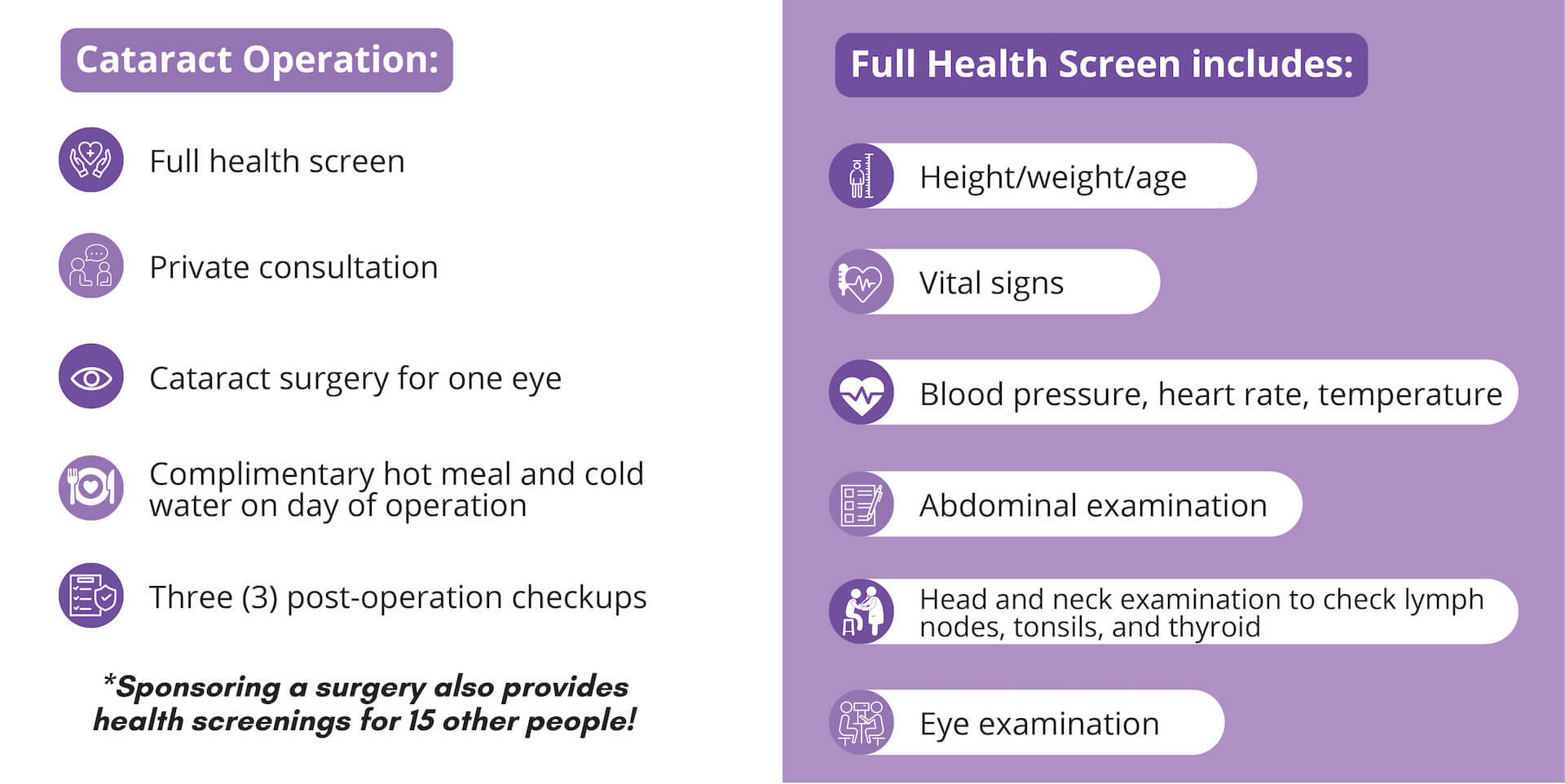
But there is hope. Through our health and cataract surgery program, we provide life-changing surgeries to those in need, restoring their vision and transforming their lives. Each surgery is just $120 and goes beyond covering the cost of a cataract surgery and includes:

By sponsoring a cataract surgery in your mother’s name, you’re not only honoring her love, sacrifice, and commitment, but you’re also giving the gift of sight to someone who would otherwise live the rest of their life visually impaired.

It’s a beautiful way to show your appreciation for everything your mom has done for you, while also making a tangible difference in the life of another.

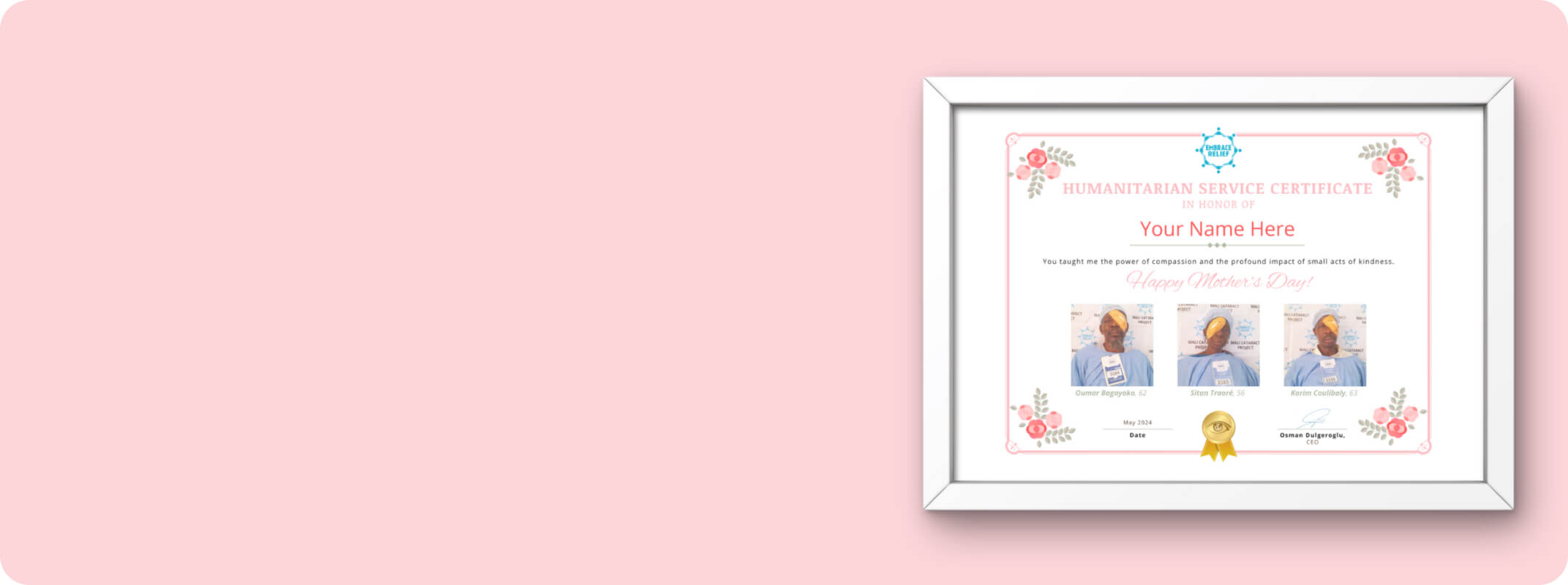
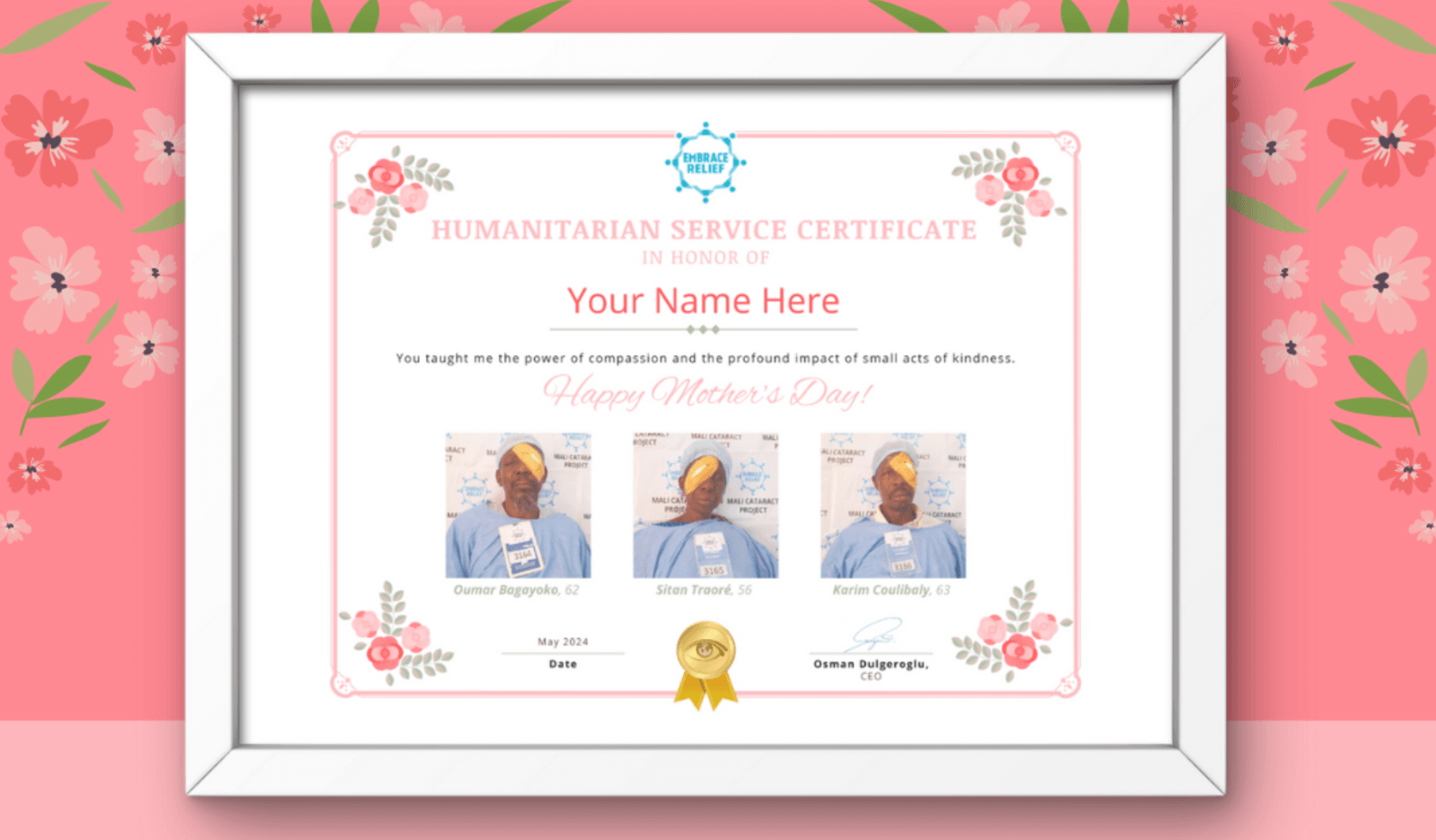
You can commemorate this special gift with a custom Cataract Surgery Certificate which includes a picture and information about the person whose surgery you sponsored.

This Mother’s Day, let’s honor our moms in a meaningful way. Let’s give the gift of sight and transform lives together. It’s a gift that truly keeps on giving, spreading love, hope, and compassion to those who need it most. Join us in making a difference.

To sponsor a cataract surgery or learn more about our programs, please click here.

Donate to Embrace Relief’s Cure Cataract program in Mali!

That’s where Embrace Relief comes in. We support three clinics in the capital city of Mali, Bamako, which provide cataract surgeries free of charge to people who need them.

Thanks to donations from generous people like you, our clinics have been able to give 36,000 Malians – including thousands of children under the age of 10 – the gift of sight. A donation of just $120 can provide a life-changing cataract surgery, as well as a preventative health screening, for someone in need.

So for Cataract Awareness Month, join Embrace Relief and sponsor a cataract surgery through our Cure Cataract program! Give hope to people in Mali and make the world a brighter place with just a couple clicks.

$

Breaking Chains: The Birth of First Wave Feminism and Its Relevance Today

Summary

  • Unearth the conditions women faced before the advent of first wave feminism and the monumental changes it brought.
  • Examine the enduring struggles for gender equality and the significant impact of initiatives like RISE, LEARN, KEEN, and SEED.
  • Join us in supporting women’s empowerment programs to build a more inclusive and equitable future.

Before the dawn of first wave feminism in the late 19th and early 20th centuries, women’s lives were confined by restrictive societal norms and legal limitations. Denied the right to vote, own property, or even retain custody of their children after a divorce, women were often treated as dependents of their fathers or husbands. Their roles were primarily domestic, focusing on housekeeping, child-rearing, and supporting their husbands’ endeavors.

Education and professional opportunities for women were severely limited. Higher education institutions were mostly closed to them, and the few job opportunities available were often low-paying and considered extensions of their domestic roles, such as teaching, nursing, or domestic service. Women were expected to embody virtues of piety, purity, submissiveness, and domesticity, a framework known as the “cult of true womanhood.”

The first wave of feminism emerged as a powerful response to these oppressive conditions. Activists like Elizabeth Cady Stanton, Susan B. Anthony, and Sojourner Truth in the United States, and Emmeline Pankhurst in the United Kingdom, spearheaded movements that fought tirelessly for women’s suffrage, property rights, and access to education. The Seneca Falls Convention of 1848 marked a pivotal moment, where the Declaration of Sentiments was adopted, demanding equal rights for women, including the right to vote.

This movement faced staunch resistance from entrenched patriarchal systems but persevered through advocacy, protests, and relentless campaigning. Significant victories were achieved, such as the passage of the 19th Amendment in the United States in 1920, which granted women the right to vote. These milestones laid the groundwork for subsequent waves of feminism that would continue to push for greater gender equality.

Despite the progress made by first wave feminists, many women worldwide still face conditions reminiscent of pre-feminist eras. In various regions, women continue to be denied education, face restrictions on their autonomy, and experience gender-based violence. Economic disparities, political underrepresentation, and social discrimination persist, underscoring the ongoing need for feminist advocacy.

Breaking Chains: The Birth of First Wave Feminism and Its Relevance Today

Empowering Women Today Through Education and Economic Opportunities

To address these enduring challenges, initiatives like RISE, LEARN, KEEN, and SEED are crucial. These programs are designed to empower women and girls, providing them with the tools and resources needed to overcome barriers and achieve their full potential.

The RISE (Reach, Inspire, Support, Educate) program empowers women to become leaders in their communities. By breaking down barriers to gender equality and fostering a culture of inclusivity and diversity, RISE helps women build confidence and leadership skills. This program is instrumental in enabling women to take on leadership roles, advocate for themselves, and inspire others in their communities.

LEARN (Learning and Education for Afghan girls’ Rights and Needs) focuses on providing quality education to women and girls. Access to education is a fundamental step toward achieving gender equality and empowering women to take control of their futures. LEARN enables women and girls to unlock their potential, pursue their dreams, and contribute meaningfully to society.

KEEN (Kenya Entrepreneurial Empowerment Network) equips women with entrepreneurial skills and knowledge, promoting economic independence and financial empowerment. By training women to start and grow their businesses, KEEN contributes to economic stability for their families and communities. This program not only fosters financial independence but also supports the broader economic development of the regions where these women operate.

The SEED (Sustainable Entrepreneurship through Eggs and Dairy) program provides women with resources to engage in sustainable agricultural practices. This ensures food security and economic stability, allowing women to support their families and communities effectively. SEED empowers women by giving them the tools to create sustainable livelihoods, thus enhancing their economic resilience and that of their communities.

Breaking Chains: The Birth of First Wave Feminism and Its Relevance Today

As we reflect on the remarkable progress made since the first wave of feminism, we must also recognize the ongoing struggle for gender equality. By supporting initiatives like RISE, LEARN, KEEN, and SEED, we can continue to empower women and girls, helping them overcome barriers, shatter stereotypes, and achieve their full potential. Together, let’s build a future where every woman and girl can exercise her right to vote and participate fully in society.

For more information on Embrace Relief’s women’s empowerment programs, click here!

Donate For Women’s Empowerment

$
Donate Now