


Recent

Trusted Qurbani Donation 2025: Where and How to Give with Confidence

Each year, millions of Muslims around the world prepare to fulfill the sacred duty of Qurbani during Eid ul-Adha. In 2025, more people than ever are turning to online platforms to give their sacrifice securely, ethically, and in full accordance with Islamic principles. But in the search for trusted donation options, many simply look up terms like “Islamic relief Qurbani” to find a reliable way to perform their obligation.

The goal, however, isn’t just to click the first result. It’s to ensure your Qurbani donation is Shariah-compliant, transparent, and impactful—so your worship reaches those in need and earns maximum reward.

What to Look for in a Reliable Qurbani Program

Choosing the right Qurbani donation service means more than picking a familiar name. Here’s what you should prioritize:

  • Shariah compliance: The sacrifice must be performed after Eid prayer, during the valid days of Eid (10th–12th Dhul-Hijjah), and follow proper Islamic rules.
  • Transparency: A trustworthy program shares where and how your donation is carried out, including distribution reports and process updates.
  • Reach: The organization should deliver meat to regions where it makes a real difference—such as refugee communities, impoverished villages, and disaster zones.

Online Qurbani Donations in 2025: Growing, But Not Equal

Online Qurbani giving continues to grow as Muslims around the world seek convenience and confidence in their worship. But not every platform offers the same level of integrity. Many users search for general terms like “Islamic relief Qurbani donation” or “best Qurbani organization”—but what matters is who actually delivers on the promise.

That means finding a charity that shows how your Qurbani is processed, confirms when it’s done, and provides access to help where it’s needed most.

Embrace Relief: Qurbani Done Right

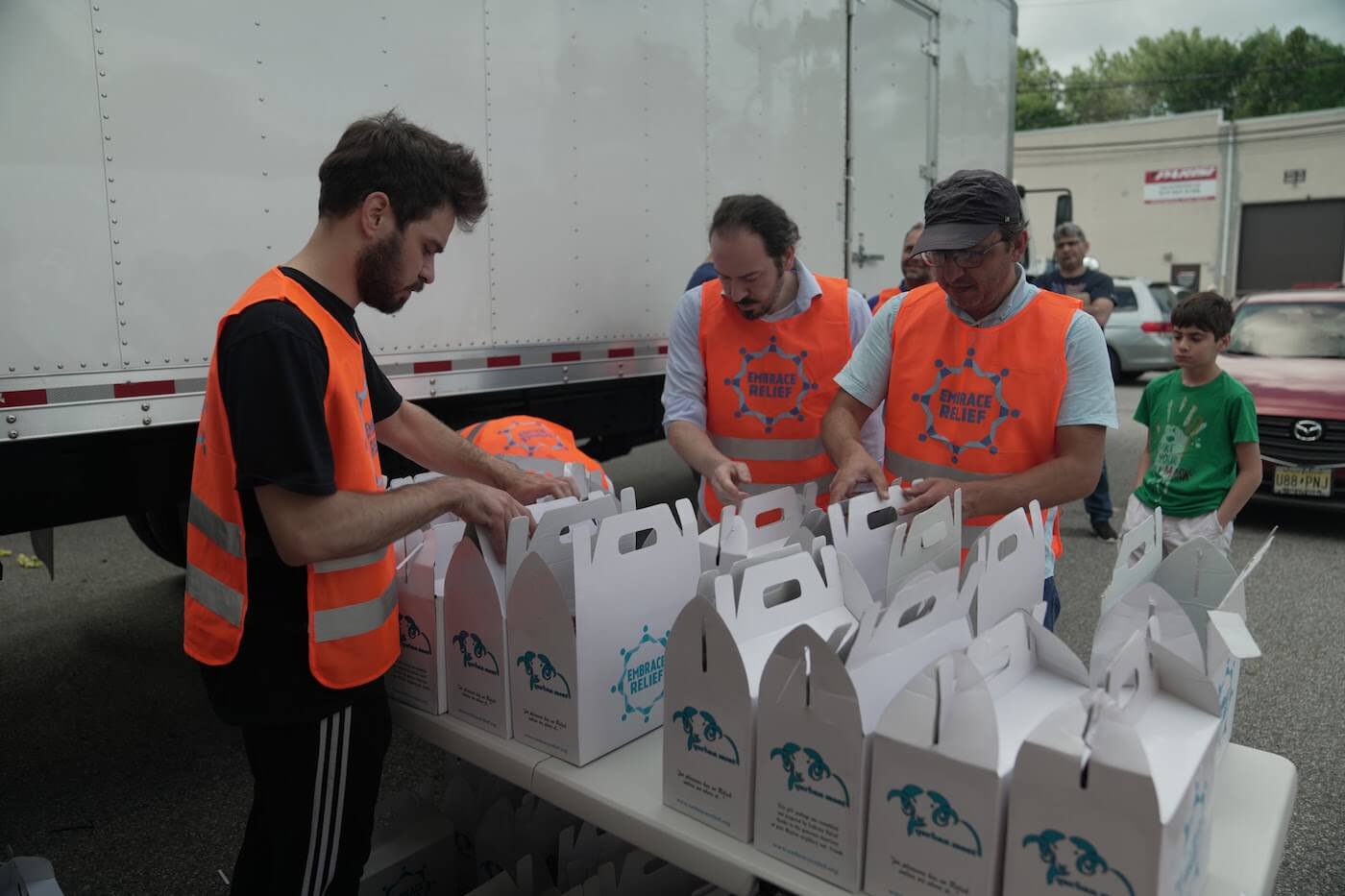
Embrace Relief provides a Qurbani program that stands out for its transparency, speed, and impact. With operations in over 20 countries, and with plans to provide fresh meat to more than 250,000 people in 2025, the organization sources healthy livestock, performs sacrifices during the proper days of Eid, and ensures meat reaches families who would otherwise go without.

Whether you’re donating a full goat or a cow share, Embrace Relief’s Qurbani service provides real-time assurance that your sacrifice meets both Islamic law and humanitarian urgency.

Your donation supports:

  • Food relief for orphans and widows
  • Meat delivery to remote, underserved areas
  • Ethical sacrifice practices monitored by local teams

Donate your Qurbani with Embrace Relief: https://www.embracerelief.org/charitable-donation-for-hunger-relief/qurbani/

Final Thoughts

As you prepare your Qurbani for 2025, choose a path that reflects the values of sincerity, responsibility, and trust. Many search for terms like “Islamic relief Qurbani” hoping to find a trustworthy place to give. What truly matters is that your Qurbani is performed properly, benefits the most vulnerable, and fulfills your duty to Allah.

Make your Qurbani count. Give through Embrace Relief and bring nourishment and dignity to families in need this Eid ul-Adha.
Who Can Receive Qurbani Meat?

Qurbani, or Udhiyah, is the sacred act of animal sacrifice during Eid ul-Adha, symbolizing devotion to Allah and compassion for humanity. A key aspect of Qurbani is how the meat is shared. But who can actually receive Qurbani meat according to Islamic guidelines?

Whether you’re preparing to perform Qurbani yourself or donating through a trusted organization like Embrace Relief, understanding the rules of meat distribution ensures your sacrifice is spiritually accepted and ethically impactful.

The Three-Part Division of Qurbani Meat

Islam encourages Muslims to divide the Qurbani meat into three equal parts:

  1. One-third for your household – This portion is for personal and family consumption.
  2. One-third for relatives and friends – You may give this to neighbors, colleagues, or anyone you wish to include in the joy of Eid.
  3. One-third for the poor and needy – This is the most crucial portion, directed toward those who cannot afford meat or proper meals.

This three-part model ensures that Qurbani remains both an act of personal worship and communal generosity.

Who Is Eligible to Receive Qurbani Meat?

According to Islamic law, anyone in need can receive Qurbani meat, including:

  • The poor (those who do not meet the nisab threshold)
  • The needy (those who struggle to meet daily expenses)
  • Orphans and widows
  • Refugees and displaced families
  • Disaster-affected communities
  • Low-income households

Recipients do not need to be Muslim, although priority is often given to Muslims in Islamic-majority programs. The overarching rule is that the recipient should not be wealthy and should be someone who genuinely needs support.

Who Cannot Receive Qurbani Meat?

Islamic guidelines prohibit giving Qurbani meat to:

  • The donor themselves as charity (you can eat and share, but not donate your own portion as zakat)
  • Non-needy individuals who exceed the nisab
  • Non-beneficiary slaughterhouse workers as compensation (unless they are also needy and it’s a gift, not payment)

The distribution should be made with the intention of charity, and not as a means to pay for services.

Embrace Relief’s Global Qurbani Distribution

Embrace Relief ensures that your Qurbani meat reaches those who need it most. The organization:

  • Performs sacrifice according to Shariah
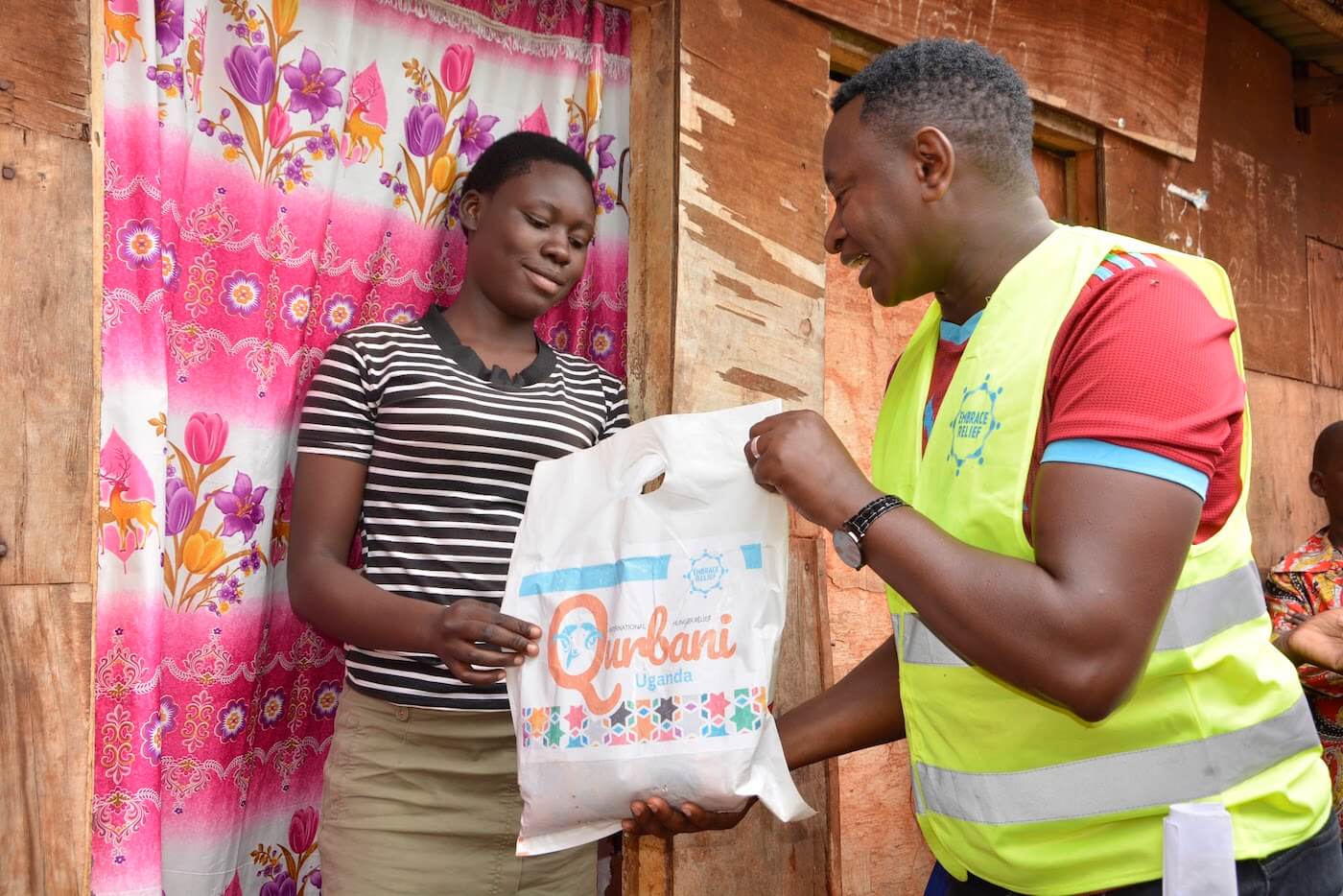
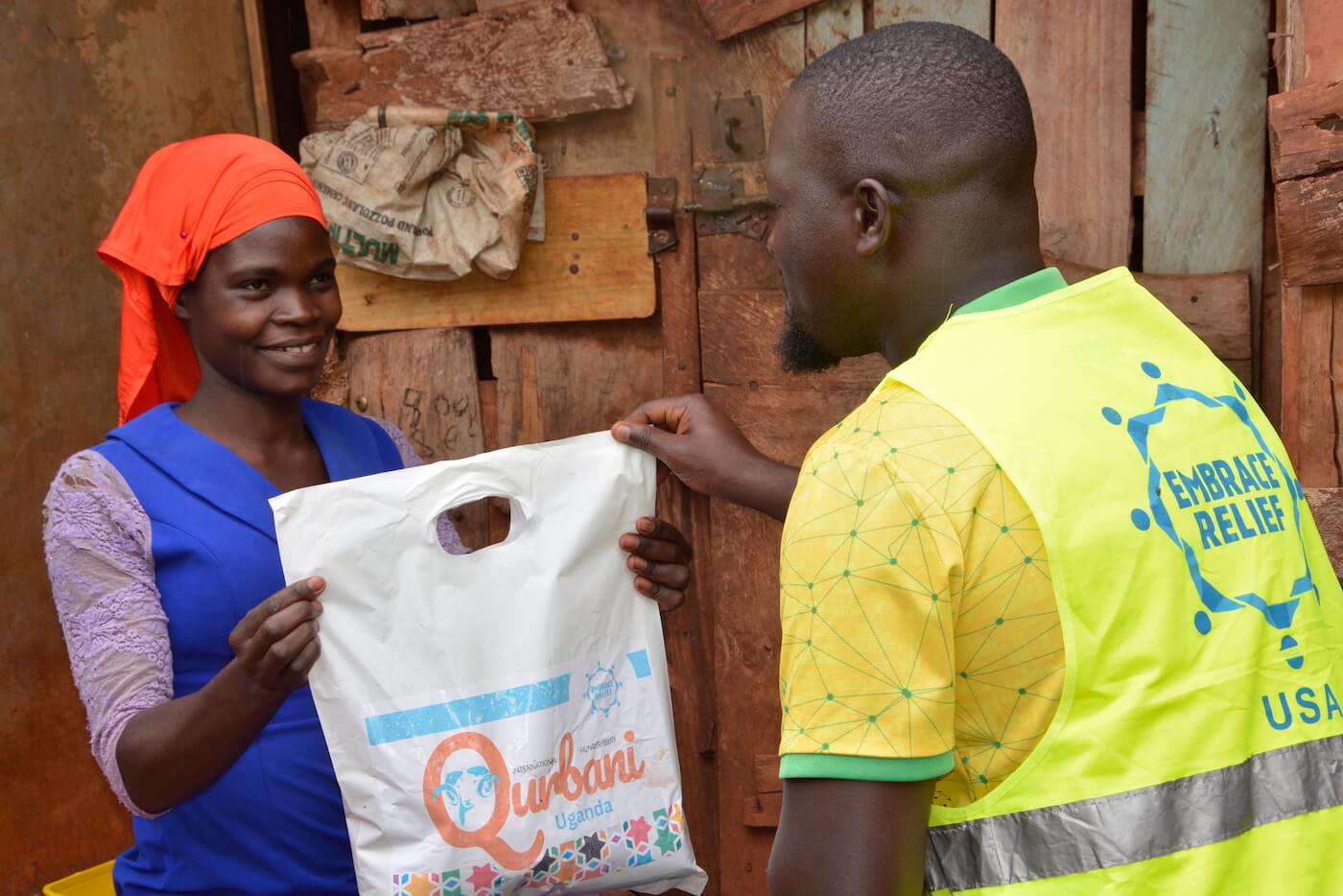
  • Distributes meat to impoverished communities in Africa, Asia, and the Middle East
  • Prioritizes vulnerable groups such as orphans, widows, and refugees
  • Operates with full transparency and ethical sourcing

Donate your Qurbani through Embrace Relief: https://www.embracerelief.org/charitable-donation-for-hunger-relief/qurbani/

Final Thoughts

Qurbani is more than a ritual—it’s a moment of mercy. By understanding who can receive Qurbani meat, Muslims fulfill their duty to spread compassion and nourishment to those most in need. Whether you distribute meat personally or through a humanitarian organization, your Qurbani should be a reflection of sincerity, care, and generosity.

Make your Qurbani count. Donate through Embrace Relief and help feed families in need this Eid ul-Adha.
How to Say Happy Eid in Different Languages Around the World

Eid is a time of joy, prayer, reflection, and togetherness. Whether it’s Eid ul-Fitr or Eid ul-Adha, Muslims across the world greet each other with warm wishes of peace and happiness. While the sentiment remains the same, the words used to say “Happy Eid” vary from country to country.

This guide explores how Muslims express Eid greetings in different languages, giving you a global view of how this beautiful celebration unites diverse communities with one universal message: peace, gratitude, and joy.

Common Eid Greeting in Arabic

Arabic: Eid Mubarak (عيد مبارك)

  • Meaning: Blessed Eid
  • Widely used across the Middle East, North Africa, and by Muslims globally.

Arabic: Eid Sa’id (عيد سعيد)

  • Meaning: Happy Eid
  • Often used interchangeably with Eid Mubarak.

South Asia: Urdu, Hindi, Bengali

Urdu (Pakistan): Eid Mubarak (عید مبارک)

  • Common in Pakistan and spoken by Urdu-speaking communities worldwide.

Hindi (India): Eid Mubarak (ईद मुबारक)

  • Used by Indian Muslims and Hindi speakers.

Bengali (Bangladesh): ঈদ মোবারক (Eid Mubarak)

  • Slight variation in script but retains the Arabic origin and pronunciation.

Southeast Asia: Malay and Indonesian

Malay (Malaysia): Selamat Hari Raya Aidilfitri / Aidiladha

  • Meaning: Happy Eid celebration (Eid ul-Fitr or Eid ul-Adha)

Indonesian: Selamat Idul Fitri / Idul Adha

  • Common greeting in the world’s most populous Muslim country.

Turkey and Central Asia

Turkish: Bayramınız Mübarek Olsun

  • Meaning: May your Eid be blessed
  • Used during both Eid ul-Fitr and Eid ul-Adha

Kazakh: Qurban Ait Qutty Bolsyn

  • Meaning: Blessed Qurbani Eid (used during Eid ul-Adha)

Uzbek: Qurbon Hayiti Muborak Bo‘lsin

  • Traditional greeting for Eid ul-Adha in Uzbekistan

Africa

Swahili (East Africa): Iddi Njema

  • Used in Kenya, Tanzania, Uganda, and parts of the Swahili Coast

Hausa (West Africa): Barka da Sallah

  • Popular in Nigeria, Niger, and surrounding countries

Somali: Ciid Wanaagsan

  • Common in Somalia and among Somali communities globally

Western Countries

In the United States, Canada, the UK, and Europe, Muslims often use “Eid Mubarak” in English-speaking settings. In multicultural gatherings, you may hear multiple versions depending on the ethnic diversity of the Muslim community.

Celebrate Globally, Give Locally

Eid greetings are more than just words—they represent unity, joy, and faith shared across borders. Whether you say “Eid Mubarak,” “Bayramınız Mübarek Olsun,” or “Selamat Hari Raya,” you are part of a global celebration.

This Eid, share more than greetings. Support a cause that brings joy to others. Through Embrace Relief, your donation can help deliver food, clean water, and vital support to those in need.

Make your Eid meaningful. Donate through Embrace Relief: https://www.embracerelief.org/charitable-donation-for-hunger-relief/qurbani/

Final Thoughts

Language may differ, but the spirit of Eid is universal. Use these greetings to connect with Muslims worldwide and spread the joy of Eid. No matter how you say it—Happy Eid, Eid Mubarak, Selamat Hari Raya—your words have the power to unite hearts.

From all of us: Eid Mubarak!

Students Take the Lead: Hill Academy Hosts a Day of Service, Solutions, and Inspiration

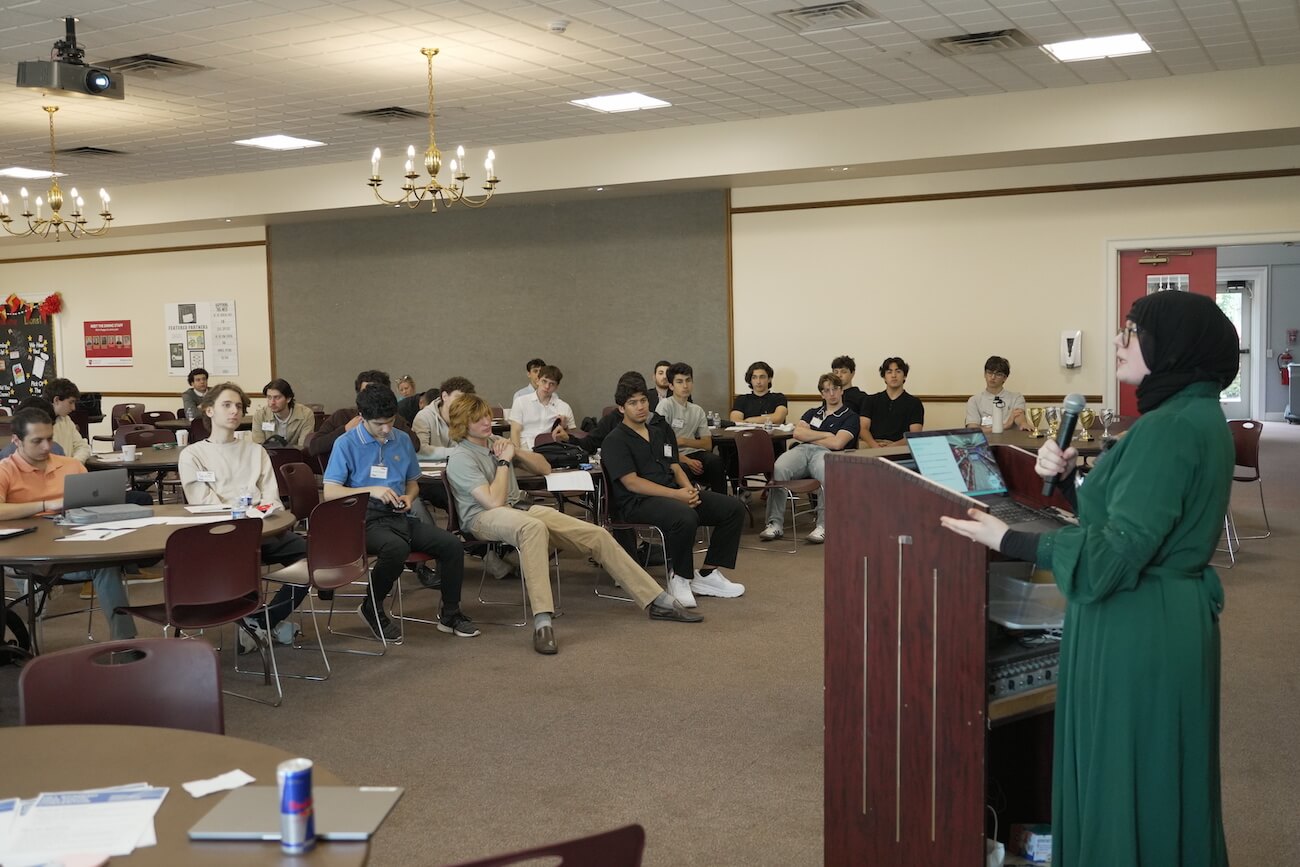
BETHLEHEM, PA–On Saturday, May 17, Embrace Relief was proud to participate in the Hill Academy High School Convention at Moravian Academy’s Merle Smith Campus in Bethlehem. The day-long event brought together a remarkable group of high school students, educators, and nonprofit partners to tackle two of the most pressing challenges of our time: food security and education equality.

During the afternoon program, a representative from Embrace Relief took the stage to speak directly to the students about the reality of food insecurity in underserved communities, and more importantly, what young people can do to make a difference.

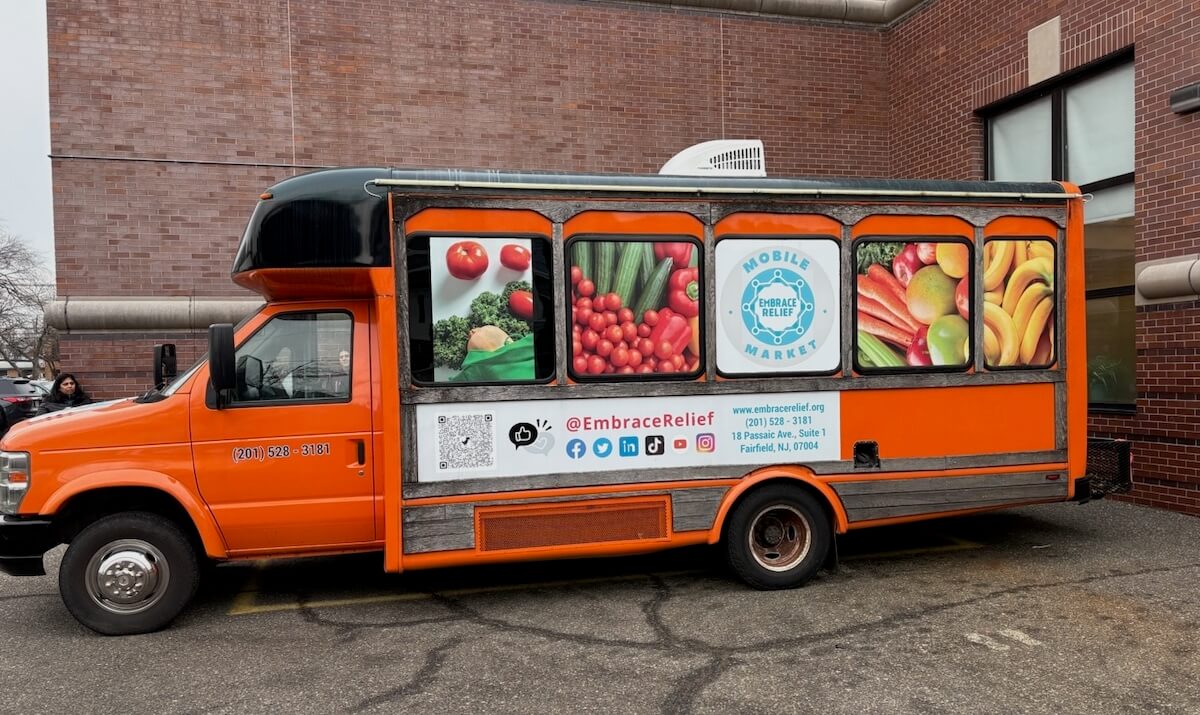
One of the key solutions discussed was Embrace Relief’s Mobile Farmers’ Market, a pop-up grocery store designed to serve families in food deserts. The Mobile Market travels directly into neighborhoods where access to healthy, affordable food is limited. Through partnerships with schools, religious centers, and local leaders, the program provides fresh produce to families in need, always at no cost.

This isn’t a handout. It’s a community-based solution powered by donations and supported by volunteers; many of whom are students. By bringing nutritious food directly to people who need it most, the Mobile Market is helping to close the hunger gap, one stop at a time.

But the conversation didn’t stop at food insecurity. Embrace Relief also introduced students to Group FUNdraising, an initiative that puts power directly in their hands. Group FUNdraising gives students and youth groups the chance to:

  • Choose a humanitarian cause that matters to them, like clean water, food security, or education access.
  • Raise funds through peer-to-peer support, creative events, and community engagement.
  • Travel abroad (optional) to witness the impact firsthand, whether that’s distributing food packages, building water wells, or supporting orphanages.

The message was simple: You don’t have to wait to graduate to be a changemaker. You can start right now.

This message resonated strongly with Hill Academy students, who have already shown deep commitment to service. Their past efforts include:

  • Building water wells and supporting orphanages in Kenya and Tanzania
  • Fundraising for earthquake relief in Turkey
  • Organizing food drives for families of the incarcerated in Philadelphia
  • Mentoring and tutoring fellow students
  • Hosting seasonal retreats focused on growth and leadership

As these young leaders gathered to share ideas and forge new partnerships, the energy in the room was undeniable. The day was a celebration of youth-led activism—and a powerful reminder that meaningful change can start in any classroom, community center, or club meeting.

Want to join the movement?

Whether you’re part of a school club, youth group, or simply passionate about making a difference, Group FUNdraising gives you the platform to lead with purpose.

Donate For Mobile Market

$
Donate Now

Supporting Orphaned Children in Africa: 5 Facts That Will Inspire You to Act

Summary

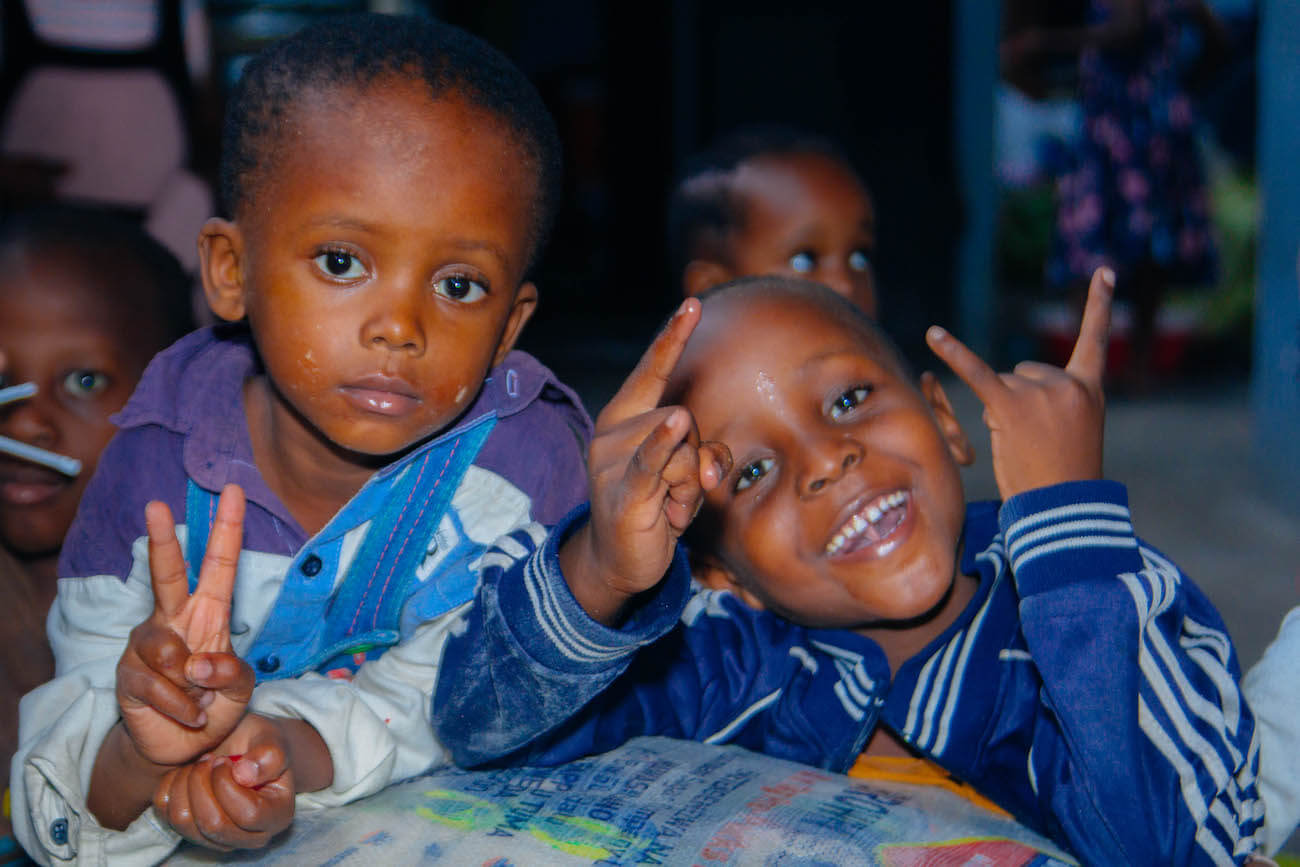
  • Most orphaned children in Africa live with extended families or in unsafe conditions, not orphanages.
  • Diseases like HIV/AIDS and malaria are leading causes of orphanhood.
  • Without support, orphaned children face risks like exploitation and poverty.
  • Learn how you can support Embrace Relief’s efforts to empower orphans with education, healthcare, food, and safe shelter.

When we think about orphaned children, it’s easy to focus on the obvious — a lack of parents and a need for shelter. But behind these basic needs lies a deeper, more complex reality, especially for orphans in Africa. Every day, millions of vulnerable children across the continent face challenges most of us could never imagine, yet they also show incredible strength and hope.

At Embrace Relief, we are committed to helping these children not just survive — but thrive. Today, we’re uncovering five powerful facts about orphaned children in Africa that every compassionate donor should know.

1. Most Orphans Are Not Living in Orphanages

It’s a common misconception that orphaned children are always cared for in official institutions. In reality, most live with extended families or in precarious, unstable conditions without consistent support.

Without structured care, these children in need often miss out on basic essentials like education, nutrition, and healthcare — leading to a cycle of poverty and lost opportunities.

2. Disease Is a Leading Cause of Orphanhood

While conflict and war grab headlines, diseases like HIV/AIDS, malaria, and COVID-19 have quietly devastated families, leaving millions of children orphaned.

Lack of healthcare access in many African regions means preventable illnesses continue to separate children from their parents. Understanding this reality reminds us how urgent it is to help orphaned children by improving their living conditions and medical care.

3. Orphaned Children Face Higher Risks of Exploitation

Without the security of a stable home, orphaned children are at heightened risk of human trafficking, child labor, and other forms of abuse.

Strong, well-supported orphan care programs are critical to providing safe environments where children can heal, grow, and stay protected from harm.

4. Education Is Their Best Hope But It’s Often Unattainable

Education is the most powerful tool to break the cycle of poverty. Yet for millions of orphaned children in Africa, access to education remains out of reach due to school fees, lack of supplies, and other barriers.

Without your help, these bright young minds lose their chance at a future full of possibilities. By supporting child sponsorship programs, you can directly fund their education and change their destiny.

5. Small Contributions Create Big Impact

One of the most inspiring facts? It doesn’t take much to change a life.Even small monthly donations to a trusted charity for orphan children can provide nutritious meals, school supplies, healthcare services, and a safe home. In many African countries, where resources go further, your generosity can truly be life-changing.

How Embrace Relief Is Reimagining Orphan Care in Africa

At Embrace Relief, we believe that caring for orphaned children means more than just meeting their basic needs — it’s about helping them heal, empowering them to dream, and equipping them to succeed.

Across Africa, we partner with trusted local orphanages to create nurturing environments where children don’t just survive — they flourish. Here’s how your support transforms lives:

Through your donations to Embrace Relief’s child sponsorship and orphan care initiatives, we are helping thousands of children recover from trauma, rebuild confidence, and chase their dreams.

Be the Hope They Are Waiting For

Every child deserves a chance to dream. Every child deserves a future.

Today, you have the opportunity to be a part of something powerful — a global movement of compassion.

Your gift to Embrace Relief’s Orphan Care Program will provide an orphaned child with the essentials they need to survive today — and the education they need to succeed tomorrow.

Donate today and be the reason a child smiles, grows, and reaches for the stars.

Donate For Orphan Care Campaign

$
Donate Now

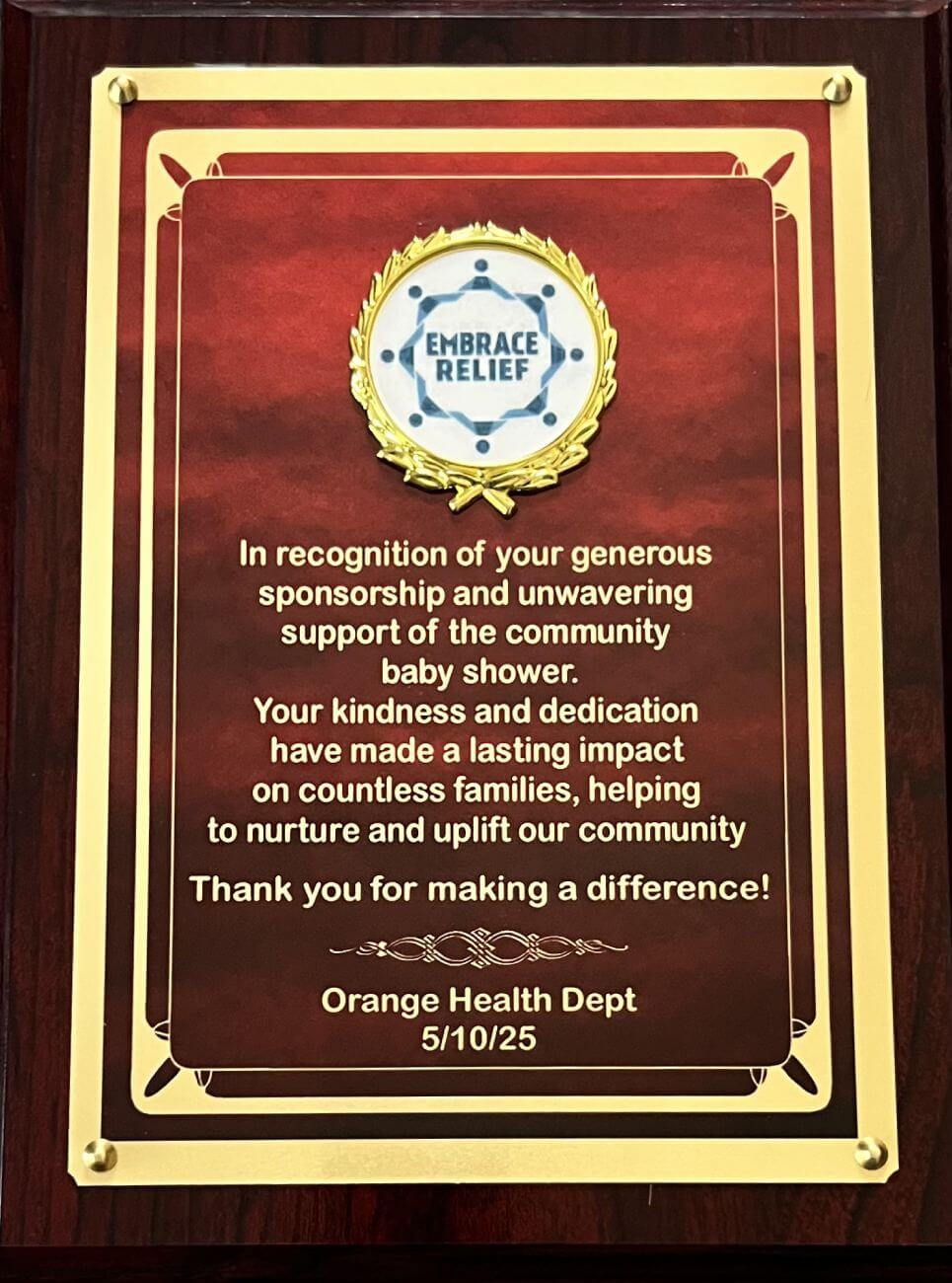
Embrace Relief Provides 250 Baby Care Gift Bags at Orange City Township’s Community Baby Shower

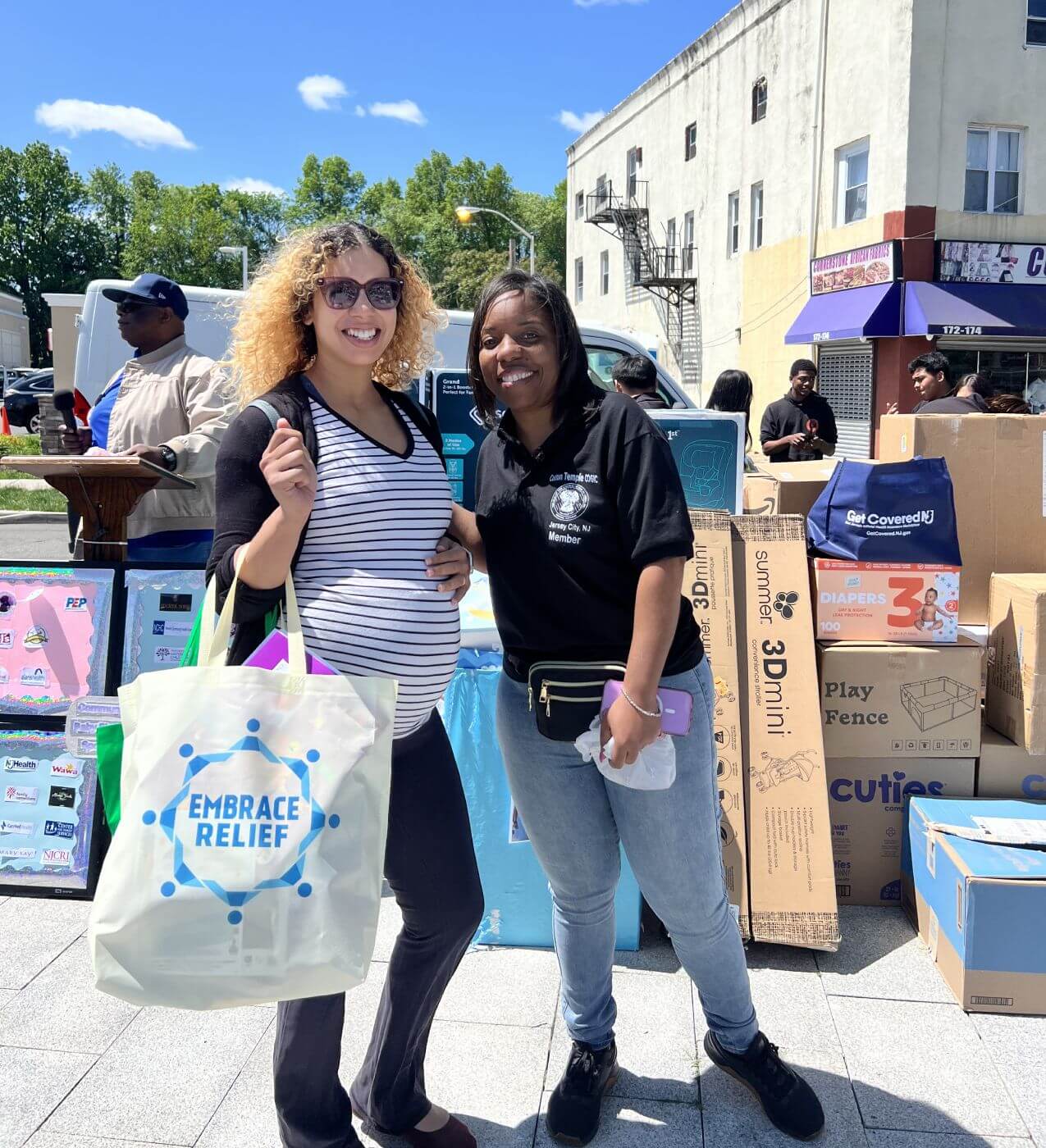
ORANGE, NJ — On May 10, 2025, Embrace Relief joined Orange City Township’s 2nd Annual Community Baby Shower to support expecting mothers facing financial hardship. As one of 15 vendors at the event, Embrace Relief proudly distributed 250 gift bags filled with essential baby items to local families in need.

Held under sunny skies and surrounded by smiles and laughter, the event brought the community together to uplift and empower new and expecting mothers. Embrace Relief’s gift bags included diapers, wipes, baby bottles, toys, playpens, baby monitors, healthcare kits, and nursing and breastfeeding supplies—everything needed to help families welcome their newborns with love, dignity, and care.

“Every mother deserves to feel supported during one of life’s most beautiful transitions,” said Kevin Meacham, Embrace USA Program Coordinator. “We’re honored to help bridge the gap for families in New Jersey who are struggling to afford the basic necessities their babies deserve.”

The event was a powerful reminder of the impact of community collaboration. Embrace Relief remains committed to supporting vulnerable populations by providing critical aid and compassionate care—locally and around the world.

Since its founding in 2008, Embrace Relief has built a global network of partnerships allowing us to provide critical humanitarian aid to vulnerable families and communities worldwide, including in the United States.

Launched in January 2025, Embrace USA is an initiative that brings this global approach home. Through this program, we are building and strengthening local partnerships to deliver essential resources — such as food distributions, clothing and school supply drives, and disaster response — and relief to U.S. families in need.

Orange Health Department Prize

About Embrace Relief

Embrace Relief is a 501(c)(3) nonprofit organization that delivers humanitarian aid and development programs to alleviate suffering and empower communities in the U.S. and abroad. Learn more at www.embracerelief.org.

How Long Can You Survive Without Drinking Water?

Summary

  • The average person can survive just 3 days without water
  • Dehydration causes organ failure, cognitive decline, and death
  • Embrace Relief’s Clean Water Program restores access to safe water in Africa

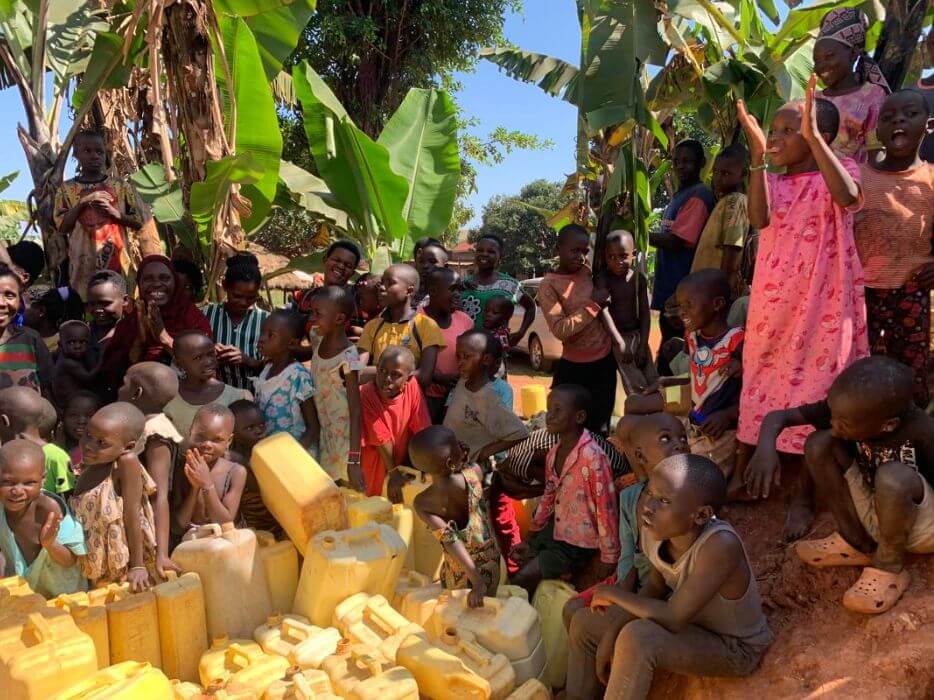
Water is life. It is the most essential substance our bodies need to function, yet over two billion people worldwide still lack access to safe drinking water. This global water crisis is not just a public health issue. It is a matter of life and death.

So how long can you survive without drinking water? The answer might shock you. While most humans can go many days — and even weeks, in some conditions — without food, our bodies begin to shut down after just a few days without water. Understanding the effects of dehydration highlights how vital clean water access is for every community on Earth.

Survival experts often cite the “rule of threes” as a general guideline:

  • You can survive 3 minutes without air
  • 3 days without water
  • 3 weeks without food

This rule is not exact for everyone, but it underscores a critical truth. Water is non-negotiable. Without it, the body cannot regulate temperature, transport nutrients, or remove waste. It cannot survive.

The effects of dehydration begin almost immediately. Within 24 hours without water, your body starts to feel the consequences. These effects progress rapidly:

Day 1:

  • Dry mouth and thirst intensify
  • Urine becomes dark and infrequent
  • Fatigue and dizziness set in
  • Headaches may occur

Day 2:

  • Blood volume decreases
  • Body temperature rises
  • Cognitive function begins to decline
  • Muscles cramp and coordination suffers

Day 3 and Beyond:

  • Organs begin to shut down
  • Hallucinations and confusion worsen
  • Risk of coma and death becomes imminent

The average person cannot survive more than 3 to 5 days without water, although some rare cases have reported slightly longer survival depending on climate, physical activity, and individual health. But make no mistake: life without water is short and full of suffering.

For children, the elderly, and individuals with chronic illness, dehydration can become deadly even faster. In areas affected by drought, poverty, or poor infrastructure, communities often rely on unsafe water sources such as contaminated rivers or shallow, polluted wells. This leads not only to dehydration but also to deadly diseases like cholera, typhoid, and diarrhea, which claim thousands of lives every day.

Access to clean water is not just about hydration. It is about dignity, opportunity, and survival.

How Embrace Relief Is Bringing Clean Water to Africa

At Embrace Relief, we believe that no one should have to face the deadly effects of dehydration because they were born in the wrong place. That’s why we launched our Clean Water Program to bring long-term, sustainable water access to vulnerable communities across sub-Saharan Africa.

Since 2013, we have built and repaired hundreds of water wells in countries like Chad, Cameroon, and Nigeria. Each well provides clean, bacteria-free water to thousands of people. Every drop is a lifeline that reduces disease, improves education outcomes for children, and allows families to live with health and hope.

How Embrace Relief Is Bringing Clean Water to Africa

You can help end the global water crisis. Here’s how:

Option 1: Pay in Full
With a one-time donation of $3,500, you can fund the construction of a brand-new well, complete with:

  • A 5-year warranty
  • Annual maintenance checkups
  • A custom name on the well
  • Photos and an impact report
  • Wells are completed in just 4 to 6 weeks.

Option 2: Pay Over Time
Prefer to raise or contribute gradually? Start a well project with our support and pay over up to six months. Once fully funded, the well will be built in 4 to 6 weeks.

Both options give you the opportunity to directly save lives and bring clean water to a community in need.

Access to clean water is not a privilege. It is a right. By understanding how quickly the human body deteriorates without water, we recognize just how urgent this crisis is. Let’s work together to ensure that no child, no parent, no elder dies from thirst.

Your donation can be the difference between life and death. Be the reason a community drinks clean water tomorrow.

For more information on Embrace Relief’s Clean Water Initiative, click here!

AI-Powered Cheating: Is Technology Hurting Student Integrity?

Summary

  • Examine the rise of AI tools like ChatGPT in student assignments and the debate over academic integrity
  • Explore the pros and cons of AI in the classroom, from personalized tutoring to plagiarism risks
  • Learn how the L.E.A.R.N. program supports honest, skill-building education for Afghan girls

Artificial Intelligence is reshaping education at lightning speed, sparking both excitement and alarm. Tools like ChatGPT, Gemini, and Microsoft Copilot can now draft essays, debug code, and explain quantum physics in plain language. While these innovations unlock unprecedented learning support, they’re also fueling fiery debates: Is AI a lifeline for struggling students, or a cheat code undermining academic integrity?

A 2024 update to the Intelligent.com survey found that 43% of students admit to using AI for assignments, a 13% jump from 2023. Platforms like ChatGPT have become go-to “homework havens,” with students leveraging AI to write essays, solve problem sets, and even simulate exam answers. Students online will claim “I finished a 10-page paper in 20 minutes. Professors can’t tell the difference.” But can they?

Educators are split. Some, like Stanford’s Dr. Linda Cheng, praise AI as a “thought partner” for brainstorming and refining ideas. Others, however, warn of a “brain-offload epidemic.” As high school teacher Marcus Ruiz puts it: “When a student pastes a ChatGPT response into an essay, they’re not just cheating the system, they’re cheating themselves out of learning.”

AI’s potential to democratize education is undeniable. Tools like Khanmigo tutor students in calculus at 2 A.M., while speech-to-text generators empower dyslexic learners. A 2024 Gates Foundation study found that AI-driven personalized learning plans boosted math proficiency by 22% in low-income schools, closing gaps for marginalized students.

For international students, AI translators like DeepL break down language barriers, letting them focus on content mastery rather than syntax. “Before ChatGPT, I spent hours translating my thoughts,” says María Gómez, a Colombian college freshman. “Now I can articulate complex ideas confidently.”

As AI-generated work floods classrooms, educators are fighting back. Turnitin’s AI detector now flags 98% of ChatGPT text, while universities like Oxford and UCLA have overhauled honor codes to ban “unauthorized AI assistance.” Yet students keep innovating: TikTok tutorials teach how to humanize AI essays using tools like Undetectable.ai, while whisper networks share “AI-friendly” professors.

The stakes are high. A 2023 incident at the University of Texas made headlines when 12 engineering students failed after submitting AI-written lab reports. “They missed the point,” said Professor Eleanor Hart. “The assignment wasn’t about answers, it was about learning to think like engineers.”

The solution isn’t banning AI but reimagining education alongside it. Forward-thinking schools are:

  • Redesigning assessments: Prioritizing oral exams, in-class writing, and project-based work (e.g., “Compare ChatGPT’s essay on Shakespeare to your own analysis”).
  • Teaching AI literacy: Harvard’s new “Digital Ethics” module trains students to use AI transparently, citing AI contributions like peer reviews.
  • Leveraging AI for skill-building: Coding platforms like Replit use AI to debug student work, fostering problem-solving over copy-paste shortcuts.

As MIT’s Dr. Rajesh Singh notes, “The pencil didn’t kill critical thinking; bad teaching did. AI is just another tool. The real question is: Will we use it to automate plagiarism, or automate growth?”

The answer lies in the gray area between fear and innovation. Because whether we like it or not, AI isn’t just in classrooms to stay; it’s here to evolve. The challenge? Ensuring it elevates integrity instead of eroding it.

How the L.E.A.R.N. Program Promotes Ethical, Future-Ready Education

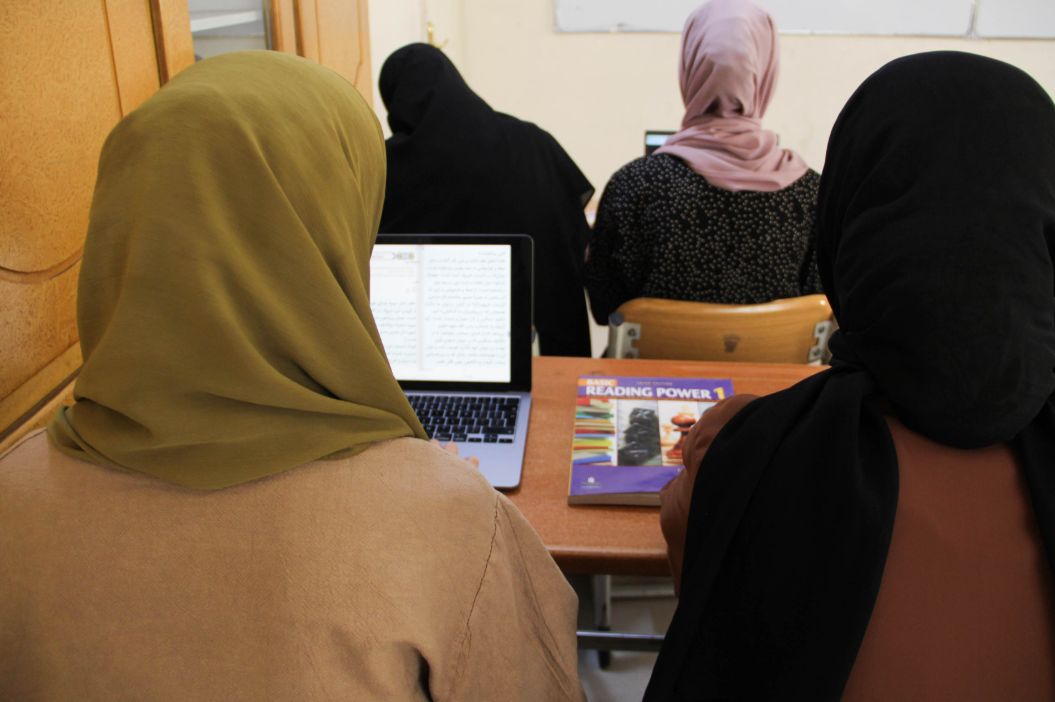
In a world where AI is becoming a staple in both classrooms and careers, digital literacy is more important than ever. That is why Embrace Relief’s L.E.A.R.N. (Learning and Education for Afghan girls’ Rights and Needs) program is preparing Afghan girls not only to use technology, but to do so with integrity and purpose.

Through secure online platforms, students in the L.E.A.R.N. program gain access to high school and college-level courses in fields like English and Computer Applications. Instructors provide real-time feedback and mentorship, ensuring that learning is meaningful, skill-based, and honest. These young women are learning how to use technology as a tool, not a crutch.

How the L.E.A.R.N. Program Promotes Ethical, Future-Ready Education

In regions where access to quality education is scarce, L.E.A.R.N. offers more than just classes. It offers a path to empowerment. With 90 percent of IT jobs expected to allow remote work by 2025, the digital skills gained through L.E.A.R.N. are preparing students for a global workforce.

You can help make this future possible.

For just $80 per month, you can sponsor a girl’s bachelor’s degree, covering tuition, mentorship, and access to a secure online classroom. Your monthly donation helps bridge the gender gap in education, supports honest academic development, and builds stronger communities for the future.

Technology will continue to change how we learn. With your support, we can ensure it also changes who gets to learn, and how they do it—ethically, confidently, and with the skills they need to succeed.

For more information on the Embrace Relief L.E.A.R.N. program, click here.

Donate For Women’s Empowerment

$
Donate Now