


Recent

Breaking bread with Yemen for Giving Tuesday

Bread is perhaps the closest thing we have to a universal food. It’s a part of every culture’s culinary tradition, a reliable staple in good times and bad. Bread can be baked anywhere, and its abundance can ease hunger everywhere.

This holiday season, when you’re sitting down with friends, family and neighbors at meal time, don’t take that loaf of bread for granted! Halfway around the world, a loaf just like yours will be providing a family in Yemen with the nutrition they need to get through their day.

To address the ongoing humanitarian crisis in Yemen, where conflict has left millions of families without their homes, incomes, and often without enough food, Embrace Relief has been supporting a daily bread distribution in the country since February 2022. This program provides free bread to 1,500 people each day, giving untold numbers of families a chance to survive, rebuild, and one day thrive again.

Akram Al-Khaishani, a humanitarian volunteer working with Embrace Relief on the ground in Yemen, sees the joy and relief that Embrace Relief and our donors provide to people on a daily basis.

“You can describe the impact on the people when you see children come to get the bread and they feel so happy,” he says. “You can describe the impact on the people when you see the widowed women and old women ask God to bless you, and to give you unlimited good, and to build a nice house for you in Paradise. You can describe the impact on people when you see orphans smile as they get their bread.”

More than half of Yemen’s population does not consume enough food on a daily basis, and just under 50 percent of children under 5 are chronically malnourished. Thanks to a severely weakened economy caused by the conflict, as well as the rising prices of food around the world, the UN World Food Programme describes the current level of hunger in Yemen as “unprecedented.” 

“To compare this issue to the last 6 months, we found that the situation in Yemen is getting worse and worse every day,” Akram says. “And the number of poor families is increasing every day.”

The conflict and instability mean that the Yemeni people need support from their neighbors and friends around the world to end this hunger crisis. And just as all people around the world eat bread, we all are willing to share our food when we see people going hungry.

That’s why Embrace Relief is spotlighting our Yemen food distribution in conjunction with Giving Tuesday, the day set aside each year for people to support the causes and communities they care about. And that’s why we’re asking you to support our hunger relief efforts and help us save thousands of lives.

“I hope this program will continue for a long time,” Akram says. “[We are in need of] as much as you can support. I hope every one of us can help these poor families.”

Every dollar donated to Embrace Relief’s Yemen hunger relief supports the work of volunteers like Akram as they share bread with grateful families and alleviate some of the suffering in that part of the world. We’re all working together to save lives in Yemen, so join us and donate today

Cataract surgeries: A life-changing operation

Cataracts are a disease that cause the lens of your eye to become cloudy, with symptoms including hazy or blurry vision, seeing faded colors, having poorer vision at night, or seeing a “halo” around objects. The leading cause of reversible vision loss in the United States, cataracts are a common ailment related to aging – more than half of all Americans will have had cataract surgery by the time they turn 80 – but can also occur as a symptom of other ailments, like diabetes, or be a congenital disease present at birth.

Because cataracts progress over time, you may be able to live life relatively normally for some time after they appear. Better lighting and eyeglasses can be a temporary solution. But the only way to get rid of your cataracts permanently is to have them surgically removed.

Don’t worry, however! This is an exceedingly common and safe surgery:

  • More than 10 million cataract surgeries are performed each year, including two million in the U.S. alone.
  • The procedure takes 30 to 45 minutes on average, with a 15-to-30-minute recovery period before you can return home.
  • Recovering from a cataract surgery can take a bit longer, about eight weeks on average, though a doctor should guide you through each step of recovery.
  • But there is a wonderful reward at the end of this wait: fully restored vision that allows you to go about your life freely.

If you or someone you know is suffering (or has suffered) from cataracts in the past, you know how disruptive they are to everyday life. They can make it difficult to see the face of a friend sitting next to you, or cause you strain and headaches while reading a book or watching television, or make it impossible to drive. Fortunately, this simple and widely available surgery is within the financial reach of most Americans.

But what if you had to live with cloudy, blurry vision for the rest of your life because you couldn’t afford cataract surgery?

This is the situation in the African country of Mali, where 2.1 million people – more than 10 percent of the population – live with impaired vision. Like in America, cataracts are a leading cause of blindness in Africa. But in a country where medical care is sparse and expensive, that means potentially a lifetime of blindness for people like nine-year-old Maymuna. 

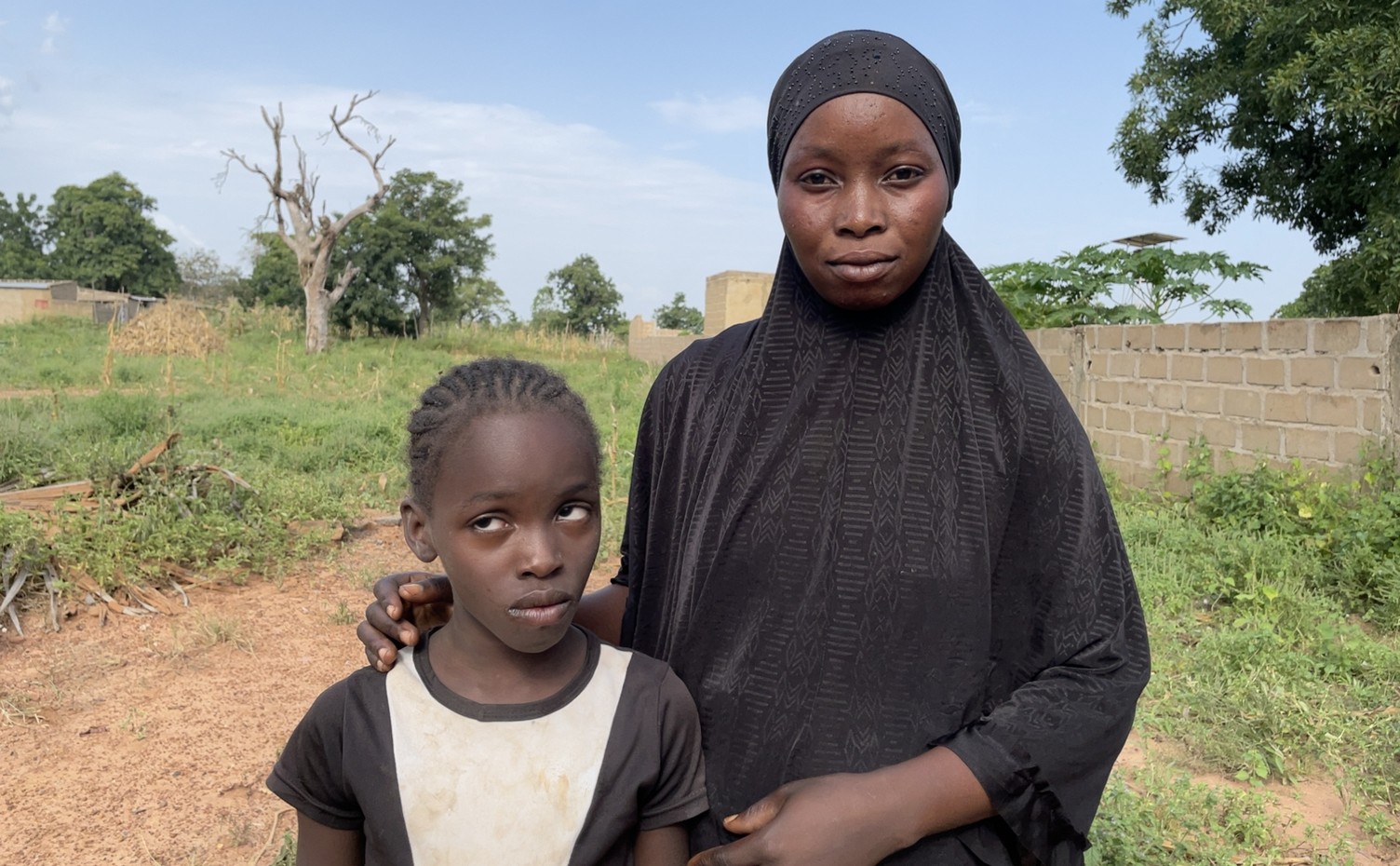
Maymuna is a nine-year-old girl living in a small village around 45 minutes way from Bamako, Mali’s capital city. She has lived with cataracts her entire life, and she can’t dance, play, or learn the same way her friends can. She can only sit on the side and listen to their laughter. Her family didn’t even know that Maymuna’s vision loss was reversible through a simple procedure.

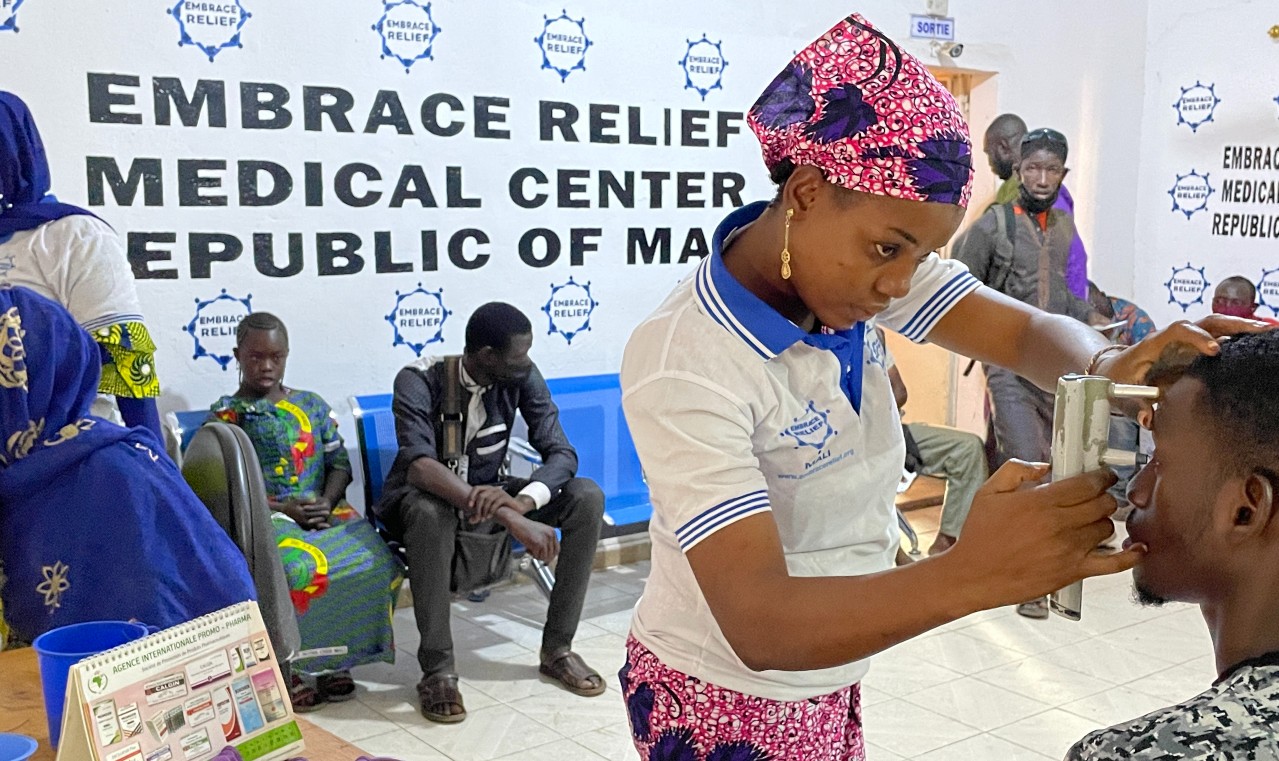
But that’s all changed now, thanks to Embrace Relief. We work with three health clinics and one mobile clinic in Mali’s capital city, Bamako, to help people like Maymuna. Our Cure Cataract program funds these clinics, which provide a variety of healthcare services free of charge, specializing in cataract surgeries. Thanks to the generosity of Embrace Relief’s donors, Maymuna was able to undergo cataract surgery and get her vision back. She’s been given the freedom to see, do and experience things she could only have dreamed of previously.

There are untold numbers of people just like Maymuna in Mali: children, young adults, working-age adults, mothers and fathers, grandmothers and grandfathers, all of whom can have their lives returned to them by one eye surgery. But they need your help. You can give the gift of sight to three people in Mali right now with a donation of just $360. Every donation makes the world just a little bit brighter and a little less cloudy.

How You Can Help: The Gift of Sight

A simple cataract surgery, which costs only $120, can transform a life. With your support, our Embrace Relief’s health clinics can provide these surgeries to those in need, giving them the gift of sight and the opportunity for a better future. Here’s how your donation can make a difference:

  • $120 Donation: Funds one complete cataract surgery, restoring sight to an individual in need.
  • $240 Donation: Supports two surgeries, doubling the impact.
  • $360 Donation: Helps three people regain their vision, enhancing their quality of life and ability to contribute to their communities.

Your donation can make a significant difference in the lives of those suffering from cataracts in Mali and Burkina Faso. For just $120, you can fund a cataract surgery and give someone the precious gift of sight.

Help us light up lives and drive away the darkness caused by cataracts. Donate now and be a part of this life-changing mission.

$

Inside Sky Academy’s humanitarian visit to Tanzania

When students from the Sky Academy, a youth organization based in Wayne, N.J., saw the state of the bathroom facilities at the primary school in Buma, Tanzania, they were “almost shell-shocked.”

“For them, it was like a whole new experience to see people, children, live like that,” said Sami Kuloglu, a mentor at the Sky Academy. “Seeing it, it was almost just like a sense of, ‘How do people live like this?’ They were almost speechless. The bathroom was basically two holes with walls around it. And one hole is for teachers, one is for students, both right next to each other.”

This is not an uncommon situation, especially in developing countries like Tanzania. More than two billion people worldwide lack access to basic sanitation services, according to UNICEF. Poor sanitation in communities and schools leads to the spread of disease and other negative health outcomes, and impedes children’s education.

While we may take them for granted in America, proper bathroom facilities can make an enormous positive impact on quality of life, development, and prosperity – especially for children. That’s why Embrace Relief works with partner organizations in Tanzania to build modern bathrooms facilities in local schools.

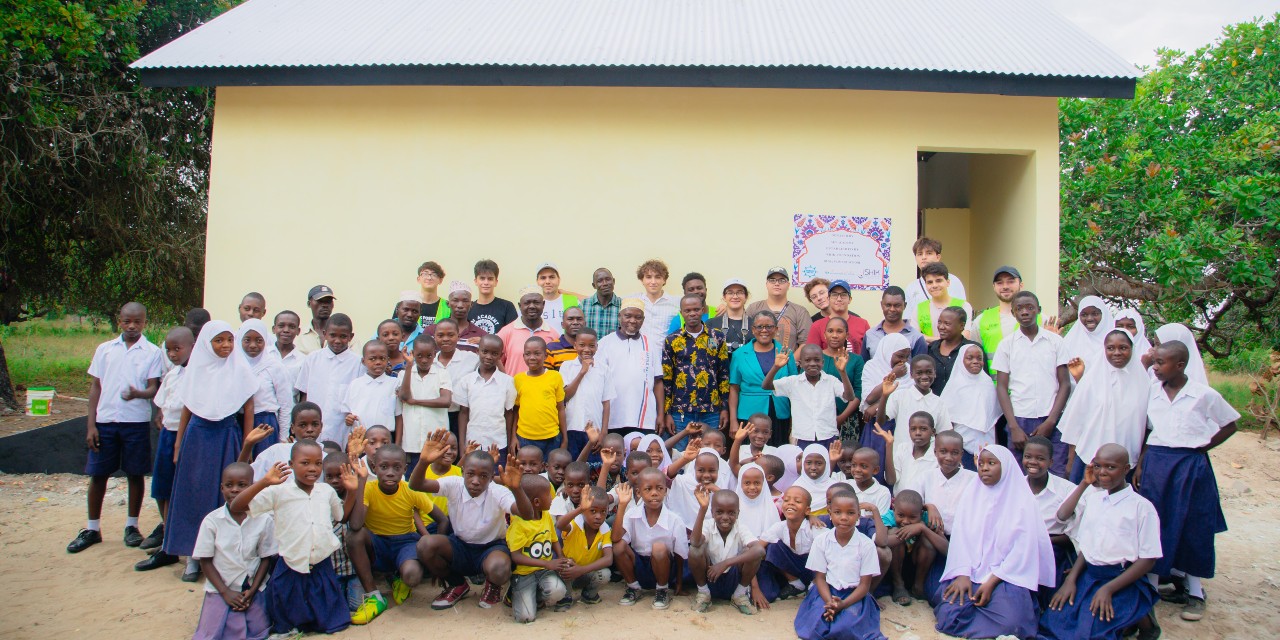
Buma, located several hours away from Tanzania’s capital, Dar Es Salaam, was the site of Embrace Relief’s latest project. Most of the construction was finished by the time they arrived, and so the 12 high school-aged Sky Academy students, including their chaperones like Sami, helped put the finishing touches on the building by painting the exterior. They also had the opportunity to interact with some of the local children.

“You could see our kids really enjoyed being with the Tanzanian kids,” Sami said. “We could really see how much they needed this bathroom. They gave us a tour of their school, and we walked through a number of villages, talking to people wherever we could. We played soccer for the children for a little while. It was really great.”

The new facility is clean, colorful and modern, and can accommodate up to four people at once. It offers a sink for hand-washing, another important step towards good health, as well as a ramp to allow access for wheelchair-bound people. Most importantly, the bathroom is attached to a sewer system, which keeps waste away from the local water supply. All of this will keep schoolchildren and their teachers healthier and safer from disease, reducing the number of interruptions to learning.

During their visit, the Sky Academy contingent also met with village leaders and government officials, who explained the importance of this project. And in addition to their work in the village, the students were also to sample the culture and natural beauty of Tanzania,  engage in a cultural exchange, visiting a number of sites in the country 

The bathroom in Buma is just one example of Embrace Relief’s use of partnerships to help people wherever they are in need around the world. Through our connection to people on the ground in Tanzania, Embrace Relief could identify people and communities in need. Through our network of donors, Embrace Relief provided the funding that built this crucial bathroom facility. Finally, Embrace Relief was able to coordinate with our partners at Sky Academy to provide volunteer support on the ground, while also providing the American-based high school students an opportunity to engage in cultural exchange and demonstrate their humanitarian spirit.

“Sky Academy came to us for help and structure with this trip,” said Sarah Bond, Embrace Relief Clean Water program coordinator. “We didn’t provide monetary backing for this trip, they did that on their own, but we could offer a lot of know-how because of our experience in creating programs like this. We were able to help them envision a group structure, help them develop their short- and long-term planning, and provide some professional support for getting the word out.”

Working together is the hallmark of every single Embrace Relief project, and the result is beneficial for all. Embrace Relief and our partners in Tanzania have developed an even closer relationship; the Sky Academy students helped people and received a one-of-a-kind experience; and most importantly, the children of Buma now have a brighter, healthier future ahead of them.

Nine-year-old Maymuna Cataract Surgery Story

Nine-year-old Maymuna couldn’t hold back her smile as she heard the commotion of her friends playing, dancing and laughing together. Even though she couldn’t see them, she wanted to be part of the fun.

Maymuna lives in Djissoumabougou, a mid-sized village of about 200 people, located approximately 45 minutes outside of Bamako, the capital of the West African country of Mali. She is one of the 2.1 million Malians – more than 10 percent of the population – who live with impaired vision. According to her aunt, Maymuna suffers from cataracts in both of her eyes, and has had resulting vision problems all her life. Her condition has worsened over time, eventually becoming so severe that she was forced to be taken out of school.

Impaired vision can have obvious negative effects, but it is particularly devastating to young children. Early-onset vision loss is heavily correlated with delayed motor, language, emotional, social and cognitive development. Children with impaired vision are more likely to fall behind in their education, and thus put at a disadvantage relative to their peers. These cascading effects can be avoided with a simple surgical procedure to remove the cataracts. But this is often not an option in Mali, where basic, accessible healthcare services are unavailable for nine out of every 10 people.

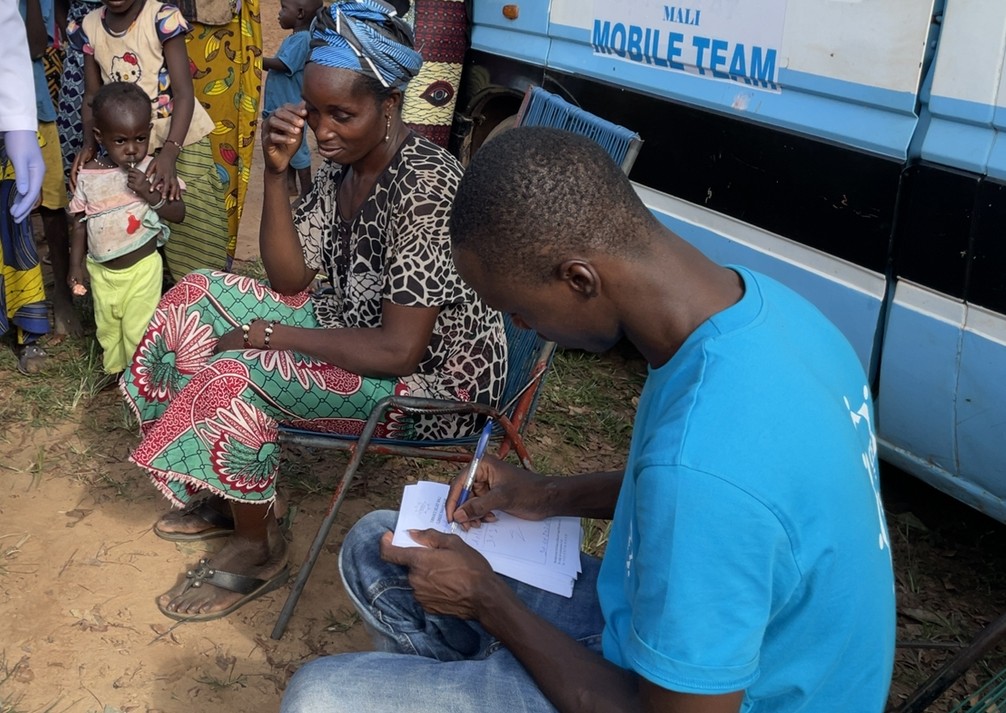
Solving this problem can unlock the potential of untold numbers of people in Mali. That’s why Embrace Relief supports a network of health clinics, which can treat all manner of ailments and diseases, but specialize in ophthalmology. This network includes three clinics located in Bamako, the capital, which serve the city’s 2 million residents. It also includes two Mobile Health Unit vehicles, which can travel several hours away from the capital in all directions, bringing healthcare directly to people who otherwise could not access it.

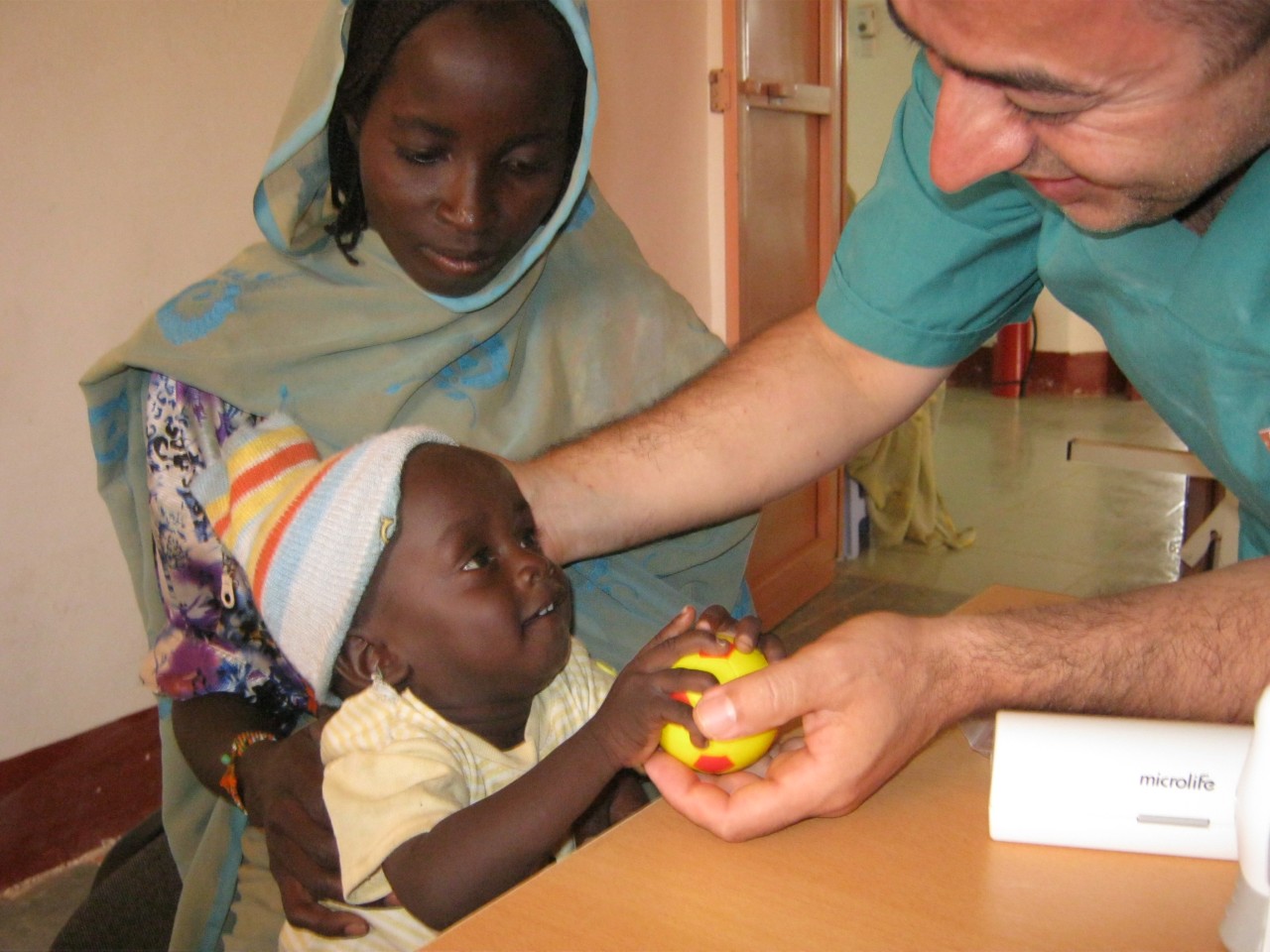
When Embrace Relief’s Mobile Health Unit visited Djissoumabougou, they provided health examinations to any villager who requested one. Maymuna sat down for an examination with Dr. Almaz, who identified her cataract issue immediately. Her family and neighbors did not know that one surgical procedure could allow Maymuna to see again. Nor did they know that the surgery was free, provided thanks to a gift of just $120 from an Embrace Relief donor.

When Dr. Almaz explained that they would bring her to the Clinic Gaoussou Fofana in Bamako, and restore her vision, Maymuna lit up. Suddenly, an entire life’s worth of possibilities had reopened for her. Soon enough, she will be able to join in with her friends as they dance and play. She’ll be able to return to school, complete her education, and follow a life path of her choosing.

But that will come in time. For now, Maymuna says she’s most excited for something simpler: she can’t wait to see her mother’s face again.

Thousands of people in Mali are waiting to undergo eye surgeries like the one Maymuna will receive. To date, Embrace Relief has given more than 4,200 people the gift of eyesight, and we’re just getting started. But we need your help. Every $120 you donate to Embrace Relief’s Cure Cataracts campaign ensures that one more person will be able to live a better life, and will be able to face the world with clear eyes. Join Embrace Relief and donate today!

August is Children’s Eye Health and Safety Month

August is Children’s Eye Health and Safety Month, which makes it a great time to consider all of the important ways that good eye health impacts childhood development. More than 200,000 children are blind due to cataracts, many of them in parts of Africa where healthcare is not widely available or affordable. They have challenges in taking care of themselves, learning, and developing into functional adults. Embrace Relief’s cataract surgery program can restore their eyesight and make life easier for children (and adults) for just $120 per surgery. Please, if you can, donate today!

Good eyesight is essential for children as they learn and grow. And with a new school year nearly upon us, that’s why August is National Children’s Eye Health and Safety Month. There’s no better time than now to ensure that your children have the best vision possible.

More than 500,000 American children have some level of vision difficulty. This can be a big issue in school, as it’s estimated that 80 percent of the information children learn in school is presented visually. Vision problems are linked with decreased academic performance, learning difficulties, and some behavioral issues. To avoid this, every parent should take three crucial steps to ensure their child’s eyes are healthy and their vision remains clear. First, be sure to schedule regular eye examinations. Second, help your child take eye safety precautions when playing sports or doing other activities. And third, be aware of the warning signs of eye problems.

Regular eye examinations: get the expert opinion

To promote good eye health, children should start receiving regular eye exams at the age of 3. Experts recommend these exams continue annual eye check-ups until at least the age of 6. If a child’s eyesight is good and there are no signs of poor vision (see below), exams can be scheduled for every two years instead until adulthood.

Regular check-ups make it more likely that a pediatric optometrist will detect any vision issues early. Early detection is our best weapon against any ailment, but particularly when we’re young and our eyes are constantly developing and maturing.

Eye safety: Be smart, see clearly

While some eye problems can be genetic, it is far more common that a child will partially or totally lose their vision due to an injury they suffer while playing sports or doing other activities. An estimated 40,000 such eye-related injuries occur every year in the United States, with most of them affecting children.

Wearing protective goggles and glasses will keep your child’s eyes safe when they play a contact sport like football, soccer, basketball, hockey or lacrosse. 

Additionally, many eye injuries are caused by younger children playing with sharp, pointy toys. Parents should make sure their children are playing with age-appropriate, safe toys.

Warning signs: Know what to look for

Even for adults, it can be difficult to self-diagnose a vision issue. Your child may complain of blurred, cloudy or double vision, which is straightforward enough. But in other cases, it may not be as obvious to your child that they’re having trouble seeing. So you may simply have to keep a watchful eye on their behavior, which can tell you more information.

Red-flag behaviors that your child might have vision problems include the following:

  • Constant squinting when reading or watching TV
  • Tilting their head forward or backward while looking at distant objects
  • Holding books too close to their eyes or sitting too close to the TV
  • Discomfort when looking at a computer, phone, tablet or gaming screen
  • Closing one eye while reading or focusing
  • Frequent eye-rubbing while reading or focusing
  • Eyes tearing up for no clear reason
  • Wandering eyes
  • Sensitivity to light with headache or nausea

If your child exhibits these behaviors, ask an eye doctor to examine them so you can get an early start on diagnosing whatever the underlying issue might be.

Eye health is important for all

Good vision and good eye health habits are fundamental to childhood development. As a parent, you can make a huge impact on your child’s future by following these recommendations. But also spare a thought for many thousands of children worldwide who don’t have access to the kind of healthcare support we have here in America.

Embrace Relief’s Cure Cataracts program provides health examinations and eye checkups for free to people in the West African country of Mali who otherwise could not afford it. This service has restored the eyesight of more than 4,200 people, giving them their lives back and making their world a better place. For just $120, you can provide someone in need with a life-changing surgery. So please, donate today!

FBI Newark CAAA Backpack Drive

FAIRFIELD, NJ (Aug. 17, 2022)—As another summer winds down, children all throughout the state of New Jersey are getting ready to go back to school. It’s an exciting time for everyone. But for some children and their families, a new school year also means additional expenses for new school supplies that they may have difficulty paying for.

To help ease these families’ burden, the Embrace Relief Foundation and the FBI Newark Citizens Academy Alumni Association are teaming up for our fourth annual Backpack Drive, which will deliver backpacks and other school supplies to more than 1,000 students in seven different locations spread throughout the state of New Jersey this month.

Embrace Relief and the FBINewarkCAAA have a growing history of partnering together to help the New Jersey community. In addition to the last three years of the Backpack Drive, the two nonprofit organizations have joined together at various times of year to deliver food, blankets, and other necessities to people in need.

“It gives us great pride to be here today with Embrace Relief,” said Edie Peters Liguori, FBINewarkCAAA President. “This is just one of the initiatives we do throughout the year, and Embrace Relief is always beside us. I’m very thankful for all that they do, not only for the FBI Newark Citizens’ Academy, but also everyone throughout the entire world. I’m looking forward to our next collaboration together.”

To prepare the backpacks for students, members of the FBINewarkCAAA Board of Trustees joined Embrace Relief workers and volunteers at Embrace Relief’s office in Fairfield on Sunday morning, Aug. 14. They all worked together over the course of four hours to pack 1,008 backpacks and 120 insulated lunch bags full of supplies. 

The backpacks are brand new, high-quality, and durable, and come in two sizes, 19 inches (large) and 17 inches (small). Each backpack was filled by hand with several spiral-bound notebooks; a packet filled with pens, crayons, markers, paper, erasers, folders, and a ruler; a package of sanitary wet wipes; and a note wishing students the best of luck in the upcoming school year.

All of these materials were purchased with donations collected jointly by the FBINewarkCAAA and Embrace Relief. Additionally, sponsors for the Fourth Annual Backpack Drive include Meineke Car Care Center of Jersey City, Raritan Central Railway, Lakeland Bank, and Peace Islands Institute.

“I’d like to thank the board members of the FBI Newark CAAA, as well as all of the sponsors who have sponsored this backpack distribution,” said Osman Dulgeroglu, Embrace Relief CEO. “We are very happy to have prepared 1,000 backpacks, which will be a big help for low-income families throughout New Jersey.”

The FBINewarkCAAA will handle the distribution of the backpacks and lunch bags, stopping in seven locations spread widely throughout the state during the final weeks of August. Distribution events include the following locations and dates (some dates still to be announced):

  • Aug. 21: Mount Bethel Church, 491 Bellevue Avenue, Trenton
  • Aug. 22: Reverend Dawson, Garfield and Arctic avenues, Wildwood
  • Aug. 30: East Newark School, 501 North 3rd Street, East Newark
  • Sept. 1: Jersey City School #20, 239 Ocean Avenue, Jersey City
  • Boys and Girls Club of Lodi, 460 Passaic Avenue, Lodi
  • Hope and Esperanza Community Health Center, 788 Mount Prospect Avenue, Newark
  • Inglesia Ciudad de Refugio, 436 Market Street, Perth Amboy

The Embrace Relief Foundation is a registered 501(c)(3) nonprofit humanitarian aid organization headquartered in Fairfield, NJ, which focuses on a variety of different programs designed to reduce suffering and promote human development around the world. These programs have been developed in harmony with the United Nations’ Sustainable Development Goals (SDGs), which provide a framework for “shared peace and prosperity for people and the planet.” Since 2013, Embrace Relief has operated programs in more than 40 countries, centered on eight different humanitarian causes that address the majority of SDGs: hunger relief, clean water, women’s empowerment, health and wellness, relief for children, disaster relief, education support, and refugee relief.

The FBI Newark Citizens Academy Alumni Association is a community-based and supported 501(c)(3) nonprofit organization, distinct and separate from the FBI. It is designed to promote a more informed and safer community through diverse service projects and by educating business, labor, media, medical, minority, government, education, religious, senior citizen, and community leaders in the State of New Jersey and in particular, about law enforcement, with particular emphasis on the mission, resources, and limitations of the FBI.


Djeneba Diallo Cataract Surgery Story

As Djeneba Diallo walked into the operating room, her hand clasped together with the hand of a staffer at the Gaoussou Fofana ophthalmology clinic in Bamako, Mali, she had tears of joy and gratitude streaming down her face.

Djeneba, age 62, has been a widow for many years. She’s been taking care of herself and her home since her husband passed away, but this task has gotten more difficult recently. For the past several years, Djeneba has been one of the 2.1 million Malians – more than 10 percent of the country’s population – who live with impaired vision. She suffers from cataracts, a progressive eye disease causing severe blurry or discolored vision. Cataracts occur naturally in many people’s eyes as they age. They are also associated with a number of health conditions, including diabetes, malnutrition, excessive exposure to sunlight, and previous eye injuries.

Older adults with impaired vision are at great risk for falling and injuring themselves in their home or out in public. They also face elevated risks of social isolation, as well as complications in performing simple, daily tasks like eating and washing. All of this has made Djeneba’s life more difficult than it needs to be.

A surgical procedure to remove cataracts is a common option with a very high rate of success in restoring vision. But in less-developed countries like Mali, the cost of an eye surgery is unaffordable for many, including Djeneba. And even when people can afford surgery, they may need to travel long distances to receive basic healthcare services.

These are problems Embrace Relief is addressing through its Cure Cataracts program. Under this initiative, Embrace Relief is supporting three clinics in Mali’s populous capital city, Bamako, which offer health screenings and general care, but which specialize in ophthalmology. We also provide transportation to and from these clinics for anyone who needs it. The network also includes two Mobile Health Unit vehicles, which can travel several hours away from the capital in all directions, bringing healthcare directly to people who otherwise could not access it.

Learning about the Gaoussou Fofana clinic in Bamako must have been a miraculous feeling for Djeneba. After being provided food, water, and an examination, she was informed that she would be given life-changing cataract surgery for free – a gift courtesy of a donation of just $120 from an Embrace Relief donor. Overwhelmed, she could only repeat the phrase “I ni ce,” which means “Thank you” in her native language of Bambara. Djeneba thanked all of the clinic’s volunteers and staffers, and wished for long and happy lives for all of the clinic’s doctors.

“I thank all of the workers here and everyone who came together to help with this project,” she said. “I am a single woman and I have no way to help my eyes to see again on my own. I haven’t got money for this surgery, but you will operate on me for free.”

After her surgeries, Djeneba will be able to enjoy a higher quality of life thanks to Embrace Relief and the Gaoussou Fofana clinic. Her vision issues are unfortunately common – but her story is also proof of how many lives can be changed for the better when we act together.

Thousands of people in Mali are waiting to undergo eye surgeries like the ones Djeneba received. To date, Embrace Relief has given 4,200 people the gift of eyesight, and we’re just getting started. But we need your help. Every $120 you donate to Embrace Relief’s Cure Cataracts campaign ensures that one more person will be able to live a better life, and will be able to face the world with clear eyes. Join Embrace Relief and donate today!

Bahima Beathé Cataract Surgery Story

Four years ago, Bahima Beathé was working as a teacher in the Ivory Coast, following his life’s calling and helping his students learn and grow. But his life came to a halt when his eyesight suddenly started to decline.

Bahima later learned that he was one of the more than 65 million people worldwide who suffer from cataracts, a progressive eye disease causing severe blurry or discolored vision. Cataracts occur naturally in many people’s eyes as they age. They are also associated with a number of health conditions, including diabetes, malnutrition, excessive exposure to sunlight, and previous eye injuries.

But in the moment, all Bahima knew was that he could no longer teach his students effectively. He had to leave his teaching job. And his daily life became significantly more challenging, too, as it does for the more than 2 billion people worldwide with impaired vision. Adults with vision impairment tend to have lower workforce participation, lower productivity, and higher rates of depression and anxiety. Older adults with vision impairment are also at higher risk of falls and injury, social isolation, and total reliance on family members to get through the day. 

There is a solution for the millions of people living with cataracts: eye surgery to remove cataracts is common and highly successful. But this is often not an option in West Africa, where the cost of surgery is unaffordable for many. And even when people can afford surgery, they may need to travel long distances to receive basic healthcare services.

This too is a solvable problem, and this is where Embrace Relief comes in. We supports a network of health clinics which offer health screenings and general care, but which specialize in ophthalmology. This network includes three clinics located in Bamako, the capital of the West African country of Mali, which serve the city’s 2 million residents. It also includes two Mobile Health Unit vehicles, which travel several hours away from the capital in all directions, bringing healthcare directly to people who otherwise could not access it.

Bahima learned about Embrace Relief’s Gaoussou Fofana clinic in Bamako, hundreds of miles away from his home. When he heard that the clinic could provide him with the life-restoring surgery to remove his cataracts free of charge – paid for thanks to a gift of just $120 from an Embrace Relief donor – he was determined to make the journey. Bahima wouldn’t say how he eventually arrived in Bamako. But he likely had two options: a 24-hour bus ride costing more than $130, or hitchhiking.

When he got to the Gaoussou Fofana clinic, he underwent surgery in one eye. Two weeks later, Embrace Relief’s humanitarian volunteer doctors will take care of his other eye. The surgeries go well. After four years of suffering, Bahima’s vision was restored. His life was returned to him. 

One day soon, he says, he’ll go back into the classroom and return to his passion: teaching others. In the meantime, he is beyond thankful for the gift given to him by Embrace Relief and our generous donors:

“The way you are working here is really good,” Bahima said. “When I heard about this clinic and came here to see for myself, I felt so happy. I greet you, may God keep you, may you have a long life, and may you have more chances to help others.”

Thousands of people in Mali are waiting to undergo eye surgeries like the ones Bahima received. To date, Embrace Relief has given 4,200 people the gift of eyesight, and we’re just getting started. But we need your help. Every $120 you donate to Embrace Relief’s Cure Cataracts campaign ensures that one more person will be able to live a better life, and will be able to face the world with clear eyes. Join Embrace Relief and donate today!