


Recent

 Hunger and food insecurity in the United States

Nearly 14 million people In the United States lived with food insecurity in 2020.

In the wealthiest country in the world, a full 10.5 percent of households – approximately 38 million people – in America were unsure of where their next meal came from at some point in 2020, because they lacked the money or resources. Many of these people were forced to alter their diets, reduce their food intake, or seek assistance from local governments and charities to survive.

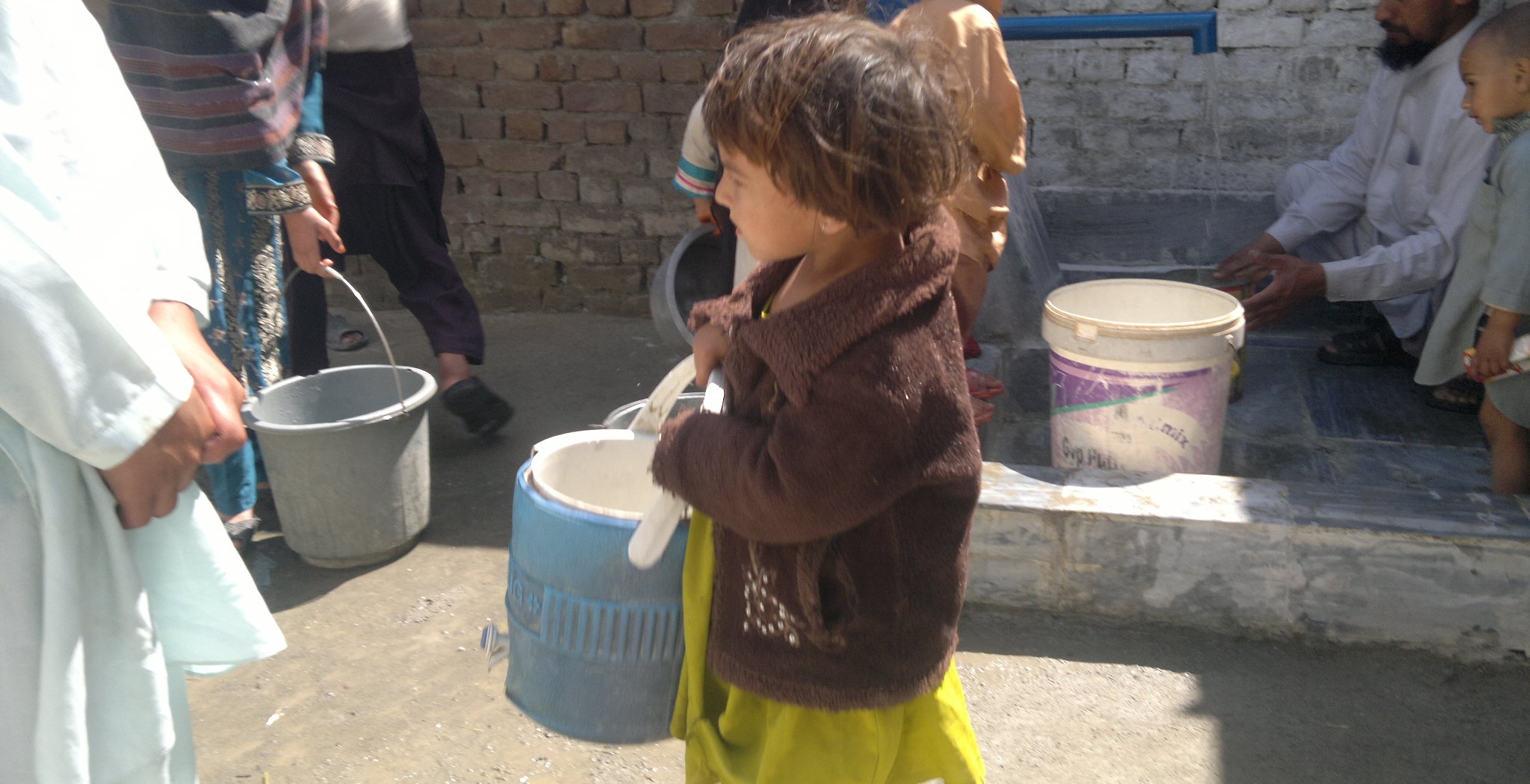
Even worse, American households with children were statistically more likely to not have enough food to eat, according to the USDA:

  • An estimated 14.8 percent of households with children suffered from some level of food insecurity in 2020.
  • Food-insecure households were split just about evenly between those in which only adults were food-insecure and those in which both adults and children were hungry. There were approximately 2.9 million households in the latter category, adding up to about 6.1 million children, in 2020.
  • Rates of food insecurity were even higher among households with children under the age of 6 (15.3 percent), as well as those households headed by a single woman (27.7 percent) or single man (16.3 percent).
  • And unsurprisingly, poverty was a leading indicator of households with children dealing with food insecurity: almost one in three households with an income level 185 percent below the poverty line was food insecure in 2020.
  • After a long period of decline, hunger in the US has been increasing in recent years, and the COVID-19 pandemic made the situation worse, as millions lost their jobs and income, resulting in more people relying on government programs and local organizations

It goes without saying that food is an important part of a healthy life and a human right. When families can’t afford the proper amount of nutritious food, they suffer physically and emotionally.

There simply is no reason why anyone in the United States should ever go hungry. But until poverty and hunger are solved for good, there are neighbors who need our help right now.

Help feed people in need with Embrace Relief

That’s where the Embrace Relief Foundation comes in. While we provide food and aid to needy people all around the world, Embrace Relief has made it part of our mission to help those closest to us. During our International Hunger Relief Campaign: Ramadan 2021, Embrace Relief delivered food to 900 families in New Jersey, in addition to the food packages we sent to more than 30,000 people across 12 countries, including more than 1,300 in Greece, more than 1,100 in Yemen, and hundreds more families in sub-Saharan Africa and South Asia.

For our International Hunger Relief Campaign 2022, we want to do so much more, and your support can make that possible. Donating any amount of money will make a difference – the amounts below represent the cost of one food package that will feed a family for one week:

So please, donate today. Every contribution you make helps one more family go to bed on a full stomach, and brings us one small step closer to ending world hunger.

COVID-19’s Impact on Hunger Around the World

The COVID-19 pandemic has had a negative effect on food security around the globe.

After a long period of worldwide decline, the number of people suffering from hunger began to rise again in 2019 due primarily to conflicts, climate change, and natural disasters. Then the world was overcome by the coronavirus pandemic in February and March 2020. The economic damage caused by COVID was widespread: millions of people lost their jobs or parts of their income, supply chains were disrupted as national borders were closed, and food prices rose dramatically as demand rose, among other impacts.

In low-income countries, these factors made a dire hunger situation worse. In areas of the world like sub-Saharan Africa, people typically spend a high proportion of their income just on food. So when the price of staples like eggs, fruits, vegetables and wheat rises quickly, as has happened because of COVID, suddenly millions of people are unable to afford the life-sustaining food they need.

All of this suffering adds up quickly.

  • A July 2021 report from the United Nations indicated skyrocketing levels of global hunger during 2020, with more than 2.3 billion people – more than a one-fourth of the world’s population – not having enough food to eat year-round.
  • Additionally, estimates say that as many as 660 million people will still be hungry in 2030, the year the world was supposed to reach “Zero Hunger” according to the UN’s Sustainable Development Goals, with much of the shortfall attributable to the pandemic.
  • Increased hunger is a major issue in the United States, too: The pandemic saw the number of households with children suffering from food insecurity spike, up to 15 percent
  • The widespread closure of businesses and schools during the height of the pandemic led to unemployment, increased poverty, and no free or subsidized lunches for children in need. 
  • An estimated 38 million people in the U.S., about one in every nine Americans, was food insecure in 2020. 

Food security and COVID-19 are inextricably linked. And so while the pandemic continues, we must do all we can to get food to the people who need it.

Help feed people in need with Embrace Relief

That’s where the Embrace Relief Foundation comes in. Embrace Relief has made it part of our mission to provide food to people in need. During our International Hunger Relief Campaign: Ramadan 2021, Embrace Relief delivered food packages to more than 30,000 people across 12 countries, including more than 1,300 in Greece, more than 1,100 in Yemen, and hundreds more families in sub-Saharan Africa and South Asia. We also helped out locally, delivering food to 900 neighboring families in New Jersey.

For our International Hunger Relief Campaign 2022, we want to do so much more, and your support can make that possible. Donating any amount of money will make a difference – the amounts below represent the cost of one food package that will feed a family for one week:

So please, donate today. Every contribution you make helps one more family go to bed on a full stomach, and brings us one small step closer to ending world hunger.

Water wells in Africa: Embrace Relief’s expanded commitment

Embrace Relief has been building water wells in Africa for nearly nine years. But like any physical infrastructure, wells require maintenance and upkeep. When CEO Osman Dulgeroglu and his team recently visited the north-central African nation of Chad to assess the progress of Embrace Relief’s Clean Water Program, they came across one well, between five and six years old, whose pipes had rusted through, contaminating the water pumped out of it.

As Embrace Relief does with all of its wells that need maintenance, those pipes were replaced and the system cleaned, resuming service. But often, wells installed by other groups that fall into disrepair are simply abandoned. The physical structure remains in place, but it is useless as a source for clean water. The abundance of such wells is the driving force behind Embrace Relief’s “Fountains of Hope” initiative, which has already brought 50 wells back into service, with plans for hundreds more.

Rebuilding wells reduces the distances that villagers must travel to fetch clean water, improving the lives of those who walk hours daily for life-giving water rather than take care of their families, receive a greater education, or help their community in other ways.

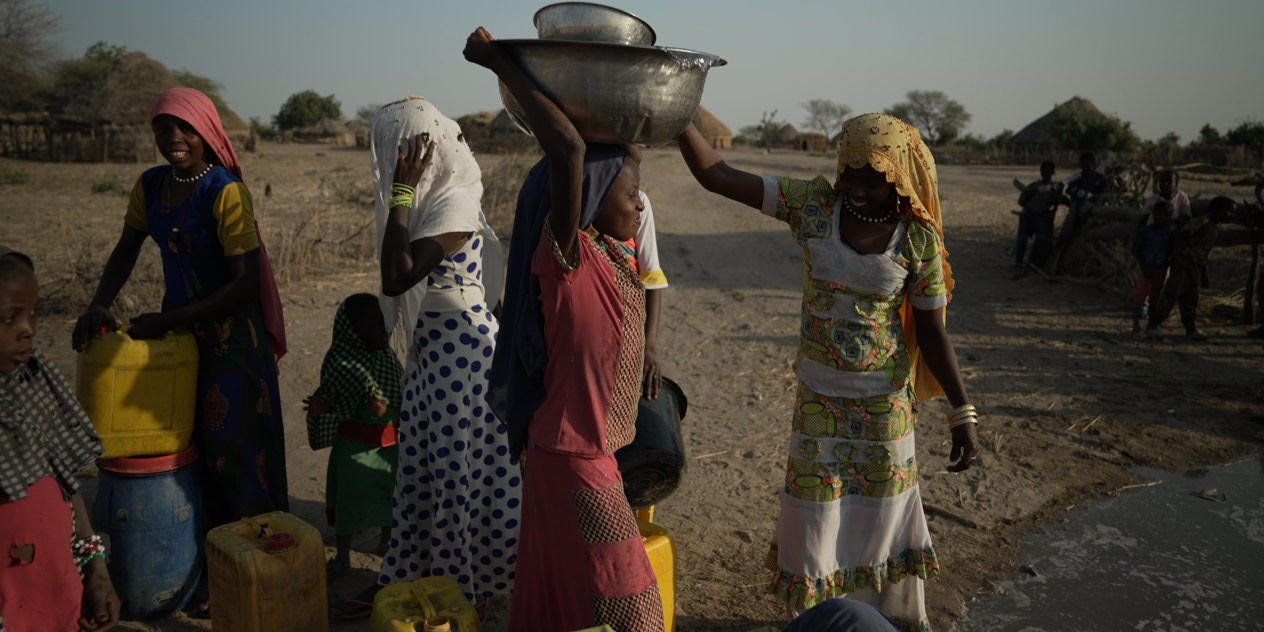
“We met with some of the people who are walking three, four, five hours a day to get water,” Dulgeroglu said. “It’s not a good situation. It’s dangerous on the roads, with wild animals and other things. Carrying 10 gallons of water is incredibly heavy, and they’re doing it over long distances. And often they’re drinking contaminated rainwater. Many people are losing their lives, children aren’t getting an education, all of these things, because they don’t see any alternative. In places like that, this is where we see the need.”

Dulgeroglu’s weeklong visit to Chad was split between scoping out possible sites for refurbished wells, checking in on those already built, and learning about the impact the wells have had on their communities. The biggest change to come out of being on the ground, Dulgeroglu said, was that Embrace Relief will be taking an even more proactive role in ensuring that the water keeps flowing.

“Until now, we were assigning the responsibility of checking the water wells to the chief of the village,” he said. “We were saying, if there’s ever any problem, reach out to us, and we’ll repair it. But we’re changing our way, and taking on that responsibility ourselves. Our people will be checking and repairing annually during our five-year warranty. That means testing the water, testing whether the well is operational or not, getting photos and videos of all of our wells.”

Water wells in Africa: a ‘step-by-step’ process

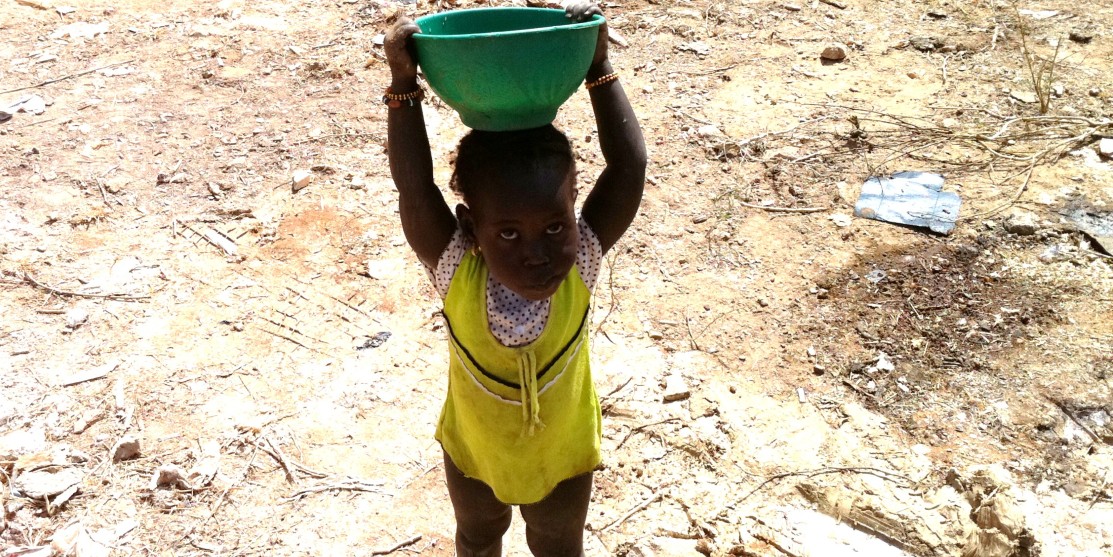
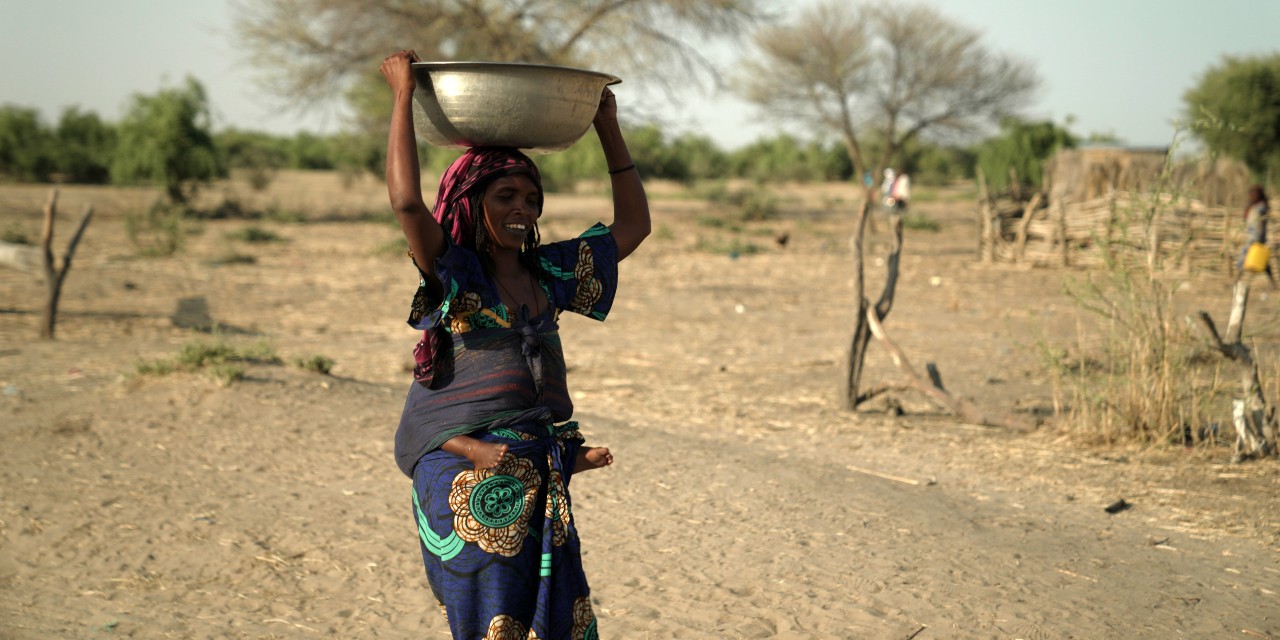
Sub-Saharan Africa is home to a large number of the two billion people who live in an area of acute water scarcity. Hundreds of millions of people in this part of the world get their drinking water from unprotected and untreated sources of water, like rivers, lakes, and ponds. Millions more – typically women and young girls – must walk an average of four miles per day to fetch water, often carrying nearly 70 pounds of water at a time. These conditions feed into a cycle of lower life expectancy, disease and chronic health issues, undernutrition, a lack of education, and poverty, said Osman Dulgeroglu, CEO of the Embrace Relief Foundation.

In February 2022, Dulgeroglu was part of an Embrace Relief team that visited Chad to assess the progress made by the organization’s Clean Water Project, which has built or reconstructed 500 water wells in Chad, Cameroon and Nigeria since 2013, providing a reliable source of clean water to more than a half-million people.

On the ground, he and the team spoke to villagers and community leaders, worked with engineers, and viewed 15 sites of abandoned water wells to be fixed up under Embrace Relief’s “Fountains of Hope” initiative. Thus far, Embrace Relief has funded the reconstruction of 50 non-functional wells, with plans to refurbish hundreds more.

Water wells are a crucial tool for increasing the availability of clean water in rural areas. People living here mostly travel on foot along the dirt roads that connect to neighboring villages or market towns, and so any infrastructure will have to use the resources that are immediately available.

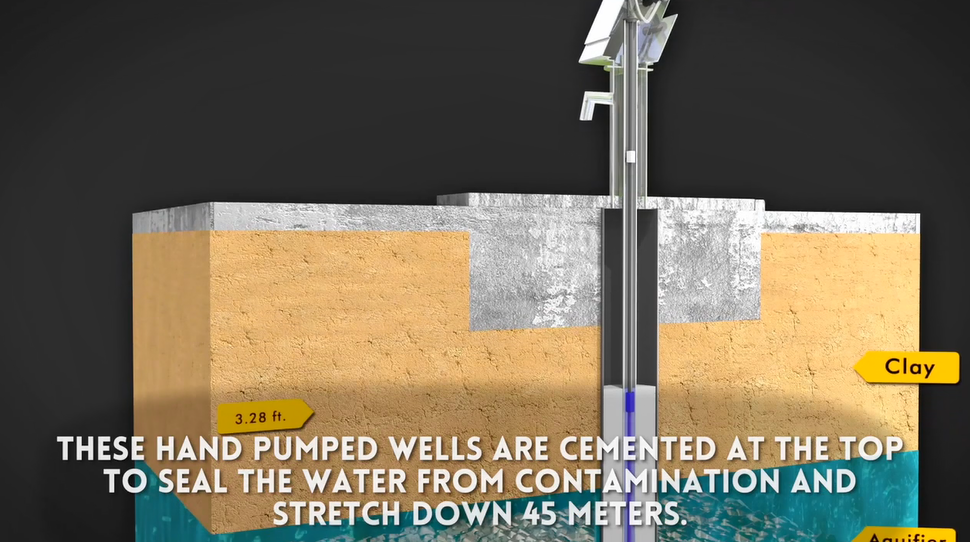
Not all wells look or operate exactly alike, as the surrounding geography can require different specifications. But they tend to be modest-looking and easy to use. The wells are typically built deep in the ground to filter out any contamination – 30 meters is considered a “safe” depth for a well pipe, but most Embrace Relief pipes are built 45 meters into the ground for added protection – and to ensure that it will retain water during the lengthy dry season.

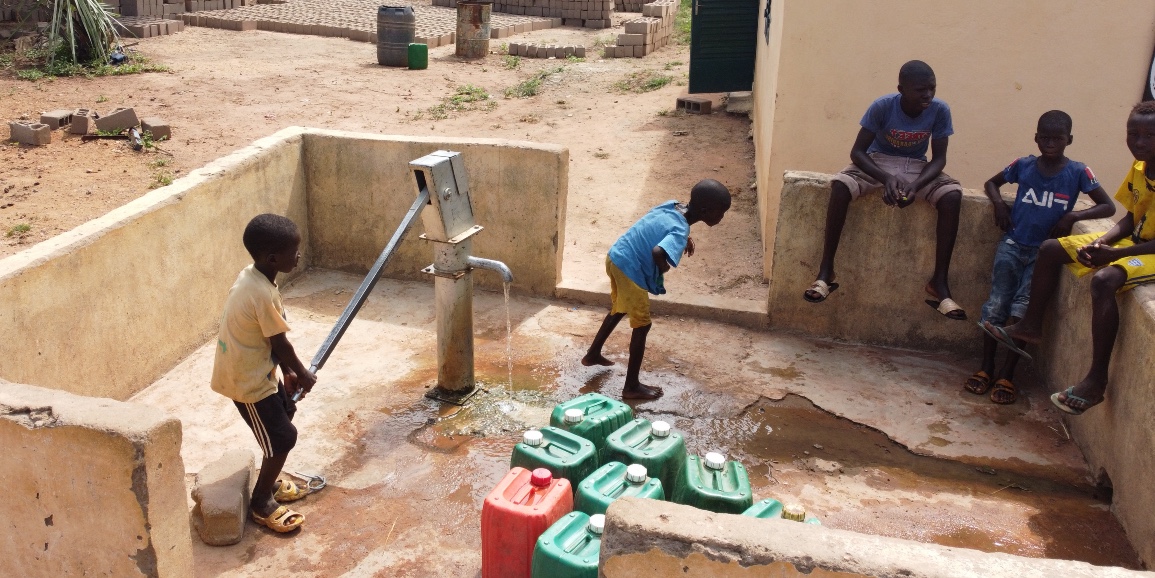
In Koukaya, a village in western Chad about two hours north of N’Djamena near the Cameroonian border, their Embrace Relief-built well features a small rectangular basin where villagers can place their bowls, containers and canisters. A concrete cylinder containing a PVC pipe rises a few feet out of the ground, with a metal nozzle. The water, which has traveled through a filtration system designed to remove all soil and contaminants, is surfaced by a hand pump which adults and children alike can operate.

This simple system opens up a world of possibilities for the people of Koukaya, Dulgeroglu explained, especially because each additional well built will have a multiplier effect on a community.

“One well is not enough for everything,” he said. “There are many villages nearby who may use this well. Everyone will need water in the morning, for themselves and their animals, and that can cause long lines, which can raise tension. So it is a process. The first well gives everyone enough water to drink. A second well will let everyone grow fruits and vegetables during every season of the year. And a third well would allow the number of animals in the village to increase. It’s step by step. First you’re eliminating waterborne diseases and making a healthier community. Then you’re giving all of those hours of fetching water back to the women and children in the village. Then you’re improving the economic situation.”

Water wells in Africa: a clear vision

It’s a winter afternoon about five hours south of N’Djamena, the capital of the north-central African nation of Chad, which means the temperature outside is hovering around 90 degrees Fahrenheit.

A young girl, maybe 10 years old, picks up a drinking glass and holds it to her lips. The liquid inside the glass is a dull yellowish beige, matching the sand underneath her feet. This is the water that her village has to offer, sourced from rainwater collected in a natural hole in the ground.

Despite the sweltering climate, water is not necessarily scarce here. A three-month rainy season provides a plentiful source of water, pooling above and below ground. But the other nine months see barely a drop fall from the sky. Without the infrastructure to collect and protect the natural rainwater, the villagers here are forced to make do with discolored, potentially dangerous groundwater to fulfill their basic needs for drinking, sanitation, agriculture, bathing and keeping livestock alive year-round.

“The people in these villages, they don’t really have any other choice but to drink this water,“ said Osman Dulgeroglu, CEO of the Embrace Relief Foundation. “They’ve drank this same water all their lives, as their parents and grandparents did. So it’s natural for them. Clean, drinkable water is a basic human right, but they don’t know that there is such a thing.”

In February 2022, Dulgeroglu was part of an Embrace Relief team that visited Chad to assess the progress made by the organization’s Clean Water Project, which has built or reconstructed 500 water wells in Chad, Cameroon and Nigeria since 2013, providing a reliable source of clean water to more than a half-million people.

On the ground, he and the Embrace Relief team spoke to villagers and community leaders, worked with engineers, and viewed 15 sites of abandoned water wells to be fixed up under Embrace Relief’s “Fountains of Hope” initiative. Thus far, Embrace Relief has funded the reconstruction of 50 non-functional wells, with plans to refurbish hundreds more.

A new or reconstructed well provides a safe source for multiple villages in this part of the world, turning opaque, brown water into clear, clean, drinkable water.

“We met with some of the people who are walking three, four, five hours a day to get water,” Dulgeroglu said. “It’s not a good situation. It’s dangerous on the roads, with wild animals and other things. Carrying 10 gallons of water is incredibly heavy, and they’re doing it over long distances. And often they’re drinking contaminated rainwater. Many people are losing their lives, children aren’t getting an education, all of these things, because they don’t see any alternative. In places like that, this is where we see the need.”

How many calories should I eat in a day?

Summary

  • What we eat every day is important for our health. But how much we eat is even more important.
  • Moderating the amount of calories we consume can have great long-term health benefits, so it can be useful to know what optimal portion sizes are for your meals.
  • Most of us in America are fortunate enough to be able to choose the healthiest foods when we need them – but not everyone in the world is.
  • Help Embrace Relief ease hunger around the world by donating to our International Hunger Relief campaigns, which support tens of thousands people each year in more than a dozen countries.

“How many calories should I eat in a day” is a question we all ask ourselves when we’re worried about our weight, or whether we’re getting enough protein, or whether we’re eating too many sweets.

Eating healthy foods, and the right amount of food each day, is one of the keys that can unlock a long life and help people avoid chronic health conditions like obesity, heart disease, stroke, diabetes, cancer, and weak bones and muscles.

But the answer to how many calories you need to eat will vary wildly based on a number of personal factors, including your age, sex, height, weight, physical activity level, and whether or not you are pregnant.

To maintain one’s body weight, the CDC recommends that an average adult man will need to consume between 2,000 and 3,000 calories per day, while the average adult woman should consume between 1,600 and 2,400 calories. You can find a rough guide to how many calories you require on the USDA’s Dietary Reference Intake calorie calculator.

But of course, those calorie counts should come through a balanced diet with a proper amount of fruits, vegetables, proteins, grains, dairy and oils. How much protein you eat in a day compared to how many fruits, vegetables and grains matters!

The 2020-2025 Dietary Guidelines for Americans, for example, suggests that adults should be eating roughly the following amounts per week to maintain a balanced and healthy diet:

  • 25-to-30 ounces of meat, poultry and eggs;
  • 8-to-10 ounces of seafood;
  • 4-to-6 ounces of nuts, seeds and soy products;
  • 15-to-20 cups of vegetables;
  • 10-to-14 cups of fruit;
  • 40-to-60 ounces of grains (split between whole grains and refined grains); and
  • 21 cups of dairy

Experts say that fats should make up about 20 to 30 percent of your daily calorie intake, which comes out to roughly 50-to-70 grams of fat consumed per day. And it’s important to avoid too many sugary foods: regularly consuming more than 25 grams of sugar per day (for women) or 36 grams of sugar per day (for men) can cause long-term health issues.

Eating right and staying active will provide a lifetime’s worth of benefits, and will give you a clear path to health and longevity. That’s an attainable goal for most people in America, where nutritious food is plentiful and usually affordable.

But that’s not the case everywhere in the world.

According to the UN, nearly 700 million people worldwide are undernourished in 2023, and while that number has decreased since the height of COVID-19 in 2020-21, it is still a troubling increase since 2019. Approximately 140 million children under the age of 5 suffer from stunting (low height for one’s age), and 40 million children are affected by wasting (low body weight for one’s height) as a result of undernourishment.

Remember that 2,000-to-3,000-per-day calorie count recommended for healthy adult men? The global threshold for undernourishment is 1,800 calories per day for an adult man, which means at a minimum, undernourished people are consuming 200 fewer calories per day – a calorie deficit of 73,000 per year! Over time that means undernourished people have less energy to burn, and are more at risk for chronic health issues.

Humans produce more than enough food for everyone to eat healthy, reach their physical potential, and go on to live productive adult lives. Yet hunger persists around the globe due to conflict, climate change, structural poverty, and other ills.

Solving the problem will take time and a coordinated, worldwide effort. In the meantime, each of us can help lessen the burden for those people who are hungry right now.

Help feed people in need with Embrace Relief

That’s where the Embrace Relief Foundation comes in. Providing food to people in need around the world is a foundational part of our work. We support and operate food distributions throughout the year in dozens of countries, delivering much-needed nutritious food to people in need around the globe.

Our annual International Hunger Relief campaigns make the greatest impact: during our two International Hunger Relief 2023 campaigns alone, Embrace Relief delivered food packages and meat packages to more than 150,000 people in over 20 countries, from sub-Saharan Africa and Yemen, to Afghanistan and Indonesia, from Greece to the United States.

Easing hunger is a team effort, and we can’t do any of this without you. Donate to Embrace Relief’s Hunger Relief efforts in the box below and you can be part of the solution for the many millions of people living with hunger around the world. Your donation will support food distributions in one of the many countries we serve – and every dollar you donate makes a difference.

So please, donate today. Every contribution you make helps one more family go to bed on a full stomach, and brings us one small step closer to ending world hunger.

Donate For Hunger Relief

$
Donate Now

What is the UN’s Sustainable Development Goal #5 on Gender Equality and Women’s Empowerment?

In 2015, the United Nations adopted a list of 17 “Sustainable Development Goals” (SDG), providing targets for the world to meet by the year 2030 in order to ensure a livable, more equal planet. As March is Women’s History Month, there’s no better time of year to learn about UN SDG 5, achieving gender equality and empowering all women and girls. The struggle for the fundamental human right of women’s equality has been going on for centuries, and progress has been slow but real in many parts of the world. However, we haven’t come far enough yet. Women around the world remain under-educated, under-paid and under-represented in leadership positions, compared to their male counterparts. True equality means unlocking the potential of billions of women around the world. It means giving women everywhere the education, skills and support they need to be healthy, productive and successful. And no matter your gender, everyone benefits when we empower women. Gender equality has been shown to promote better economic growth, a more educated society, a safer society, and a society where every single person can thrive. To make that world a reality, the UN and its member countries pledged to follow Sustainable Development Goal 5, which seeks to accomplish the following by 2030:
  • Ending all forms of discrimination against all women and girls everywhere
  • Eliminating all forms of violence against women and girls in the public and private spheres, including trafficking and sexual and other types of exploitation
  • Eliminating all harmful practices, such as child, early and forced marriage and female genital mutilation
  • Recognizing and value unpaid care and domestic work through the provision of public services, infrastructure and social protection policies, as well as the promotion of shared responsibility within the household and the family as nationally appropriate
  • Ensuring women’s full and effective participation and equal opportunities for leadership at all levels of decision-making in political, economic and public life
  • Ensuring universal access to sexual and reproductive health and reproductive rights as agreed in accordance with the Programme of Action of the International Conference on Population and Development and the Beijing Platform for Action
  • Undertaking reforms to give women equal rights to economic resources, as well as access to ownership and control over land and other forms of property, financial services, inheritance and natural resources, in accordance with national laws
  • Enhancing the use of enabling technology, in particular information and communications technology, to promote the empowerment of women
  • Adopting and strengthening sound policies and enforceable legislation for the promotion of gender equality and the empowerment of all women and girls at all levels

How Embrace Relief is helping to empower women

The Embrace Relief Foundation believes that the best way to impact the lives of individual girls and women is to provide them with the education and skills they need to join the workforce and grow into higher-level leadership positions. Monetary donations to our R.I.S.E. program – that stands for Reach. Inspire. Support. Educate. – go directly to tuition, health insurance, books, transportation and meals for dozens of women in Tanzania who are currently studying to earn diplomas in education management and administration and school inspection. Our current program provides 24 women with the financial tools they need to complete a two-year course and earn diplomas in Education Management and Administration (DEMA) and School Inspection (DSI). This program aims to lift the burden of financial difficulties related to continuing education. Those that graduate with a degree in Educational Management will be empowered with the knowledge and skills they need to improve the education system and compete in a male-dominated labor market. Through increasing the number of quality assurers and education officers, our partnership works to improve the education conditions in Tanzania. But we can’t do any of this without you. So please, donate today. With every $100 donated to R.I.S.E., you are empowering one more woman to unleash her potential, making her life – and the world – better for it.

What is the UN’s Sustainable Development Goal #2 on Zero Hunger?

In 2015, the United Nations adopted a list of 17 “Sustainable Development Goals” (SDG), providing targets for the world to meet by the year 2030 in order to ensure a livable, more equal planet.

Food is a human right and a fundamental building block of life. And on a planet that produces more than enough food for us all to eat, hunger should be an afterthought. Unfortunately, it’s not.

According to the UN, nearly 700 million people worldwide were undernourished in 2019, and it is estimated that that number has risen significantly following the instability caused by the COVID-19 pandemic. More than 144 million children under the age of 5 suffer from stunting (low height for one’s age), and 47 million children are affected by wasting (low body weight for one’s height) as a result of undernourishment.

Reaching Zero Hunger is one of the most important ways we can improve human life and allow for sustainable development worldwide, and that is why it has a prominent place as Sustainable Development Goal #2. Because the biggest causes of world hunger – climate change, conflicts, declines in agricultural production – are structural, international cooperation by the UN and its member countries can make the biggest difference in ending world hunger. By pledging to follow SDG 2, they seek to accomplish the following by 2030:

  • Ending hunger and ensuring access by all people, in particular the poor and those living in vulnerable situations, including infants, to safe, nutritious, and sufficient food year-round
  • Ending all forms of malnutrition and meeting and addressing the nutritional needs of adolescent girls, pregnant and lactating women, and older people
  • Doubling the agricultural productivity and incomes of small-scale food producers, particularly women, indigenous peoples, family farmers, pastoralists and fishers, by making land secure and accessible and by utilizing other productive resources and inputs, knowledge, financial services and markets
  • Ensuring sustainable food production systems and implementing resilient agricultural practices that increase productivity and production, help maintain ecosystems, strengthen capacity for adaptation to climate change, extreme weather, drought, flooding and other disasters, and that progressively improve land and soil quality
  • Maintaining the genetic diversity of seeds, cultivated plants and farmed and domesticated animals and their related wild species, including through soundly managed and diversified seed and plant banks at the regional, national and international levels, and promoting access to and equitable sharing of benefits arising from the utilization of genetic resources and associated traditional knowledge

How Embrace Relief is helping feed people in need

The Embrace Relief Foundation has made it part of our mission to provide food to people in need. During our International Hunger Relief Campaign: Ramadan 2021, Embrace Relief delivered food packages to more than 30,000 people across 12 countries, including more than 1,300 in Greece, more than 1,100 in Yemen, and hundreds more families in sub-Saharan Africa and South Asia. We also helped out locally, delivering food to 900 neighboring families in New Jersey.

For our International Hunger Relief Campaign 2022, we want to do so much more, and your support can make that possible. Donating any amount of money will make a difference – the amounts below represent the cost of one food package that will feed a family for one week:

  • $50 for refugees in Greece
  • $50 for families in the U.S.
  • $65 for Yemeni families
  • $25 for African children

So please, donate today. Every contribution you make helps one more family go to bed on a full stomach, and brings us one small step closer to ending world hunger.