


Recent

Embrace Relief, Sweatcoin team up to generate 30 billion steps for Clean Water

How far would you walk for water? On June 25, Embrace Relief found out exactly how far – and you exceeded our wildest expectations!

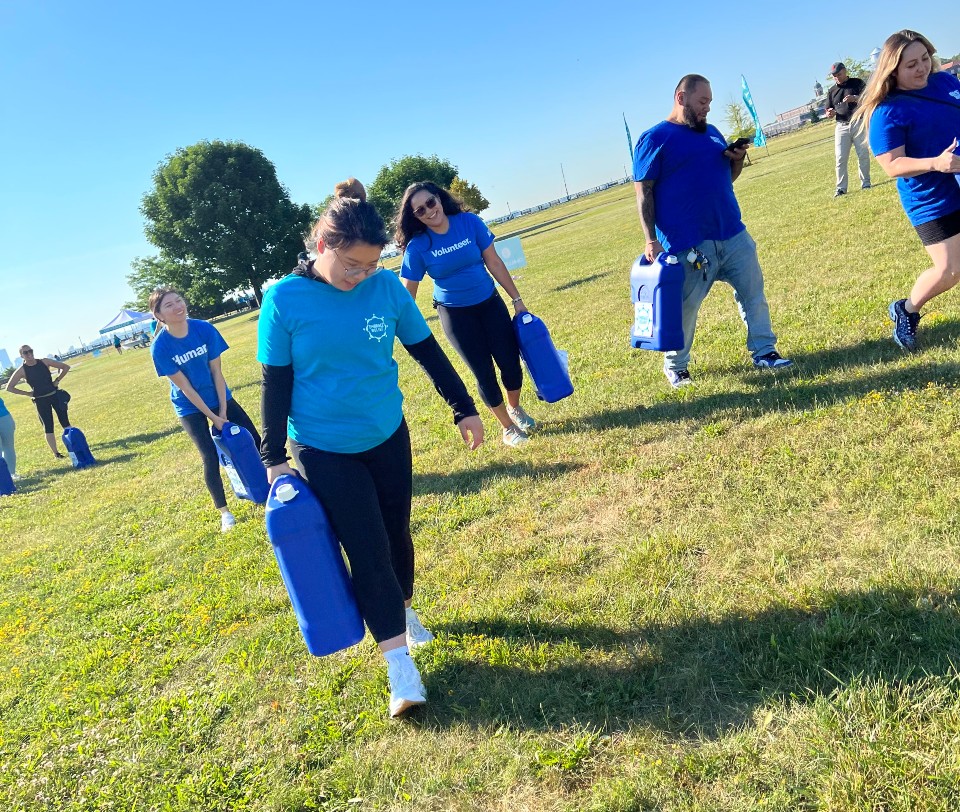
Participants who attended and completed Embrace Relief’s first-annual “H2Ow Far Can You Walk” 5K Walk-A-Thon in-person at Liberty State Park in Jersey City took a combined 625,000+ steps for clean water. And thanks to our partnership with Sweatcoin, this event was a global effort – more than 6,000 people around the world supported our cause through our virtual event that day, walking a total of 20.5 million steps!

The “H2Ow Far Can You Walk” 5K Walk-A-Thon event was held to support Embrace Relief’s efforts in building and rebuilding water wells in Africa. The clean water crisis has left hundreds of millions of people in that part of the world without an accessible, safe source of drinking water.

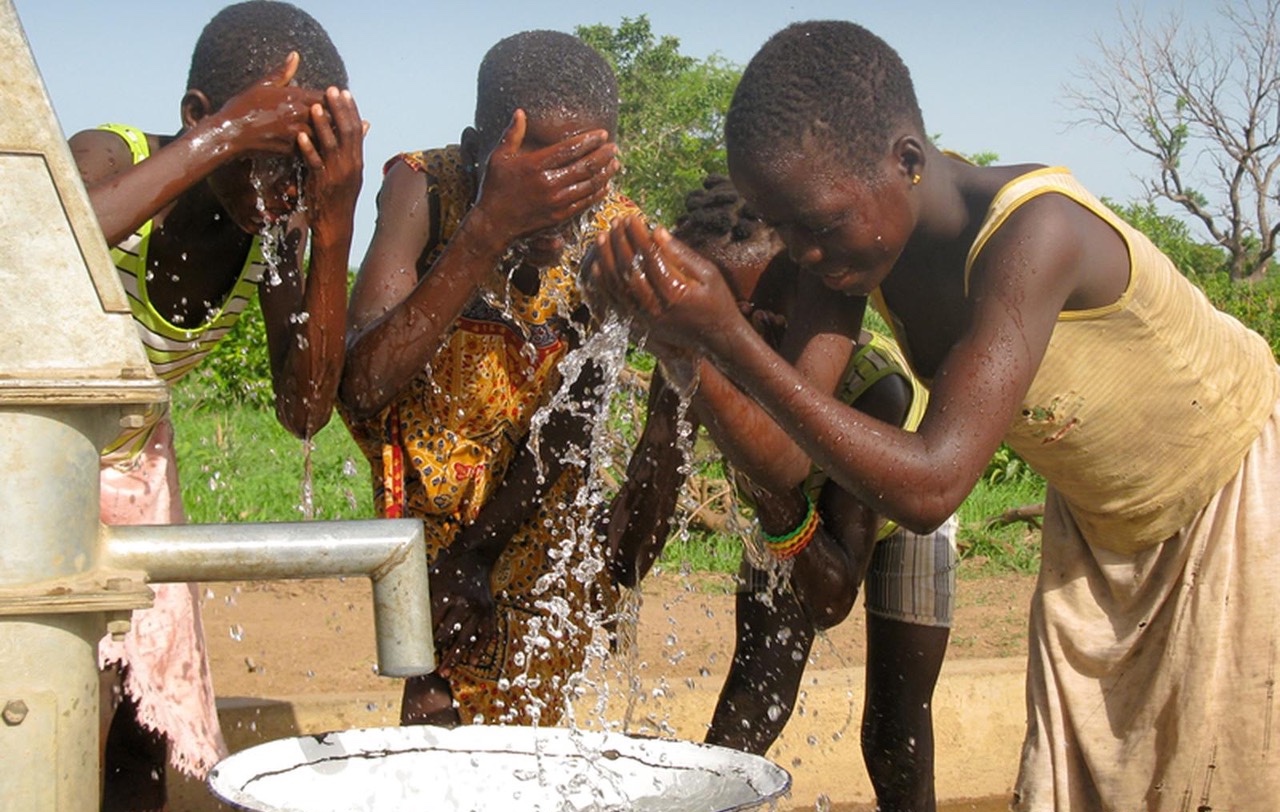
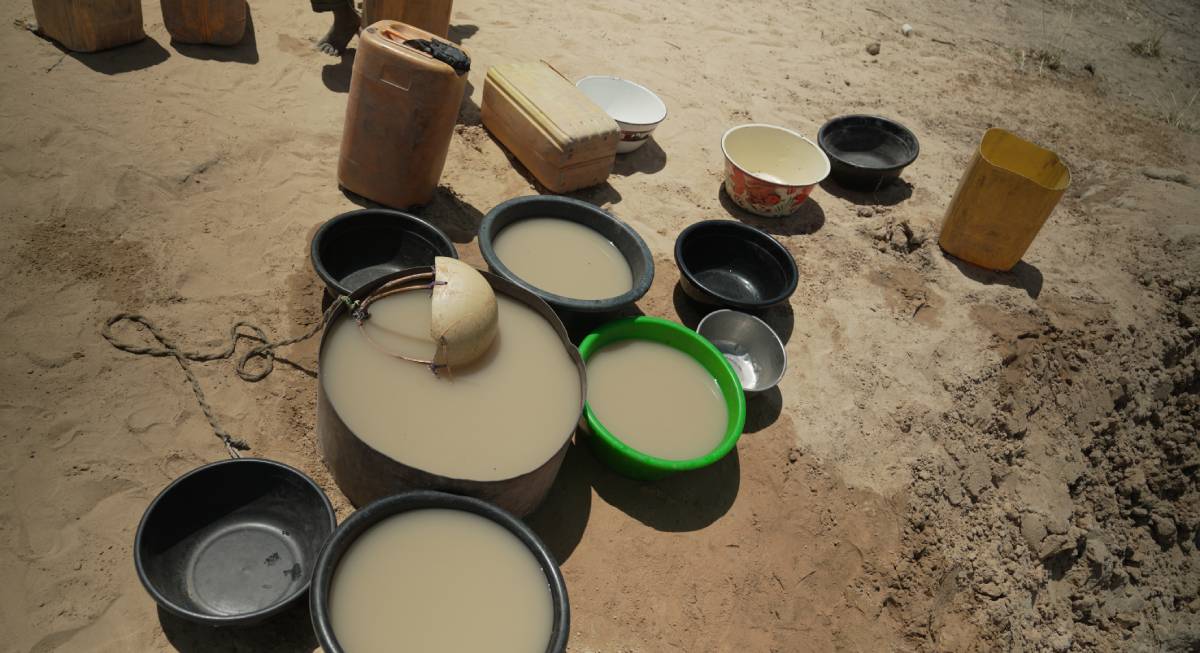
The Walk-A-Thon itself was designed to draw attention particularly to the plight of young women and girls in Africa, who often take on the role of water-carriers in their families. Because many communities are located long distances from the nearest source of water, they must walk for several miles per day on average – often barefoot, under the heat of a blazing sun, while carrying as much as 80 pounds of water.

Embrace Relief’s well-building campaign aims to reduce or eliminate that burden for as many people as possible. So far, our Clean Water Initiative has already delivered safe, accessible drinking water to more than 500,000 people in the African countries of Chad, Cameroon and Nigeria. 

Our newest ongoing project, “Fountains of Hope,” is reconstructing malfunctioning and abandoned water wells and restoring them to full use for their nearby communities.

Embrace Relief has set an ambitious target of 250 more refurbished wells under the “Fountains of Hope” Project by the end of 2022. Thanks to the generosity of the people who walked with us in Jersey City, or who supported our cause through the Sweatcoin app, Embrace Relief is well on our way to our goal.

Embrace Relief’s partnership with Sweatcoin, a free step-tracking app that allows users to convert their steps into a digital currency that can be spent on products or donated to charity, was a major contributor to the 5K Walk-A-Thon’s success.

Throughout the month of June, the “H2Ow Far Can You Walk: A Walk to Bring Water to Africa” campaign was featured on the Sweatcoin app, where more than 568,000 people from 240 countries contributed their steps toward this global cause. Together, we walked more than 30 billion steps for clean water during June!

On the day of the Walk-A-Thon itself, more than 6,000 Sweatcoin users registered and completed their 5K virtually from a variety of locations from around the world. They joined the more than 100 guests who joined Embrace Relief in-person at Liberty State Park and completed the 5K walk along the Hudson River.

All funds raised through the in-person event and the Sweatcoin app for the Walk-A-Thon 5K program will directly support Embrace Relief’s well reconstruction efforts.

Donating to food banks and food pantries: Simple, sustainable and impactful

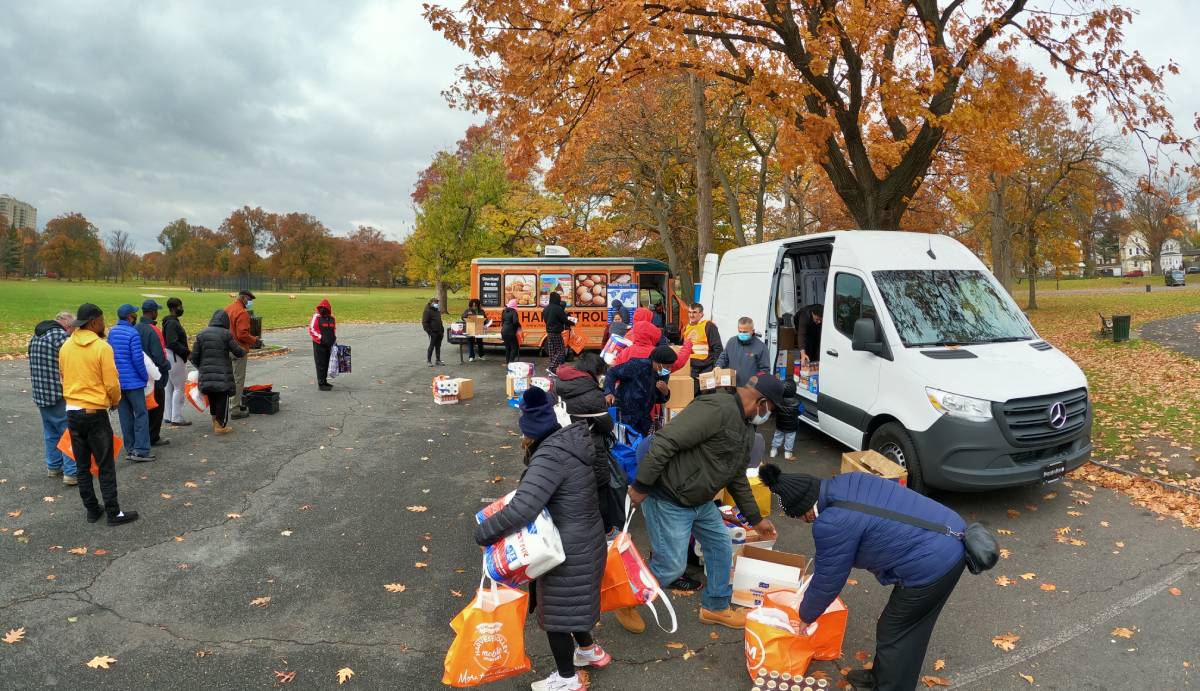
Food banks and food pantries serve millions of people every single day in America, and the need is growing more and more. In 2020, nearly 7 percent of American households made use of a communal food source, the highest total on record. They are an important source of food and nutrition especially for the United States’ 13.8 million households (about 1 out of every 10, equivalent to roughly 46 million people) who lived with some level of food insecurity in 2019.

If you’re in need of a meal, or if you’re fortunate enough to be able to donate food to a local pantry and support your community, finding a food bank can be as simple as a Google search. Websites like feedingamerica.org and foodpantries.org offer location information for many food banks and food pantries in every state in the U.S., and include listings for government-run food banks as well as private and religious charitable organizations who provide food.

Each location will have its own rules for what donations are and are not acceptable. But most will accept simple, nutritious foods like pasta, rice, granola, canned fruits and vegetables, soups. (Some food banks may also accept donations of cash or expensive personal hygiene necessities like diapers or sanitary pads, which can also be extremely helpful for people in need.)

Donating to a food bank is one of the easiest, yet most impactful ways to make your community a better place. Hunger and poverty are closely linked as part of a vicious cycle that affects millions of people in America. The nature of poverty often forces people to choose between their next meal and other necessities like shelter, clothing, or transportation. By providing food to those who are in need, food banks and pantries can help to alleviate this cycle.

The same is true for the hundreds of millions of people who live with hunger worldwide. Having enough food to eat is a human right. Making that a reality is not only possible – we produce far more food than we could ever eat – but also a moral obligation. Whether you’re dropping off boxes of food at your local pantry, or working with organizations like Embrace Relief to aid people in dozens of countries around the world, every little bit helps. 

Donate today to help us feed thousands of people during Qurbani 2022

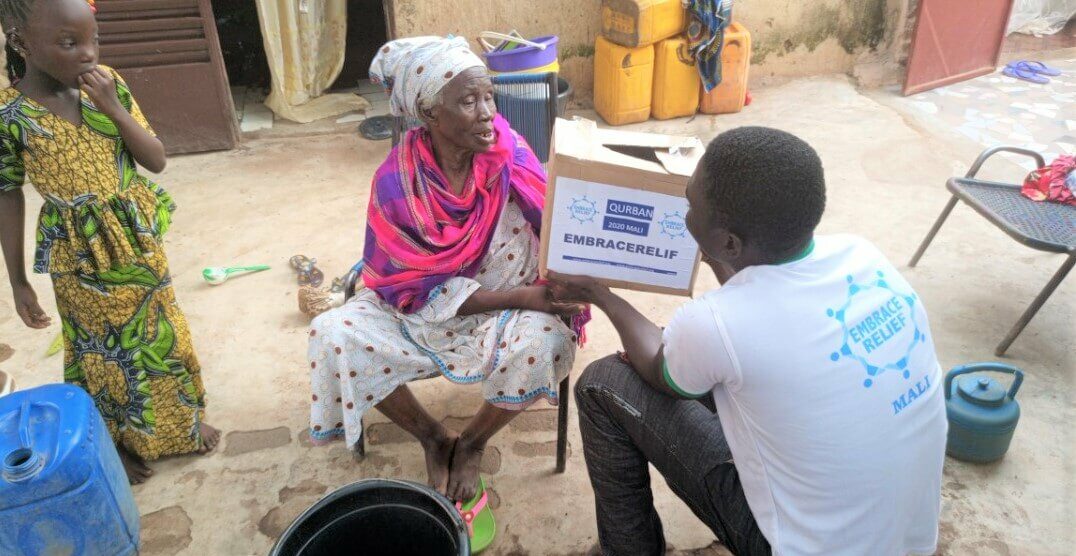
A commitment to fighting hunger wherever it exists on the planet is one of the foundations of Embrace Relief’s work. To mark Qurbani and the celebration of Eid in July, Embrace Relief’s International Hunger Relief: Qurbani 2022 campaign plans to provide food packages to tens of thousands of needy people in more than a dozen countries.

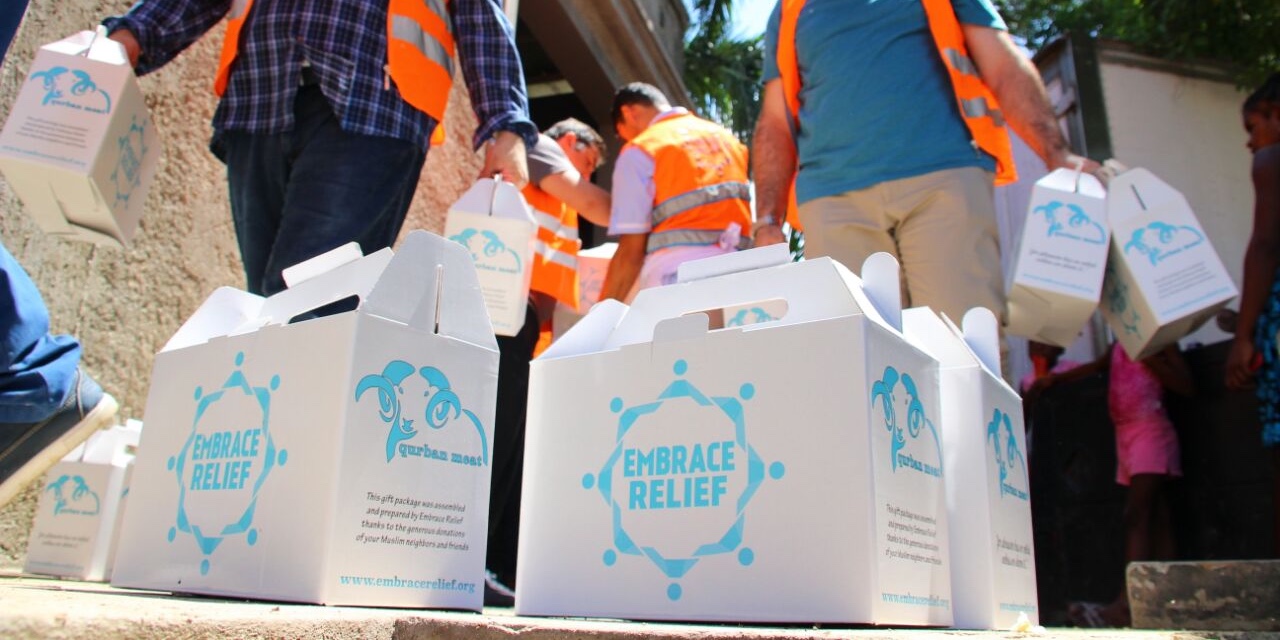
Embrace Relief’s Qurbani packages will contain sheep, cattle or goat meat, all of which has been 100% humanely and hygienically slaughtered. This meat is high in fat, protein, minerals and vitamins, which are vital in fighting malnutrition, particularly for growing children.

Each Qurbani meat package from Embrace Relief feeds eight families! And when you donate to provide a Qurbani package for those most in need, we will notify you once it has been sent and delivered.

The cost for each package in each area we serve depends on the local market price for the meat. Here’s how much it would cost for you to lessen the burden of hunger for eight families this Qurbani:

  • Africa: $175
  • United States: $265
  • Greece: $265
  • Yemen: $265

With your help, we can combat food shortages and provide hope to people in need in places like sub-Saharan Africa, Yemen, Greece and the United States. Every contribution you make helps one more family go to bed on a full stomach, and brings us one small step closer to ending world hunger.

Hand washing: Vital for all, a luxury for some

Though you may take it for granted, your bathroom sink is one of most important weapons we have in fighting disease. Washing your hands with soap and clean water is one of the most comprehensive ways of preventing the spread of germs, and thus a critical piece of public health

It takes just about 20-30 seconds for one person to properly lather their hands with soap, rub them together under running water, and rinse off. But when we collectively take that time to clean our hands before handling food, after using the toilet or blowing our nose, or after touching a frequently-used surface in a public area, we eliminate millions and billions of germs that might make ourselves, our families, and others around us sick.

For generations now, people have understood the link between hygiene and the spread of disease, and the latest science confirms this understanding. When communities become more educated about the importance of handwashing, studies show that their rates of respiratory illnesses, diarrheal illnesses, and gastrointestinal illnesses are reduced significantly.

That’s no small thing in a world where these preventable diseases cause unnecessary deaths and suffering around the world. Consider:

  • An estimated 40 percent of the world’s population lacks access to a basic hand-washing facility.
  • An estimated 432,000 deaths per year are caused by diseases directly resulting from poor sanitary and hygienic conditions. These deaths are overwhelmingly concentrated in countries where clean water, sanitation and hygiene are least accessible.
  • These diseases disproportionately impact children. Respiratory diseases like pneumonia and gastrointestinal diseases like diarrhea are among the leading causes of death for children under 5, killing nearly 1.8 million children every year. Universal hygiene and handwashing could make a huge dent in that number.

An estimated 780 million people worldwide lack access to a safe, accessible source of clean water. But this crisis has issues that go beyond simply drinking unprotected, potentially dirty water.

Without water available for proper sanitation and hygiene, a community is at deep risk for the spread of disease. As we’ve learned during the era of COVID-19, when some of us are at risk for the spread of contagious diseases, eventually all of us are at risk.

 Help Embrace Relief deliver clean water to people who need it

That’s why the campaign to provide clean water universally is so important. And that’s why it’s a cornerstone of the mission of the Embrace Relief Foundation. Embrace Relief has invested in the building of hundreds of water wells in Africa, providing clean water to more than 500,000 people in the African nations of Cameroon, Chad, and Nigeria. 

Through our Clean Water Initiative, we have funded the construction of 450 new water wells in those countries. And through our recently launched “Fountains of Hope” project, we’ve reconstructed 50 abandoned or non-functioning wells.

To aid more people, we need your help.

Donating to Embrace Relief’s Clean Water Fund and our “Fountains of Hope” project is the single-best way to ensure that thousands of people will get the water they need.

Together with your support, we can give a lifeline to hundreds of vulnerable communities in Africa and limit the spread of disease with this one act.

Embrace Relief’s first-annual ‘H2Ow Far Can You Walk’ 5K Walkathon

Crowds of people filled the pathways beside the Hudson River on Saturday morning, June 25, braving the heat and humidity to complete Embrace Relief’s “H2Ow Far Can You Walk?” 5K Walkathon Fundraiser at Liberty State Park in Jersey City, NJ.

This first-annual event raised money for Embrace Relief’s “Fountains of Hope” initiative, which reconstructs abandoned non-operational water wells in the African countries of Chad, Cameroon and Nigeria. All proceeds from the Walkathon are going towards Embrace Relief’s goal of rebuilding 250 water wells in 2022, which would provide clean drinking water for at least 250,000 people in those countries.

“Today’s event was great,” said Embrace Relief CEO Osman Dulgeroglu. “I think it was a great opportunity for everyone to learn, to gain a greater understanding of what people are experiencing, and to come together and support people. We’re looking forward to organizing this event again next year, and in the following years as well.”

In addition to the many dozens of walkers who joined the 5K in person Saturday, Embrace Relief also received the support of hundreds of thousands more people around the world virtually through a partnership with Sweatcoin, an step-counting app that turns each step into digital currency.

The idea of the “H2Ow Far Can You Walk?” 5K Walkathon came from Embrace Relief’s experience working with the communities we serve. In America, our water supply is safe, clean and easily accessible. But in parts of Africa, people – usually young girls and women – must carry heavy water containers over long distances in extreme heat, often while barefoot, risking their safety and health.

The walkers at Saturday’s walkathon were able to experience a very small taste of what this life is like. The air temperature at Liberty State Park exceeded 80 degrees by the time the first participants arrived for registration at 7:30 a.m. The heat and humidity continued to climb, nearing 90 degrees by the time the opening ceremonies got underway shortly after 8:30, featuring speeches from Dulgeroglu, Embrace Relief project manager Dana Coppola, and a pair of honored guests, U.S. Winter Olympian hopeful Lauren Brzozowski and Jersey City Councilman James Solomon.

Before the walk started, many walkers tried out the “Challenge Area,” in which they could carry a full 6.5-gallon jug of water a mere 50 meters, a fraction of the distance most water-carriers in Africa walk daily.

“It completely opened my eyes,” said Wendy, one of the participants. “I would have had absolutely no idea the distance they walk, the danger they’d be in, the weight they’re carrying. I tried out [the “Challenge Area”] and I couldn’t imagine carrying that much weight for the whole 5K, much less doing it multiple times a week. And it’s not an option for many people, it’s literally a necessity to live. It was really impactful.”

Addressing the crowd at a stage near the 5K’s starting line, the opening ceremony speakers stressed the urgency of reaching Embrace Relief’s 250-well goal. Councilman Solomon noted that the number of people who will be helped this year by the Fountains of Hope project (250,000) is nearly equivalent to the population of Jersey City, New Jersey’s second-largest municipality. The clean water they receive will improve and save tens of thousands of lives, boost economic and agricultural production, and give women and girls more time to pursue their education and support their families.

“We know that with people’s support, we can reach our goal of 250 wells this year,” said Project Manager Dana Coppola. “We want to encourage everyone here, our donors, supporters, anyone who’s just learning about this issue for the first time, to educate yourself, get involved, advocate, give if you can, and try to do what you can!”

The actual 5K walk began shortly after 9 a.m., with groups of people filing down the path at their own speed. Walkers could enjoy strolling alongside the Hudson River accompanied by picturesque views of New York Harbor, the Statue of Liberty, and the Manhattan skyline. (And unlike their counterparts in Africa, walkers could refresh themselves at two water stations.) After reaching the southern tip of Liberty State Park, walkers looped around and retraced their steps to return to the starting line.

Embrace Relief is thankful for the many partners and sponsors who helped make the “H2Ow Far Can You Walk?” 5K Walkathon happen: partner organizations Peace Islands Institute and Sweatcoin, and sponsors Xtreme Element; Dun & Bradstreet; New Jersey District 34 Assemblywoman Britnee Timberlake; and Antonio Prieto Salon. 

What is food insecurity?

Food insecurity occurs when a person does not have regular access to the amount of safe and nutritious food required for normal growth and an active, healthy life.

People who are food-insecure typically either lack the resources, like money, required to obtain food, or live in parts of the world where food is scarce for one reason or another, such as drought or conflict.

In either case, people who consume less food than their body needs, or who are forced to eat cheaper but less-nutritious foods, over an extended period of time are at risk for short- and long-term health issues.

The United Nations’ Food and Agricultural Organization (FAO) measures food insecurity along a scale, from mild to severe. The closer to the “severe” side of the spectrum a person is, the more a person’s health and well-being is endangered by hunger. The different levels of food insecurity include:

  • Food security: A person has access to a sufficient amount and variety of food of their choice, which is both safe and nutritious, at all times.
  • Mild food insecurity: A person occasionally lacks the ability to obtain sufficient amount and/or variety of food of their choice. This may include eating the same foods over and over, or occasionally eating foods considered undesirable.
  • Moderate food insecurity: A person does not have sufficient money or resources to sustain a healthy diet. Moderately insecure people may often eat the cheapest food available, which may not be nutritious, or they may regularly skip meals or cut back on the size of the meals they consume.
  • Severe food insecurity: A person involuntarily goes an entire day (or more) without eating, or runs out of food entirely.

The hunger statistics measured by world organizations like the FAO focus on these latter two categories when they talk about the crisis of world hunger. And it is a crisis: the FAO projects that between 720 and 811 million people were either moderately or severely food-insecure in 2020. The countries most affected are in sub-Saharan Africa, with more than 50 percent of the population in some countries in that region being food-insecure. 

But hunger is a problem across every continent and, to at least some extent, in every country on Earth.

Hunger is projected to increase in the coming years as structural and environmental factors – poverty, the ongoing COVID-19 pandemic, supply-chain issues resulting from the pandemic, climate change, conflict – impact millions of people and disrupt normal life.

Donate today to help us feed thousands of people during Qurbani 2022

The scale of the problem requires us all to work together to support our fellow people, wherever they may be in need of food. 

That spirit of togetherness, and the commitment to fighting hunger wherever it exists on the planet is one of the foundations of Embrace Relief’s work. To mark Qurbani and Eid, Embrace Relief’s International Hunger Relief: Qurbani 2022 campaign plans to provide food packages to tens of thousands of needy people in more than a dozen countries.

Embrace Relief’s Qurbani packages will contain sheep, cattle or goat meat, all of which has been 100% humanely and hygienically slaughtered. This meat is high in fat, protein, minerals and vitamins, which are vital in fighting malnutrition, particularly for growing children.

Each Qurbani meat package from Embrace Relief feeds eight families! And when you donate to provide a Qurbani package for those most in need, we will notify you once it has been sent and delivered.

The cost for each package in each area we serve depends on the local market price for the meat. Here’s how much it would cost for you to lessen the burden of hunger for eight families this Qurbani:

  • Africa: $175
  • United States: $265
  • Greece: $265
  • Yemen: $265

With your help, we can combat food shortages and provide hope to people in need in places like sub-Saharan Africa, Yemen, Greece and the United States. Every contribution you make helps one more family go to bed on a full stomach, and brings us one small step closer to ending world hunger.

Wema Mkamba

Wema Mkamba doesn’t take her responsibilities lightly.

A primary school teacher at the Kitomanga Primary School in Lindi, Tanzania, Wema shoulders the responsibility of raising a young daughter while working professionally. She is also driven to work hard and improve her skills in the hope of creating a better life for herself and her family.

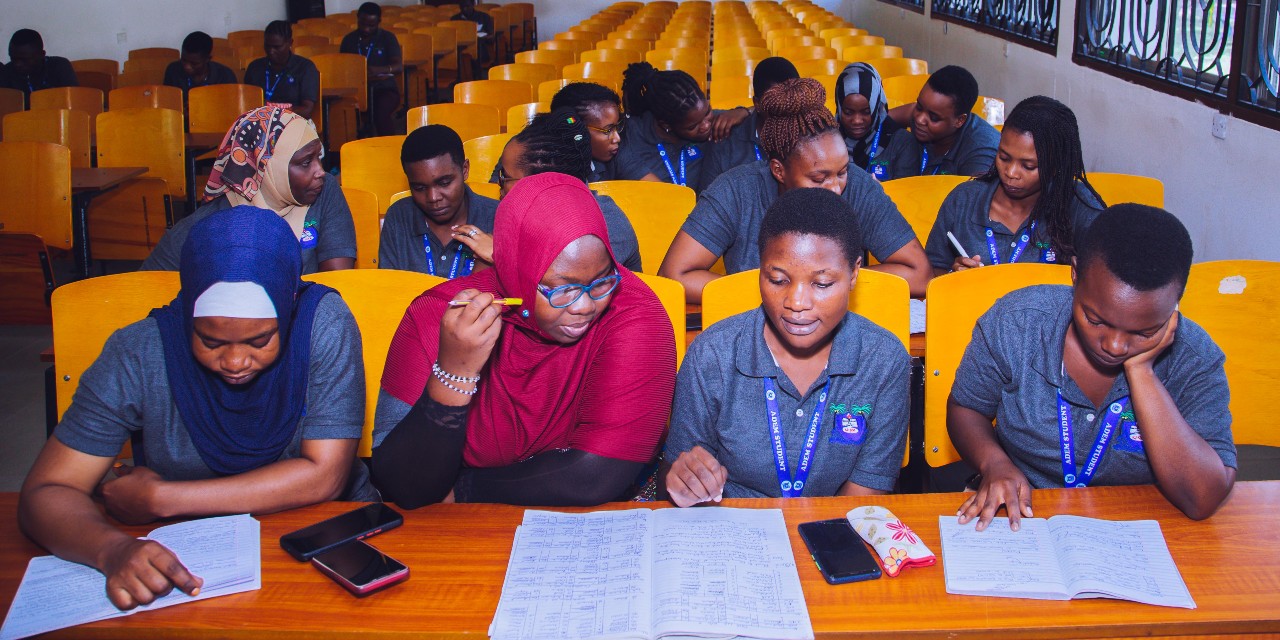
After a successful first semester in her studies at the ADEM School in Bagamoyo this year, Wema became one of the first 24 recipients of a scholarship from the Embrace Relief Foundation, which will pay her tuition fees and other expenses during the second semester.

Wema is taking courses to become an expert in ICT (information, communication and technology) tools, which will provide her a path to teach important skills to the next generation of Tanzanians.

“It’s my desire to be at ADEM because I want to become a good leader,” Wema says. “This scholarship is so important to me, as a mother. I have a responsibility to my daughter, to pay for her school, and to my family. They depend on me. This scholarship has made it easier for me to afford my responsibilities.”

Embrace Relief’s scholarship program at the ADEM School is designed to empower women in Tanzania, who remain under-represented in leadership positions in many fields. For women like Wema who are pursuing careers in education, Embrace Relief’s support can make the difference between being able to afford an education and not. 

When Wema completes her degree, her qualifications will open the door to advancing into leadership roles in the Tanzanian education system. With advancement comes stability and a sustainable income that will support her family. Meanwhile, she’ll also have the opportunity to shape the lives of young people in her region and country through her work.

Wema doesn’t take this responsibility lightly, and plans to work even harder to make the most of her scholarship.

With the support of our donors, Embrace Relief aims to provide annual scholarships to more and more women in Tanzania as part of our Women’s Empowerment program. This first class of students – Wema’s class – is only the beginning of what we hope will be a long, successful partnership.

“I thank the Embrace Relief organization,” Wema says. “It’s not easy for me to accept this scholarship. There are many women who need this scholarship, who work hard and have ambition. We need this because of our economic situation, where we come from, and because of our responsibilities. I ask that you please do not only do this for me, but to also help others next year, and the next year, and the next year. Thank you.”

Easter Joel

As is the case in many other countries, teaching is a stable if not lucrative career in Tanzania. The average primary school teacher in the country earns the equivalent of $230 US dollars per month, slightly more than Tanzania’s median income. 

But for a group of people whose role in society is so important, and who work long hours to ensure their students’ success, most teachers are just about making ends meet. Many struggle to afford housing, food, and other necessities. And for teachers who wish to better themselves and advance their careers, paying for advanced education is an additional expense – and perhaps not a feasible one.

Easter Joel, a school teacher at the Igoma Primary School in Mwanza Region, Tanzania, is one of those teachers seeking knowledge and a professional path forward. She is studying to earn a diploma in School Quality Assurance from the ADEM School in Bagamoyo. 

Her success in the classroom during the first semester of the school year led to her being named one of 24 recipients of a scholarship from the Embrace Relief Foundation, which will pay her tuition fees and other expenses during the second semester.

Embrace Relief’s scholarship program at the ADEM School is designed to empower women in Tanzania, who remain under-represented in leadership positions in many fields. For women like Easter who are pursuing careers in education, Embrace Relief’s support can make the difference between being able to afford an education and not. 

“Getting this scholarship makes things easier for me,” Easter says. “I can use the tuition money for other things, which makes life easier. “

With the support of our donors, Embrace Relief aims to provide annual scholarships to more and more women in Tanzania as part of our R.I.S.E. (Reach.Inspire.Support.Educate.) women’s empowerment program. This first class of students – Easter’s class – is only the beginning of what we hope will be a long, successful partnership.

“This scholarship is helping me continue my studies without any disturbance,” Easter says. “We have many things that we need to that cost money. And so [the scholarship] is very good to me. I can say thank you so much, Embrace Relief, for this support. May God bless you

Domila Plasid

Public schools in Tanzania have been free for primary- and secondary-school students, and their families, since 2016. In a country where half the population exists below the international poverty line, that’s an important step towards ensuring an educated populace with the skills to be productive, successful adults.

It also means that the people designing and operating the public school system are crucial to making it all function.

Domila Plasid, a teacher at Jude Secondary School in Tanzania’s capital city, Dar-es-Salaam, is studying for an advanced degree in School Quality Assurance because it will give her the opportunity to impact the lives of future generations of Tanzanian citizens.

Domila is enrolled at ADEM College in Bagamoyo, about 90 minutes’ drive north of Dar-es-Salaam, where she is part of a one-of-its-kind program in school expertise. And after a successful first semester of her 2021-22 school year, she has been awarded one of 24 full scholarships, covering tuition and other school costs, from the Embrace Relief Foundation.

Embrace Relief’s R.I.S.E. (Reach. Inspire. Support. Educate.) scholarship program at the ADEM School is designed to empower women in Tanzania, who remain under-represented in leadership positions in many fields. For women like Domila who are pursuing careers in education, Embrace Relief’s support can make the difference between being able to afford an education and not.

“My hope is to become a school quality assurance officer, who can help the government in my country to produce a good, educated people,” Domila says. “I want to thank God, because he has helped me to struggle, and to work hard, in order to get this scholarship. And I want to say thank you so much to Embrace Relief for this support.”

Once she completes her courses, Domila will have the qualifications to pursue a path in the Tanzanian national school system, and the insight necessary to develop and adjust the curriculum of Tanzania’s public schools.

In addition to serving the next generation through her work in the school system, Domila can also be a trailblazer and a role model for girls in Tanzania. Her success in breaking into the male-dominated leadership of Tanzania’s school system can open doors for the young girls and women who follow.

“Our graduates, these 24 ladies, will be our ambassadors in different regions of Tanzania,” says Mohamed Kitendo, Charity Department Coordinator at Ishik Medical and Education Foundation Tanzania, and an Embrace Relief partner. “Because one part of this program is we want our graduates to give back to society after they graduate. And it will be easy for them to give back to support, because they’ll have been supported. Embrace Relief came out and supported us, and so we are [developing] people who will be there to help others. This is the goodness of this project.”

With the support of our donors, Embrace Relief aims to provide annual scholarships to more and more women in Tanzania as part of our R.I.S.E. women’s empowerment program. This first class of students – Domila’s class – is only the beginning of what we hope will be a long, successful partnership.

“We need this program to continue,” Domila says. “We need to get more knowledge. I’m hopeful I can continue on after my studies, and after finishing my diploma. [With this scholarship], Embrace Relief is pushing me to continue and gain more knowledge.”