Recent

US Hunger Relief: Hunger in America

The state of hunger in America has been especially poor recently, and COVID-19 is only making it worse, leading to more people facing hunger and potential homelessness daily. Plus, the situation is only bound to increase as colder weather continues to approach. Below we take a look at how hunger is impacting America at the moment.

Hunger Statistics in America 2021 and looking into 2022

  • According to the USDA, more than 38 million people, including 12 million children, are currently food insecure.
  • Families face hunger in every community in the country, especially rural ones. In fact, 15% of people in rural areas are hungry because they often don’t have access to grocery stores or transportation.
  • Contrary to popular belief, food insecure people are more prone to obesity. Limited transportation and lack of nearby grocery stores force many to shop at places that sell mostly packaged and prepared foods that are higher in calories, but lower in nutrition.
  • Many households experiencing food insecurity don’t qualify for federal nutrition programs, so they have no other option but to visit local food banks and other programs for support.
  • African American, Latino, and Native American communities suffer higher rates of hunger due to systemic racism.
  • According to a new study published by Temple University and the Wisconsin HOPE Lab, a staggering 36 percent of college students are food insecure. It’s more prevalent among college students of color—up to 57%.
  • 60% of households led by older Americans must choose between buying groceries or paying utility bills.

How Embrace Relief is Helping Stave Off Hunger in the US

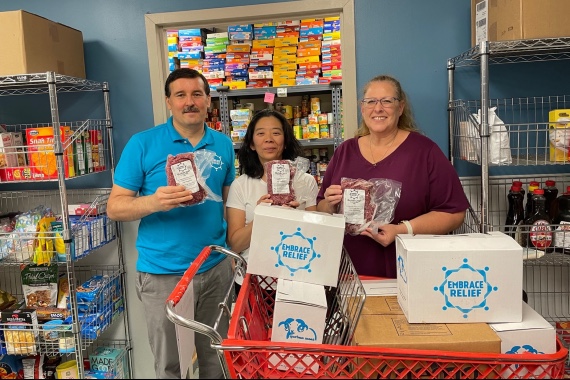
This past year, we reached 320 families in Orange, East Orange, Hackensack, and Montclair, New Jersey with Harvest Trolley, our mobile market. Harvest Trolley is a unique, brand-new venue in which we literally bring a “supermarket” directly to people facing hunger, regardless of race, age, or sex. Also, in 2020, we distributed roughly 5,000 food packages to families in the US, but there are still so many more who need help! So, please donate today to help supply food to thousands more people struggling to put food on the table. That’s part of our Year-End Resolutions, anyway.

About Our Year-End Resolutions

A take on New Year’s Resolutions, our Year-End Resolutions is something you can do—right here, right now—that will have an impact before the year is officially over. For example, contributing to one of Embrace Relief’s many humanitarian causes (check them all out here). And the best thing is—by doing so, you’ll officially make 2021 a great year. Not just for yourself, but for people who need support but have nowhere and no one to turn to, because we provide them the resources needed to change and save lives. Happy Year-End!

A Trip to Mali and the Importance of Clean Water

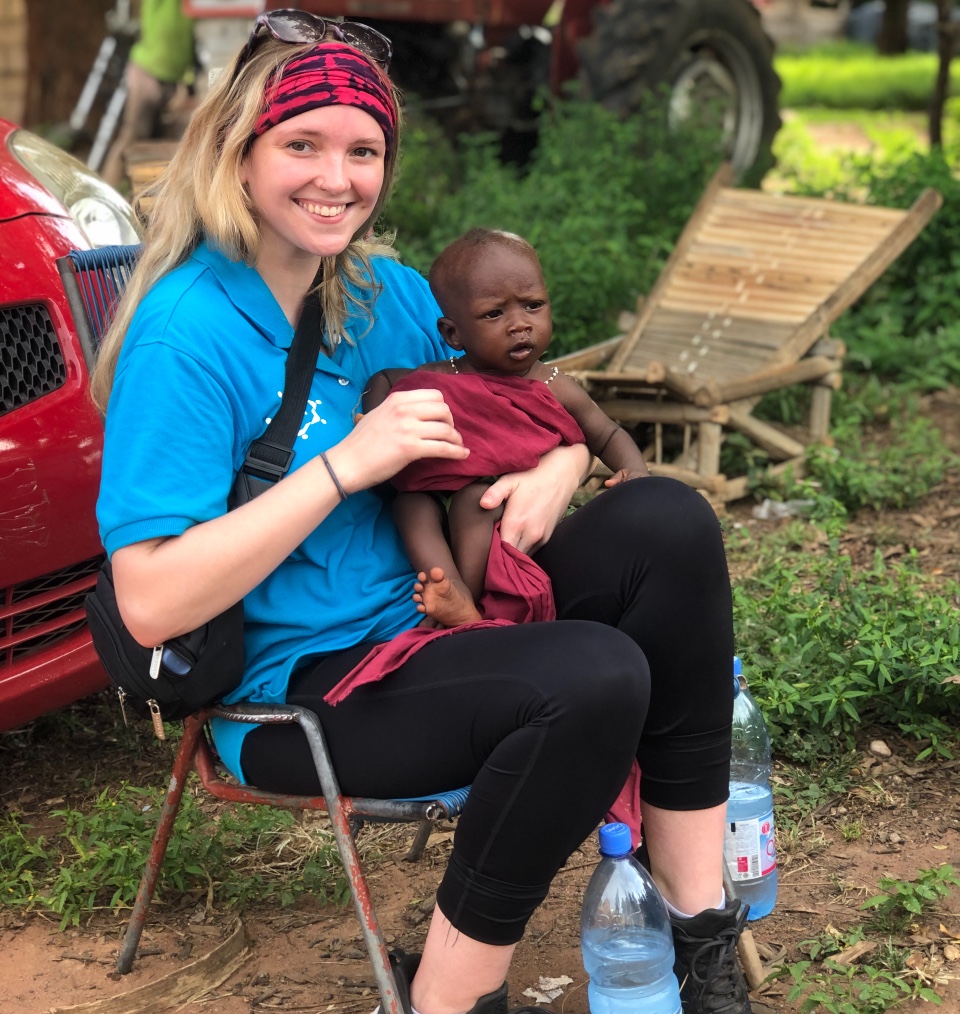
One of our very own, Dana Coppola, visited Mali, Africa, earlier this month for 10 days, a trip she has called “life-altering.” Below is her personal account of the trip, in her own words.

Dana’s Trip

I had to mentally and physically prepare myself for the trip we took to Bamako, Mali, located in West Africa where there are limited sources of readily available water and the weather is 100 degrees Fahrenheit. The thought of this made me extremely anxious, but I was also so excited and grateful I was going to have this experience. 

We left with 50-degree weather from JFK Airport and arrived in Bamako, Mali one layover and 14 hours later in 98-degree weather. My body immediately began to sweat, and I knew it was going to be 10 days of trying my best to stay hydrated. Hydrate, perspirate, repeat. 

I have worked at Embrace Relief for over two years, and during my time here I have done a lot of research and have learned a lot about the water crisis and clean water scarcity that affects the region. I had never been to Africa or gone on a humanitarian mission trip before, so I really didn’t know what to expect. I took all of the suggested travel precautions, which included the vaccination for typhoid, which is a bacterial infection contracted from food or water. Thankfully, no one on our team got sick.

Luckily, our team stayed in the Doctor’s Quarters in one of our clinics, which had a shop next door that had water bottles with filtered, safe water we could get. Every day, we made sure to bring extra water with us in case someone got lightheaded or passed out since none of us have been exposed to a climate like Mali’s before.

Children who lived near the clinic would come to say “Hello” to us and we always tried to give them some candies we brought there from the U.S. If we didn’t have anything, we would give them water, which they happily accepted. I had never seen children so excited to get a bottle of water before. Things really started to be put into perspective for me.

The villages we visited were Djissoumabougou, which is 45 minutes outside of the capital city, and Sirakorola which is two and a half hours away. Djissoumabougou has one water well that serves all 40 families who live in the village, and some people must walk up to 30 minutes to reach the well. This well, in particular, was dug 45 meters underground, so we knew it was safe to drink – the water was even chilled! Sirakorola is a network of 55 villages. The section we visited had a water pump and although we were unable to ask how deep it was, it was chilled and felt refreshing to put on my neck and arms. 

During our time in Mali, I saw poverty for the first time up close, and the way I view the world has been changed forever. I returned from Mali filled with gratitude, knowledge, and drive to work harder than ever in the U.S. to continue to help my friends in Mali. 

The Importance of Clean Water

Mali isn’t the only country struggling from clean water scarcity and its ill effects. Millions of people in sub-Saharan Africa collect unsafe water from lakes, rivers, and ponds on a daily basis, infecting themselves with waterborne illnesses that either result in death or make them too sick to work or pursue an education. Many of them also spend up to six hours a day obtaining this water, especially women and young girls, forcing them to face danger and extreme weather conditions. This daily practice also steals valuable time they could be using to work or pursue an education. The fact that this vastly impacts women and young girls is particularly noteworthy because studies show females contributing to the workforce and pursuing education increases gender equality, which in turn leads to economic growth. Therefore, due to Africa’s lack of access to clean water, millions are suffering greatly from poor health and poverty.

How Embrace Relief is Aiding the Situation

Fortunately, Africa houses a substantial amount of clean water underground, possibly 20 times more than the 8,000 miles of visible water in its lakes and ponds. This is why Embrace Relief stepped up to the plate in 2020, building and reconstructing a total of 500 water wells throughout Chad, Cameroon, and Nigeria to date. (Our Fountains of Hope project focuses specifically on reconstructing no-longer-operational wells.) We also plan on building and reconstructing hundreds more throughout the region, as well as in Nigeria. The current wells supply clean water to over 500,000 people on a daily basis, are constantly monitored to ensure peak performance, and are guaranteed to last at least five years. We also educate each community on how to maintain the wells so they can become self-sustainable on into the future.

The Effects of Clean Water

By providing clean, sanitary water, Embrace Relief has and will continue to drastically reduce the multitude of ill effects of unsanitary water in the region, which will lead to the following improvements:

  • Vast improvement in overall health due to increased sanitation and hygiene. This includes women being able to better manage menstruation and pregnancy.
  • Vast increase in education since children will have more time to pursue it rather than fetching water, allowing them to obtain higher-level, more lucrative jobs
  • Vast increase in gender equality, since women and girls will have more time to work and pursue an education as well
  • Vast increase in irrigation, leading to improved agriculture and more, better-paying jobs for farmers
  • Less conflict between neighboring countries and communities fighting over clean water reserves
  • As a result of all these things, the sub-Saharan area—which is currently experiencing extreme poverty—will experience significant economic growth. This in turn will lead to more sustainable communities, which is of particular importance because the people in sub-Saharan Africa are hard-working people who deserve a higher standard of living. And if nothing is done to help them achieve this, forecasts predict that in 2030, 90 percent of the world’s poor will be concentrated in this area of the world.

Please Donate Today

So, make it your Year-End Resolutions this year to donate to our Clean Water campaign to help improve the lives of hundreds of thousands of people forever. You can even fund your own clean water well project, in which you can give your well a name and provide a description of the project to be posted on our site. By doing so, you’re not only providing hundreds of thousands of people with clean water, you’re providing them with life itself.

More About Our Year-End Resolutions

A take on New Year’s Resolutions, our Year-End Resolutions is something you can do—right here, right now—that has an impact before the year is officially over. For example, contributing to one of Embrace Relief’s many humanitarian causes (check them all out here). And the best thing is—by doing so, you’ll officially make 2021 a great year. Not just for yourself, but people who need support but have nowhere and no one to turn to, because we provide them the tools and resources necessary to improve their lives. Happy Year-End!


Meet Mariam and Her Family’s Daily Struggles with Lack of Clean Water

Mariam lives in Chad, Africa. While she stays at home taking care of her infant son, her older daughter, Zara, is out fetching water from a nearby lake, something she must do to supply her family with water every single day. This grueling task takes upwards of six hours, rendering Zara utterly exhausted when she’s done, not to mention it badly strains her shoulders, back, and neck. It also steals valuable school-time from her, affecting her future ability to earn adequate income, and is highly dangerous because of Africa’s extreme weather conditions and the fact she’s at risk of experiencing physical and sexual assault.

Perhaps most unfortunate of all, though, is that the water Zara retrieves could potentially make her and her family sick, as the local lake water potentially contains debilitating—sometimes even deadly—waterborne diseases. In fact, her father (Mariam’s husband) has been hospitalized twice in the past few years alone due to waterborne illnesses, forcing him to lose lots of work. Unfortunately, many people in their village have passed away over the generations due to unsanitary water. Despite how terrible that is, Zara and Mariam can’t help but think they’re incredibly fortunate so far because they’re still alive themselves. Still, they can’t help but fear every single day one of them might be next…

How Embrace Relief Aids People Like Mariam and Her Family

Fortunately, Africa houses a substantial amount of clean water underground, possibly 20 times more than the 8,000 miles of visible water in its lakes and ponds. This is why Embrace Relief stepped up to the plate in 2020, building and reconstructing a total of 500 water wells throughout Chad, Cameroon, and Nigeria to date. (Our Fountains of Hope project focuses specifically on reconstructing no-longer-operational wells.) We also plan on building and reconstructing hundreds more throughout the region, as well as in Nigeria. The current wells supply clean water to over 500,000 people on a daily basis, are constantly monitored to ensure peak performance, and are guaranteed to last at least five years. We also educate each community on how to maintain the wells so they can become self-sustainable on into the future.

The Effects of Clean Water

By providing clean, sanitary water, Embrace Relief has and will continue to drastically reduce the multitude of ill effects of unsanitary water in the region, which will lead to the following improvements:

  • Vast improvement in overall health due to increased sanitation and hygiene. This includes women being able to better manage menstruation and pregnancy.
  • Vast increase in education since children will have more time to pursue it rather than fetching water, allowing them to obtain higher-level, more lucrative jobs
  • Vast increase in gender equality, since women and girls will have more time to work and pursue an education as well
  • Vast increase in irrigation, leading to improved agriculture and more, better-paying jobs for farmers
  • Less conflict between neighboring countries and communities fighting over clean water reserves
  • As a result of all these things, the sub-Saharan area—which is currently experiencing extreme poverty—will experience significant economic growth. This in turn will lead to more sustainable communities, which is of particular importance because the people in sub-Saharan Africa are hard-working people who deserve a higher standard of living. And if nothing is done to help them achieve this, forecasts predict that in 2030, 90 percent of the world’s poor will be concentrated in this area of the world.

Please Donate Today

So, make it your Year-End Resolutions this year to donate to our Clean Water campaign to help improve the lives of hundreds of thousands of people like Mariam, Zara, and everyone in their village forever. You can even fund your own clean water well project, in which you can give your well a name and provide a description of the project to be posted on our site. By doing so, you’re not only providing hundreds of thousands of people with clean water, you’re providing them with life itself.

More About Our Year-End Resolutions

A take on New Year’s Resolutions, our Year-End Resolutions is something you can do—right here, right now—that has an impact before the year is officially over. For example, contributing to one of Embrace Relief’s many humanitarian causes (check them all out here). And the best thing is—by doing so, you’ll officially make 2021 a great year. Not just for yourself, but people like Mariam and her family who need support but have nowhere and no one to turn to, because we provide them the tools and resources necessary to improve their lives. Happy Year-End!
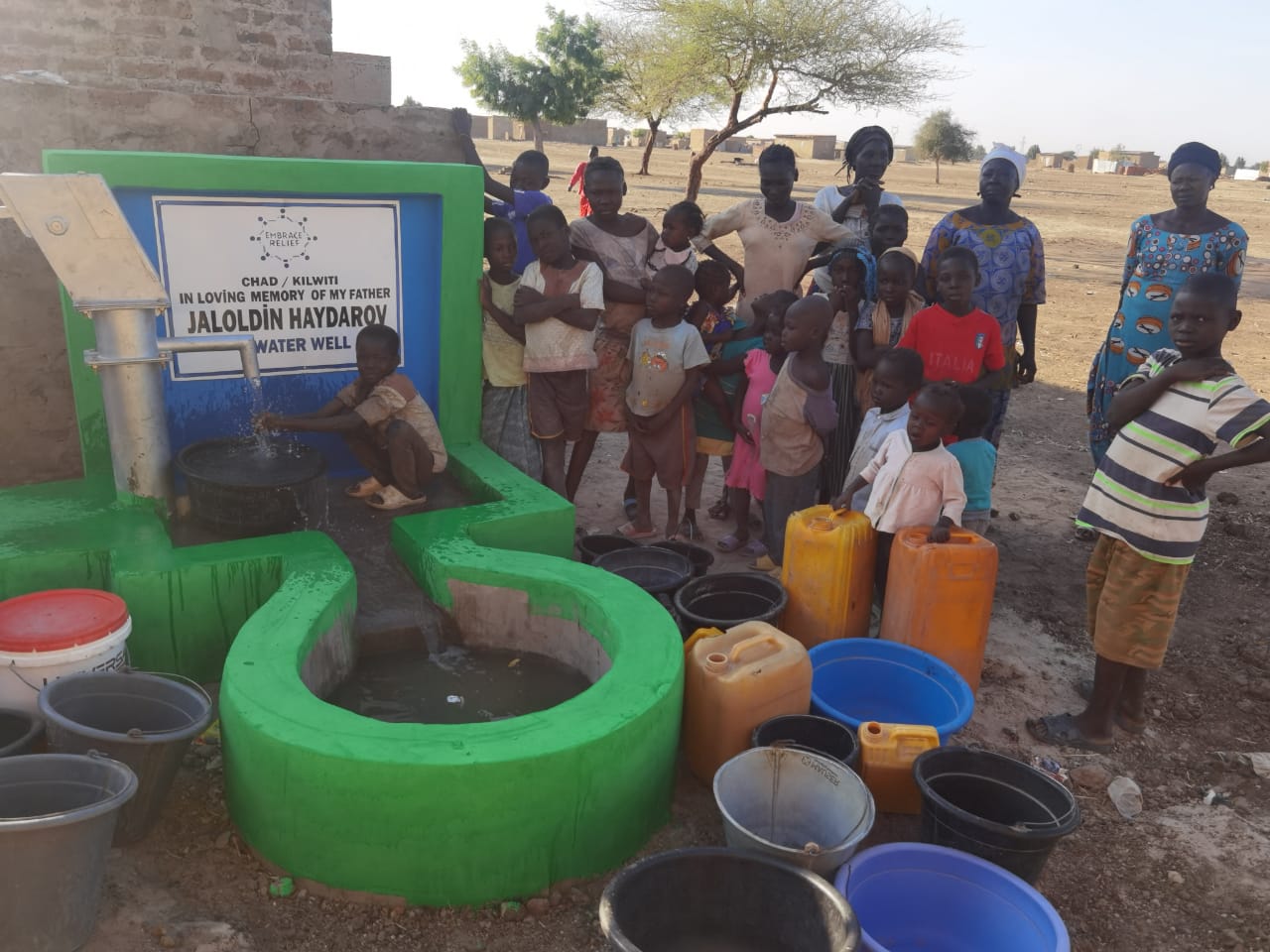
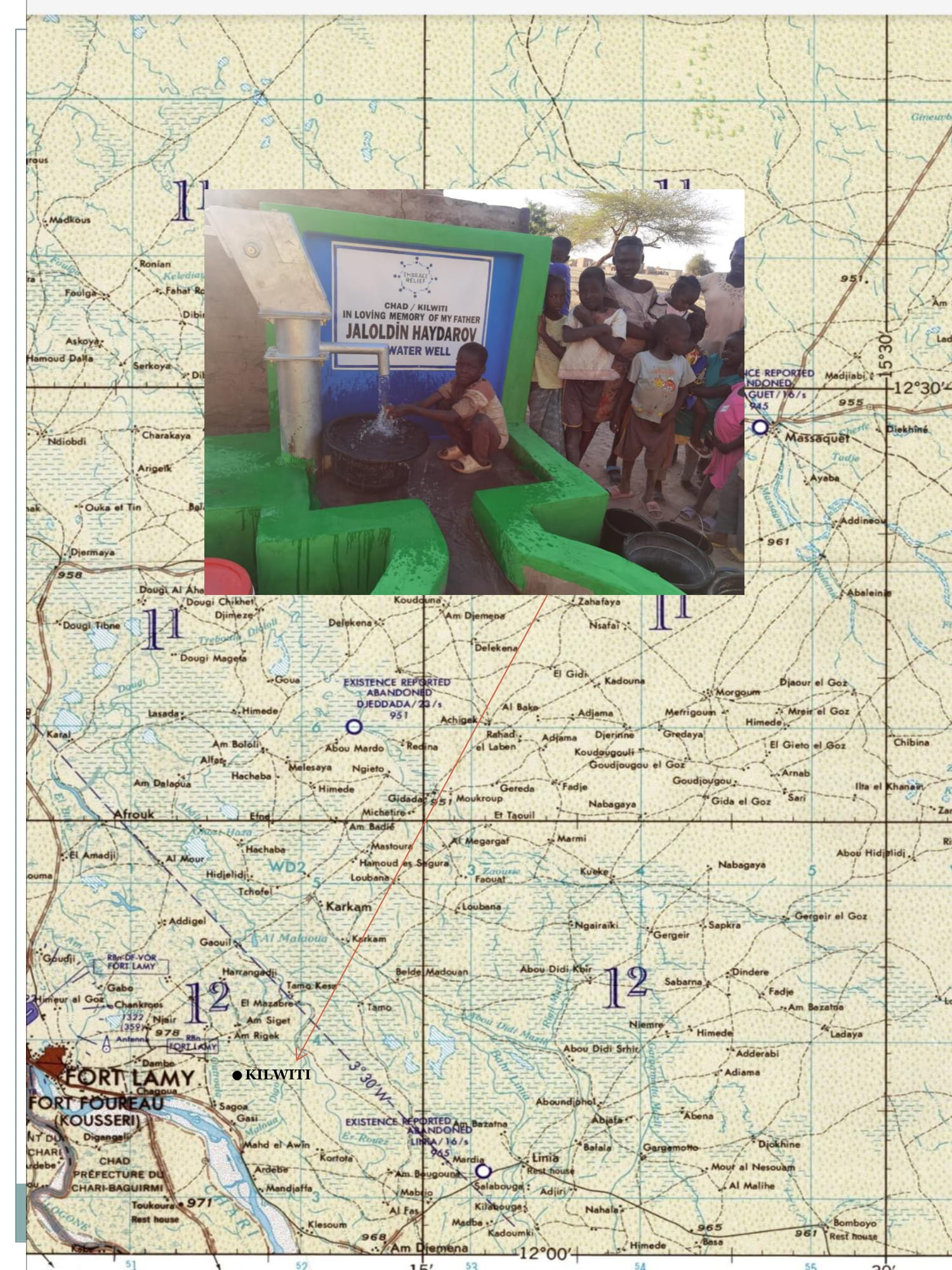
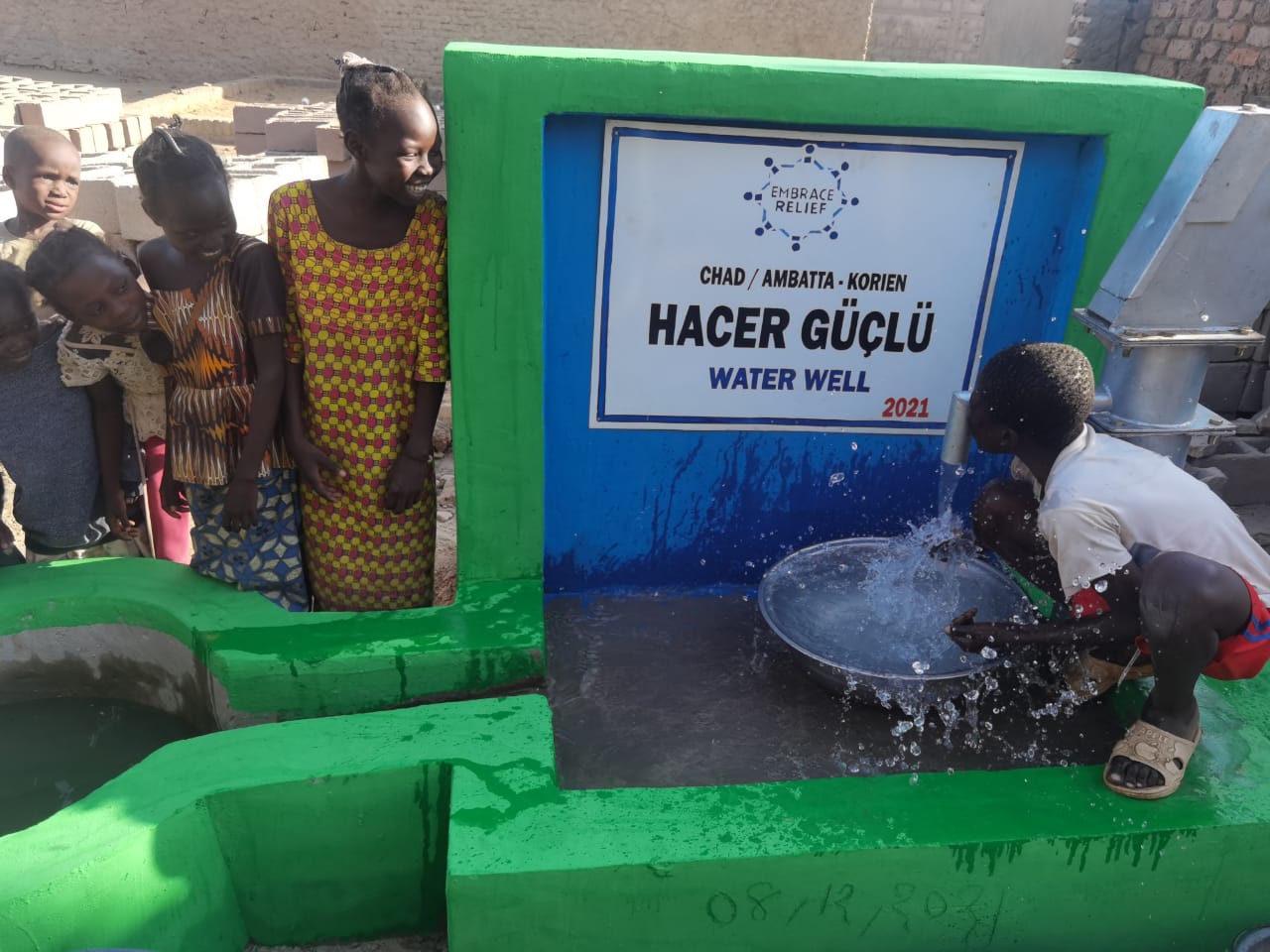
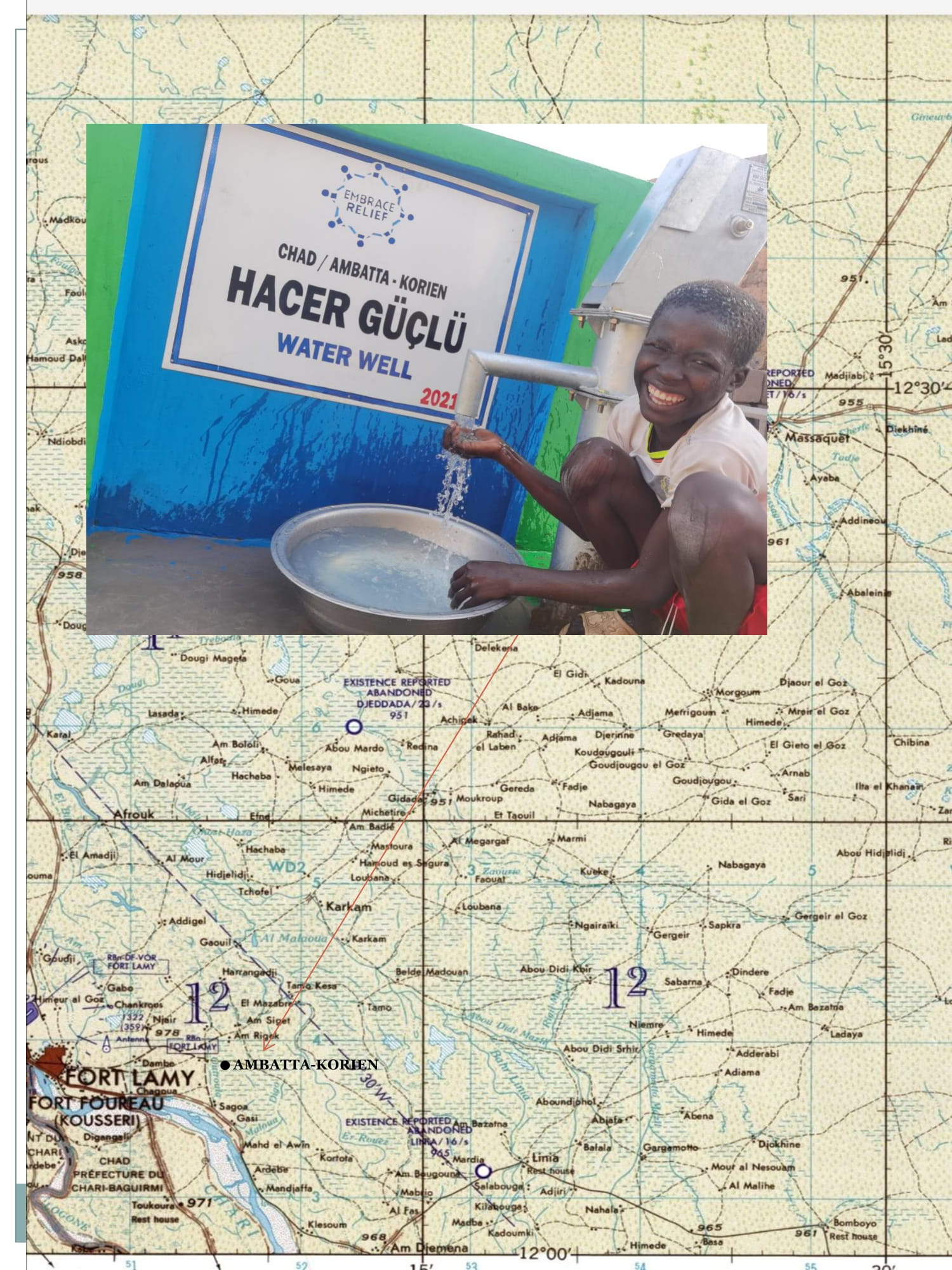
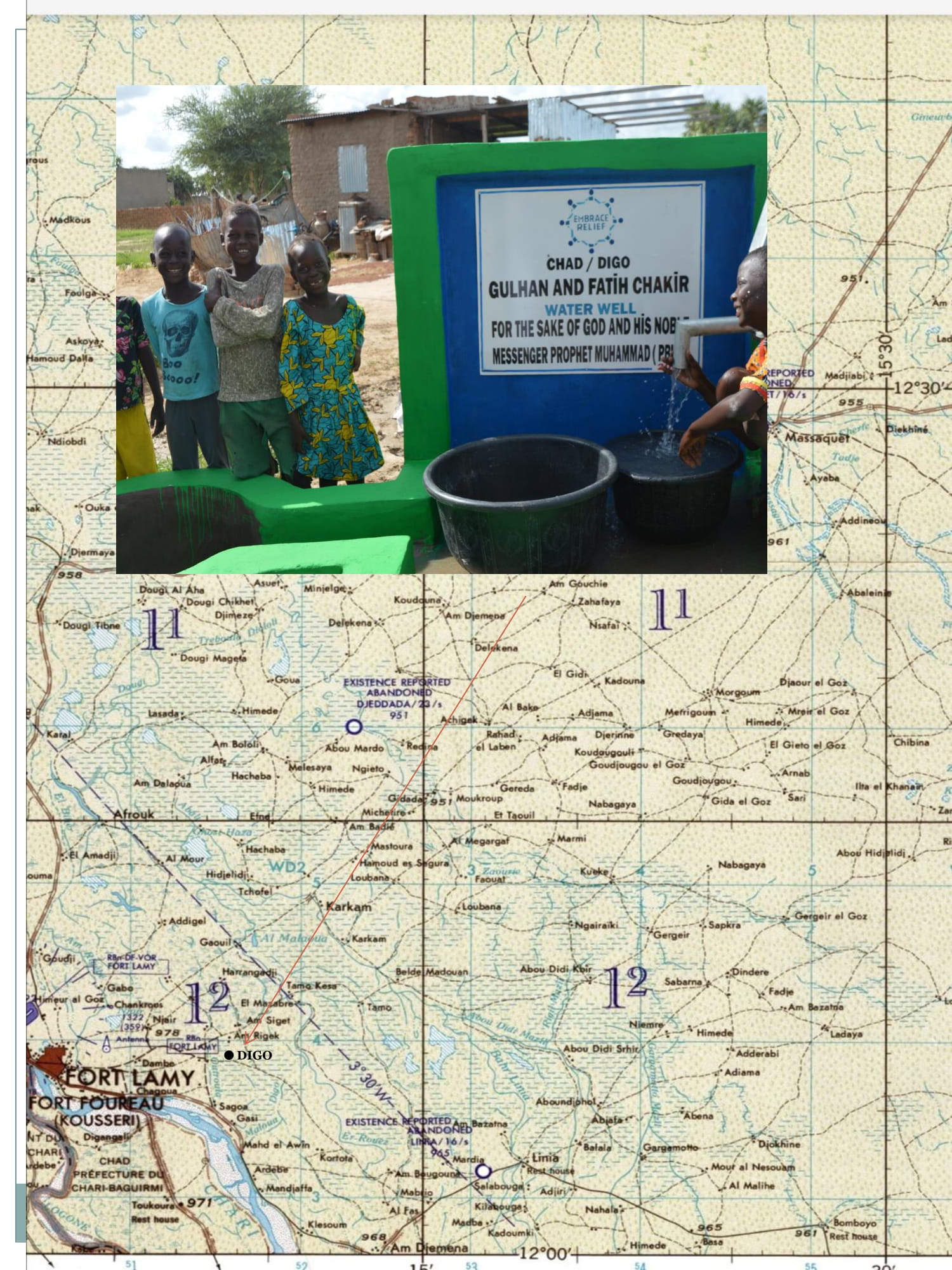
Gulhan and Fatih Chakir Water Well

Code Country Town/Village Inauguration Depth Serving
Chad Digo 08/2021 45m / 148ft 1300 people


Giving Tuesday 2021: What is Giving Tuesday?

Let’s face it. Tuesday’s a pretty drab day, if not the drabbest of the week. It’s not as “despised” as the so-called Dreaded Monday, and it’s not as “uplifting” as Wednesday, the so-called Hump Day. However, there’s one Tuesday of the year that’s actually incredibly special—and that’s Giving Tuesday. 

So, What and When is Giving Tuesday, Exactly?

Giving Tuesday, also termed #GivingTuesday for the purposes of hashtag activism, is always the Tuesday after Thanksgiving (so, this year it’s November 30). It’s a day for everybody in the entire world to set aside to support the causes and communities they believe in. In a way, it coincides with Black Friday (the day after Thanksgiving) and Cyber Monday (the day before Giving Tuesday). While those days promote holiday shopping for friends, relatives, and even oneself, Giving Tuesday asks people to extend their generosity beyond those in their inner circle.

How Did Giving Tuesday Begin?

Giving Tuesday began in 2012 as the simple idea of encouraging people to do good, conceived of by Henry Timms of the United Nations Foundation. For its first eight years, Giving Tuesday was housed in the 92nd Street Y’s Belfer Center for Innovation & Social Impact, which serves as an incubator for ideas until they prove their sustainability. Giving Tuesday did just that. In June 2019 it split off from 92Y to become its own independent 501 (c)(3) nonprofit organization. Since its inception, Giving Tuesday has grown to become immensely popular, particularly among nonprofit organizations, even spawning many Giving Tuesday logos. In fact, on Giving Tuesday 2020 alone, a staggering $503 million was raised online to promote the cause.

How Embrace Relief Factors In

As an organization that is constantly striving and succeeding in alleviating human suffering wherever it exists, we hold Giving Tuesday near and dear to our hearts. We think it’s incredibly important that everybody in the world take at least one day (though we certainly advocate more!) to consider supporting those less fortunate. That’s why we’re inviting you to support this Giving Tuesday now by donating or volunteering with Embrace Relief. So, please visit our website and choose from one of our many campaigns. Or, you can donate in our name on Meta (formerly Facebook), which will match every dollar donated up to two million dollars on November 30 (so, if you donate $10, Meta will also donate $10). Then, it will match ten percent up to eight million dollars (if you donate $10, Meta will donate $1)! Have a happy Giving Tuesday!

Yemen Crisis 2021: The Yemen Crisis Facts

The Yemen Crisis is currently the worst humanitarian crisis in the world. Among many other issues, it has led to the Yemen Famine. 17.8 million people in Yemen don’t know where their next meal is coming from, 8.4 million are considered at risk of starvation, and severe acute malnutrition is threatening the lives of almost 400,000 children under the age of five. In fact, over 11 million Yemeni children are in desperate need of aid. That’s nearly every single child in the Yemeni population! But why is the Yemen Crisis so debilitating? What is contributing to all of this human hardship?

The Yemen Humanitarian Crisis and Its Impact Explained

Since 2015, Yemen has been embroiled in conflict, resulting in airstrikes hitting many different parts of the country, with one every 99 minutes for the past three years to be exact. As expected, these airstrikes have had a number of very destructive effects, including:

  • Destroyed homes and public areas such as schools, markets, and health facilities, killing over a quarter of a million civilians, injuring thousands more, and leaving over 4 million people displaced.
  • Millions more suffer because the resulting destruction has cut off their access to healthcare and clean water. More than half of the country’s healthcare facilities have been destroyed, leaving over 19.7 million people without access to basic healthcare, and lack of access to clean water has led to the Yemen Water Crisis. 
  • The airstrikes make it difficult for humanitarian organizations to provide food and medical aid, which only exacerbates a deadly cholera outbreak that has already killed thousands of people.
  • Thousands of schools have shut down due to the conflict, keeping two million children out of the classroom. Plus, armed groups have occupied schools and displaced people use others for shelter. The latter is a part of the severe refugee crisis in the country, with over three million Yemenis displaced from their homes.
  • Left in vulnerable positions due to the conflict, young boys are being recruited as child soldiers, and young girls are forced into early marriages.

How We Are Aiding the Situation

In response to all this turmoil, Embrace Relief is distributing as many food packages as possible to those affected by the crisis in Yemen. Since 2020, we’ve distributed over a thousand food packages to hungry people in Yemen, but there are still so many more who need help! So, please consider donating today to provide them not only the nutrition they desperately need, but hope for a brighter future. That’s part of our Year-End Resolutions, anyway.

About Our Year-End Resolutions

A take on New Year’s Resolutions, our Year-End Resolutions is something you can do—right here, right now—that has an impact before the year is officially over. For example, contributing to one of Embrace Relief’s many humanitarian causes (check them all out here). And the best thing is—by doing so, you’ll officially make 2021 a great year. Not just for yourself, but for people who urgently need support but have nowhere and no one to turn to, because together, we can provide the resources needed to change and save lives. Happy Year-End!
Yemen Hunger Relief

Eight-year-old Abbas’s Story: How to Donate to Yemen

Meet eight-year-old Abbas. Since 2015, his country Yemen has been embroiled in conflict, resulting in the destruction of most of the country’s infrastructure including houses, hospitals, schools, and markets. Unfortunately, one of these buildings happened to be Abbas and his family’s home, forcing them to take refuge in a nearby closed school.

This school is also home to many other people who also lost their homes due to the conflict. The school Abbas and his younger brother and sister attend is closed as well due to the turmoil, like thousands of other schools in Yemen, stealing valuable class time from the children.

Needless to say, Abbas and his family live in a fearful, uncertain state every single day. For one, they’re praying the school they’re taking refuge in isn’t suddenly destroyed like so many other buildings in the country, potentially leading to their deaths or terrible injuries. Plus, they’re finding it extremely difficult to find food, water, and medical care because so much of their country is no longer operational. This is particularly distressing because a cholera outbreak is ravaging Yemen, leaving thousands dead and many more at risk of infection. All Abbas and his family can do is cling to one another and spend their days desperately scavenging for food and water.

The Big Picture

Abbas and his family are just one of millions of families affected by the conflict in Yemen, the worst humanitarian crisis in the world. A striking 17.8 million people don’t know where their next meal is coming from. 8.4 million are considered at risk of starvation, and severe acute malnutrition is threatening the lives of almost 400,000 children under the age of five. In fact, over 11 million Yemeni children are in need of desperate aid—that’s nearly every single child in Yemen!

How We Are Aiding the Situation

In an effort to help those struggling in Yemen, Embrace Relief is distributing as many food packages as possible. Since 2020, we’ve distributed over a thousand food packages to hungry people in Yemen, but there are still so many more who need your help! So, please consider donating today to provide them not only the nutrition they desperately need, but hope for a brighter future. That’s part of our Year-End Resolutions, anyway.

About Our Year-End Resolutions

A take on New Year’s Resolutions, our Year-End Resolutions is something you can do—right here, right now—that has an impact before the year is officially over. For example, contributing to one of Embrace Relief’s many humanitarian causes (check them all out here). And the best thing is—by doing so, you’ll officially make 2021 a great year. Not just for yourself, but for people like Abbas and his family who need support but have nowhere and no one to turn to, because with your help, we provide the resources needed to save and change lives. Happy Year-End!

The Story of Miray: One of Many Refugees in Greece

Meet 34-year-old Miray Ozmen, one of many refugees in Greece today. After learning that there was a warrant out for her arrest, Miray fled her hometown in Turkey in the middle of the night. Her husband, a highly respected doctor, had been imprisoned a few months before, leaving Miray and her eight-year-old and ten-year-old daughters alone.

Miray and her daughters traveled for days on foot to the Meric River, sleeping in farms along the way. They had only a backpack, the clothes on their backs, and the very little money Miray’s husband left for them.

Miray’s plan—get to Greece. Get to freedom. But once she and her daughters met the Meric River, another problem greeted them—no way to cross. Luckily, smugglers were in the area and granted them passage overnight—for a fee. And apparently, that fee was everything Miray had left.

Still, she agreed—she had to get herself and her daughters to freedom, after all! So they all boarded the boat, their entire bodies feeling like lumbering masses of burnt rubber after all that traveling.

But the danger was far from over. What if a log penetrated the boat, or what if it capsized? Such things had happened many times before, drowning loads of refugees. So, during the incredibly nerve-wracking trip across the Meric, Miray clung to her daughters, enveloping both of them with both her arms, holding them as close as she could to her own extremely weary body.

“It’s going to be okay,” she kept whispering to them as the boat bucked and bobbed amid the pitch-black night. “Don’t worry. It’s going to be okay.”

But she couldn’t know that for sure. In fact, it hardly even seemed possible. She and her daughters were going to a brand-new country, after all. They were leaving their friends and family, where they were born—all of which they might never see again—with practically nothing. Even if they made it across the river, where were they going to stay, and how would they survive, much less build a future? How were they even going to communicate with the Greek citizens, and how would the Greek citizens treat them?

Finally, and thankfully, the boat safely made the trip across the Meric, and the smugglers dropped Miray and her daughters off on Greece’s sandy shore. They staggered straight to the Greek police, who promptly shuttled them to an overpopulated refugee camp.

How Embrace Relief Helped Miray and Her Children

Miray and her children are just a few among thousands of refugees in Greece. In fact, the number of refugees in Greece is approximately 5,500, all of whom arrived by land or sea since the beginning of 2021. And, as more migration occurs, there is a greater need for efforts to grant refugees access to rights and opportunities in order to avoid isolation and protect their human rights. Thankfully, Embrace Relief recognizes that refugees provide an opportunity for cultural diversity and economic growth in Greece. Therefore, we embrace refugees like Miray and her children by providing them with the following:

  • Emergency Housing—With emergency housing, they’re no longer forced to stay in overpopulated refugee camps, which are especially unsafe during the COVID-19 pandemic. Our support also includes food, water, clothing, and access to pro-bono lawyers and translators who assist refugees with asylum paperwork, searching for a permanent home, and placing their children into schools.
  • Rent Assistance—Upon finding a permanent home, we continue to aid refugee families with up to $500 in rent assistance. So far, we have assisted 280 families.
  • English-Learning Courses—We systematically pair refugees with volunteer native English speakers who meet once a week via video call. They learn how to speak English, allowing them to excel in school, find new jobs, and make new friends in their new countries. To date, we’ve enrolled nearly 300 refugees in English courses.     
  •  Adopt a Refugee Family—This program personally matches people in the United States with a refugee family in Greece, providing refugees with invaluable emotional and psychological support. Providing a sense that someone cares about them and their family has helped refugee families in the program survive and succeed. We currently have 110 families who have been symbolically adopted.
  • First Bricks ProgramMillions of refugee children worldwide are often years behind the education level they should be at for their age. This is because they often miss months—if not years—of school. After all, they often hide with their parents to avoid conflict in their countries and endure prolonged periods of isolation in refugee camps. Therefore, the First Bricks online education program helps children of refugees learn math, science, languages, among other important subjects, and connect with other children their age—all for free.     
  •      For children of refugees, the emotional and psychological burden of migrating to an unfamiliar country is undeniable. Under this state of duress, gestures of kindness and thoughtfulness often have a profound impact. Therefore, in the last two years, we’ve provided gift bags for over 3,000 children of refugees.

How YOU Can Help Refugees Fleeing to Greece

Please donate today or volunteer for refugees in Greece to help us provide them not only a significant cushion to fall on during tough times, but the means to integrate themselves into their new, unfamiliar country. Thanks to the efficient system we have in place, refugees have the tools to positively impact their new communities. And YOU can make it part of your Year-End Resolutions to be a part of this meaningful evolution!

About Our Year-End Resolutions

A take on New Year’s Resolutions, our Year-End Resolutions is something you can do—right here, right now—that has an impact before the year is officially over. For example, contributing to one of Embrace Relief’s many humanitarian causes (check them all out here). And the best thing is—by doing so, you’ll officially make 2021 a great year. Not just for yourself, but for people like Miray and her daughters who need support but have nowhere and no one to turn to, because together, we provide resources needed to save and change lives. Happy Year-End!